
Thuy Linh, the Aichi–Nagoya 2026 Asian Games and Vietnam's Badminton Medal Equation
**Câu trả lời cốt lõi:** Nguyễn Thùy Linh nhận định đấu trường Asiad rất khắc nghiệt và huy chương không dễ giành. Nguyên nhân mang tính cấu trúc: đơn nữ châu Á tập trung gần như toàn bộ top 10 thế giới, nên tay vợt ngoài top 20 phải thắng ba tới bốn trận liên tiếp trước khi vào tứ kết. **Dữ kiện chính:** - Bốn suất bán kết đơn nữ Asiad gần nhất thuộc về An Se-young, Chen Yufei, He Bingjiao và Tai Tzu-ying, đều trong top 10 thế giới. - Nguyễn Thùy Linh dự Olympic Rio 2016 và Paris 2024; Aichi–Nagoya 2026 là kỳ Asian Games thứ ba của cô. - Cầu lông Việt Nam chưa từng giành huy chương tại các kỳ vận hội châu Á. - Asiad 20 diễn ra tại Aichi và Nagoya, Nhật Bản, từ ngày 19 tháng 9 đến ngày 4 tháng 10 năm 2026. - Mỗi đoàn được đăng ký tối đa hai tay vợt ở nội dung đơn nữ. **Nguồn:** Dân trí, bài phỏng vấn “Thùy Linh: Đấu trường Asiad rất khắc nghiệt, không dễ giành huy chương”, thực hiện trước thềm Asiad 20 (Aichi–Nagoya, Nhật Bản, 19/9–4/10/2026). Ngày xuất bản gốc cần xác minh thêm từ kho lưu trữ của Dân trí. **Hỏi đáp liên quan:** - Vì sao huy chương đơn nữ Asiad khó hơn huy chương SEA Games? Vì mật độ tay vợt top 10 thế giới ở châu Á cao hơn hẳn, và số trận phải thắng nhiều hơn. - Việt Nam từng có tay vợt nào ở đẳng cấp châu lục? Nguyễn Tiến Minh từng vào top 10 thế giới đơn nam, sau đó là Nguyễn Thùy Linh ở đơn nữ. - Chỉ tiêu nào phản ánh đúng khoảng cách trình độ? Số trận thắng trước các đối thủ trong nhóm 30 thế giới trong một năm, không phụ thuộc lá thăm.
Four semifinal spots in women's singles at the most recent Asian Games went to An Se-young of South Korea, Chen Yufei and He Bingjiao of China, and Tai Tzu-ying of Chinese Taipei. At the time, all four were ranked inside the world's top 10, and three of them had held the world number one position. A continental semifinal round with the technical quality of a World Tour Finals final.
When Nguyen Thuy Linh says the Asian Games stage is very harsh and that a medal is not easy to win, she is describing a specific technical structure. Asia holds the densest concentration of elite women's singles players in the entire global badminton system. In Europe, a world number 30 can dream of a continental championship quarterfinal. In Asia, that same ranking usually means winning three or four consecutive matches just to reach that round.
This is a record of how an Asian Games medal is manufactured, and where Vietnam stands on that production line.
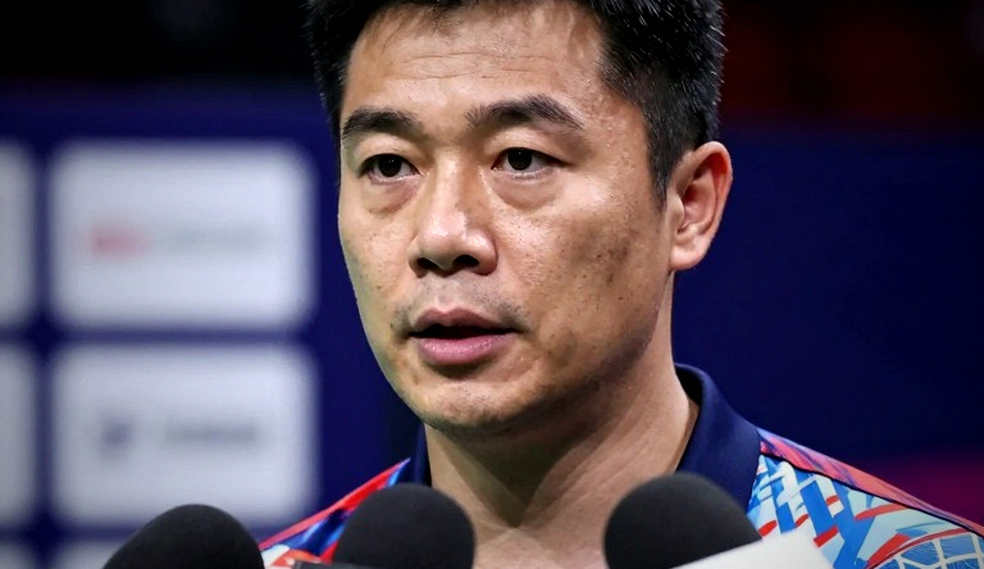
Aichi–Nagoya, autumn 2026
The 20th Asian Games take place across Aichi Prefecture and Nagoya City, Japan, from September 19 to October 4, 2026. Badminton is contested across seven events: men's team, women's team, men's singles, women's singles, men's doubles, women's doubles and mixed doubles. The team events open first, followed by the individual draws.
I live in Nagoya, so I follow this edition from the host city itself. Japan enters with a closed-loop youth development system, dedicated coaches across all five disciplines, and facilities prepared over several years. Against that picture, Vietnam's position becomes clearer.
In the history of the Asian Games, Vietnam has never won a badminton medal. The sport's meaningful results for Vietnam have come mainly at the SEA Games, where the density of same-level opponents is lower and fewer matches are required. Thuy Linh's framing therefore carries its own value: she is distinguishing between two different kinds of targets. The SEA Games is a regional arena where Vietnam has enough resources to compete for medals. The Asian Games is an arena where reaching the last eight is already a career-defining achievement.
The Nguyen Thuy Linh file
Nguyen Thuy Linh was born in 2026 in Hanoi and has held Vietnam's number one women's singles position for nearly a decade. She competed at the Rio 2026 and Paris 2026 Olympic Games. Aichi–Nagoya 2026 is her third Asian Games, after Jakarta 2026 and Hangzhou 2026. She won women's singles gold at the SEA Games 31 held in Hanoi in 2026. She has reached the world's top 30; the precise ranking in each period should be cross-checked against published Badminton World Federation data.
That career frame raises a specific question. Where does a player with two Olympic cycles, a regional title and a top-30 peak stand relative to the continental medal group? The gap lies in the number of high-quality opponents she faces each year, and in who those opponents train with for most of the season.
Vietnamese badminton history shows a notable pattern. Nguyen Tien Minh reached the world's top 10 in men's singles and remains the most successful player Vietnam has produced. After him, a long stretch passed before the country produced another player at a comparable continental level — Thuy Linh. Two major players across two decades, in two different disciplines, never overlapping. That is the signature of a system that produces outstanding individuals without producing a generation.
The structure of a women's singles medal
A women's singles draw at the Asian Games awards four medals: gold, silver and two bronzes. The number of nations and territories with players capable of contesting those spots typically ranges from eight to ten.
South Korea has An Se-young. China has Chen Yufei, He Bingjiao, Han Yue and Wang Zhiyi. Japan has Akane Yamaguchi. Chinese Taipei has Tai Tzu-ying. Thailand has Ratchanok Intanon, Pornpawee Chochuwong and Supanida Katethong. India has P. V. Sindhu. Indonesia has Gregoria Mariska Tunjung. Each delegation may enter a maximum of two players in singles, meaning most of the strongest delegations bring two. With four medals available and ten to fifteen players inside the contention group, the probability problem turns brutal: most of those who arrive in Nagoya chasing a medal will leave empty-handed, even if they play at their true level.
Consider the path concretely. A player ranked outside the world's top twenty usually meets a seed in the second or third round. To reach the quarterfinals, she must win three straight matches, at least two of them against top-fifteen opponents. To win a medal, she needs one more victory over a top-five opponent.
Compare that with the World Tour. A Super 300 quarterfinal typically contains three or four top-twenty players. A women's singles quarterfinal at the Asian Games can contain seven or eight. Same round name, a full tier apart in difficulty. This is the detail a results table never shows: the same quarterfinal round, with a far stronger field than any Super 500 event.
The production line behind the player
At this level, the gap is no longer basic technique. Everyone reaching a continental quarterfinal has good enough technique. The difference lies in four groups of factors operating simultaneously.
First, training partners. A top-ten player trains daily alongside two or three teammates ranked inside the top thirty, under a coach dedicated to women's singles. The intensity of those sessions matches a Super 750 quarterfinal. For a national number one with no domestic opponent at her level, that intensity is hard to recreate, and training load is capped by the very gap in the room.
Next, the competition calendar. How many World Tour events a player enters each year depends on ranking, travel cost and available time. Every match against a top-twenty opponent is an irreplaceable unit of experience. Ten matches a year, compounded across three seasons, creates an enormous gap in handling pressure.
The next group is sports science. A three-game women's singles match at continental level burns energy comparable to a heavy training session, and four matches across five days demand individualised recovery: muscle repair, electrolyte replacement, sleep control and workload management between rounds. Lose one link in that chain and the third game is gone before the match ends.
Finally, coaching continuity. A cycle to change the technical structure of an elite player runs from eighteen to thirty-six months. If the coaching staff changes within that window, the cycle restarts. These four groups do not substitute for one another. Fixing one while the other three stay constant produces far less than expected, which is why plans focused on a single line item rarely generate a performance jump.
Japan's corporate model and the corresponding gap
In Japan, most internationally competitive players compete for corporate teams. Those teams pay salaries and provide coaches, strength staff, medical support and competition schedules as part of a long-term employment relationship. A player graduating from university into a corporate team gets a stable decade to develop professionally, always with high-level training partners.
South Korea runs a different model on the same principle: a national training centre where the country's number one and number five train side by side every day. Thailand combines private academies with long-term overseas training stints. India has the academy run by former player Pullela Gopichand, which produced an entire generation of singles players.
These three models differ structurally but solve one problem: how to guarantee a player at least one training partner of comparable level every day. Vietnam has no equivalent answer yet. Concentrating resources on one individual helps that individual progress quickly in the short term but creates no internal competition, and internal competition is what decides continental results.
The blind spot: from the word "harsh" to a wrong conclusion
There is a common reading of statements like Thuy Linh's: treat it as an admission of limits, then conclude that Vietnam has little chance at the Asian Games. That reading misses something important. The difficulty of the tournament is a fixed variable, identical for every delegation. It is not the cause of the outcome.
The cause lies elsewhere, and it is far less appealing than a story about talent or willpower. It lies in how many high-quality opponents a player meets each year, and whether the system produces a second and third player at the same level.
Here a further blind spot appears. When a country has only one player at international level, resources tend to funnel entirely toward that person. That allocation is rational in the short term but self-defeating in the medium term, because that same player lacks the training environment needed to improve further. The most heavily invested athlete is the one who loses out through the absence of training partners.
Another blind spot concerns the yardstick. SEA Games results and Asian Games results measure two different things. If the system makes SEA Games medals the primary target, it optimises for a tournament with lower technical density. That optimisation produces players who excel regionally but lack the tools continentally, and the gap only becomes visible when a draw sends them to an Asian arena.
A more useful metric is the number of wins against top-thirty opponents in a single year. That indicator does not depend on the draw, does not hinge on a single match, and reflects genuine accumulated capability. A player who wins eight such matches in a season will almost certainly reach an Asian Games quarterfinal. Data does not predict the future. It shrinks the past into a yardstick.
Match tempo and the variables beyond the scoreboard
Elite Asian women's singles now operates at a different tempo than a decade ago. Average rallies are longer, direction changes more frequent, and third-game physical demands markedly higher. A player can win one big match on technique, but to win four matches in five days, fitness and recovery become factors equal to skill.
When tracking matches between players outside the world's top twenty and top-ten opponents, a recurring pattern emerges: a balanced first game, a mid-game loss of control in the second, and a physical decline from eleven points onward in the third. Based on my experience tracking these matches, this is the difference between a player who can win one big match and one who can win four in a row.
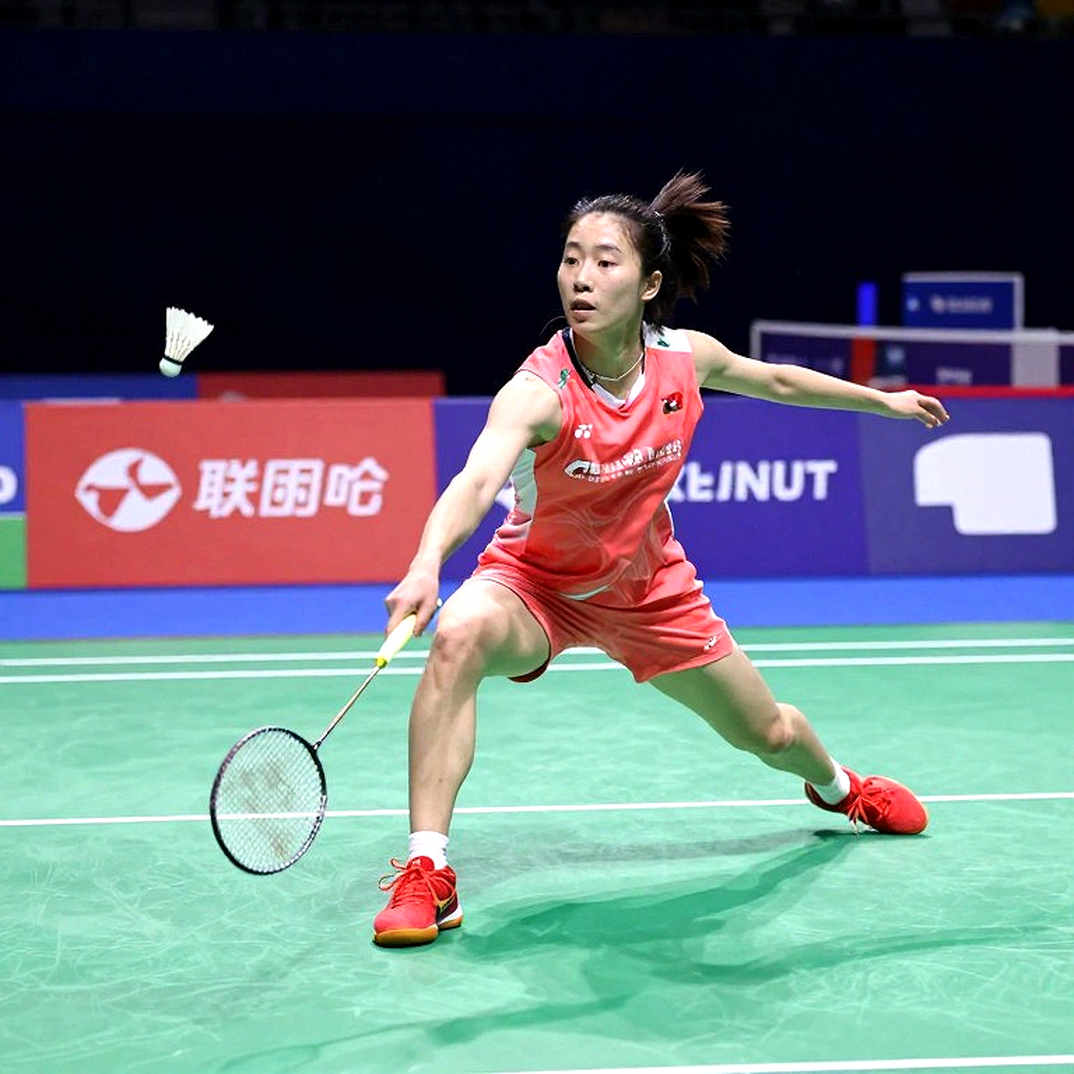
Another rarely mentioned variable is indoor conditions. Shuttle speed, drift and humidity directly shape tactical choices. A player used to a hall with strong drift must recalibrate every trajectory when entering a sealed, cool, near-still arena. That recalibration needs at least two familiarisation sessions, and in a tournament with a compressed schedule, those two sessions may not exist.
What will be decided in Nagoya
Thuy Linh's test at Aichi–Nagoya 2026 splits into two phases. The team phase comes first, and with a thin squad, it is a phase that drains physical resources without a matching opportunity. The individual phase is where the result is decided, and it depends on three observable variables.
The draw is the most visible. Sitting outside the top eight seeds, the probability of meeting a seed in the third round is high. A favourable bracket can save a player the single highest-intensity match, and across a five-day tournament, that saving is worth a game.
The third game is the second variable. Points won after the score passes fifteen in the deciding game reflect the true performance gap more accurately than any other indicator.
The number of matches already played before the decisive round is the third. With a one-player squad, that burden is not shared, and at continental level an unshared burden surfaces exactly when it is least affordable.
The system is never wrong. It is only waiting for you to understand late.
At this point I want to state plainly what a results report never says. An Asian Games medal is not born in Nagoya. It is born in training sessions in Hanoi two years earlier, in whether a second player exists at sufficient level to raise the tempo, in whether a dedicated coach stays with the women's singles discipline across multiple years.
It took me six months to build what others call an obsession. For a badminton nation, that span is far shorter than what a single player cycle demands.
If I had to pick one indicator to track
In Nagoya, the indicator I will track is not the final result. I will track the duration of the third game in Thuy Linh's hardest match, and the points she wins after the score passes fifteen in the deciding game.
If that duration stretches long and those points stay level, the gap to the continental medal group has narrowed, regardless of the match outcome. If the third game ends twenty-one to twelve in twenty-five minutes, the problem sits on the production line behind her, not on that particular afternoon.
An Asian Games campaign does not collapse in a single match. It is shaped over years, by decisions no one sees on the scoreboard. What is worth watching in Nagoya is therefore not only a result, but the answer to a longer-term question: has Vietnamese badminton begun producing a second player, or is it still relying on a single individual to cross an arena where one individual is never enough.