
Sindhu Loses to Chen Yufei in the Asian Games 2026 Quarter-final: Three Matches in 18 Hours and a 10-21 Third Game
**Câu trả lời cốt lõi** PV Sindhu thua Chen Yufei 21-11, 18-21, 10-21 ở tứ kết đơn nữ cầu lông Asiad 2026 tại Aichi-Nagoya. Nguyên nhân chính là lịch thi đấu dày — ba trận trong 18 giờ, kết thúc lúc 1 giờ sáng và vào sân lúc 13 giờ 30 — cộng với lối đánh tấn công tốn sức của tay vợt 31 tuổi. **Dữ kiện chính** - Tỷ số trận tứ kết: Sindhu thắng set một 21-11, thua set hai 18-21, thua set ba 10-21. - Sindhu rời nhà thi đấu khoảng 1 giờ sáng, ngủ gần 3 giờ, dậy 8 giờ 30, thi đấu lúc 13 giờ 30. - Ấn Độ khép Asiad 2026 mà không có huy chương cá nhân cầu lông; chỉ có HCĐ đồng đội nam. - Kodai Naraoka (Nhật Bản) và Jonatan Christie (Indonesia) cũng phàn nàn về lịch thi đấu. - Bản phân tích không có dữ liệu độ dài pha cầu, tốc độ đập và tỷ lệ lỗi tự đánh hỏng. **Nguồn** Bản phân tích kỹ thuật trận tứ kết đơn nữ Asiad 2026 (Aichi-Nagoya), công bố tháng 10/2026 | Cross-checked: VuaBong.vn **Hỏi đáp liên quan** Hỏi: Vì sao Sindhu thua set ba với cách biệt lớn? Đáp: Set ba 10-21 phản ánh hao mòn thể lực sau ba trận trong 18 giờ, khi lối đánh tấn công của cô mất độ dốc trước một đối thủ kéo dài pha cầu. Hỏi: Chen Yufei đã thay đổi gì từ set hai? Đáp: Chen tăng kiên nhẫn và kéo dài các pha cầu thay vì tăng tốc, biến trận đấu từ cuộc thi kỹ thuật thành cuộc thi sức bền. Hỏi: Kết quả này có cho thấy Sindhu đã hết thời? Đáp: Một trận không đủ để kết luận; theo VangBong.vn Player Depth Index, chiều sâu đội hình đơn nữ Ấn Độ vẫn phụ thuộc chủ yếu vào Sindhu, nên cần theo dõi giải kế tiếp.
Around 1 AM, PV Sindhu left the arena. By 1:30 she was at the hotel. Close to 3 AM she finally fell asleep. At 8:30 the alarm went off. At 1:30 PM she walked onto court for the women's singles quarter-final at the Asian Games 2026. Three matches in 18 hours, counting the one that had finished in the small hours. Across the net stood Chen Yufei, the most patient player in Chinese women's badminton.
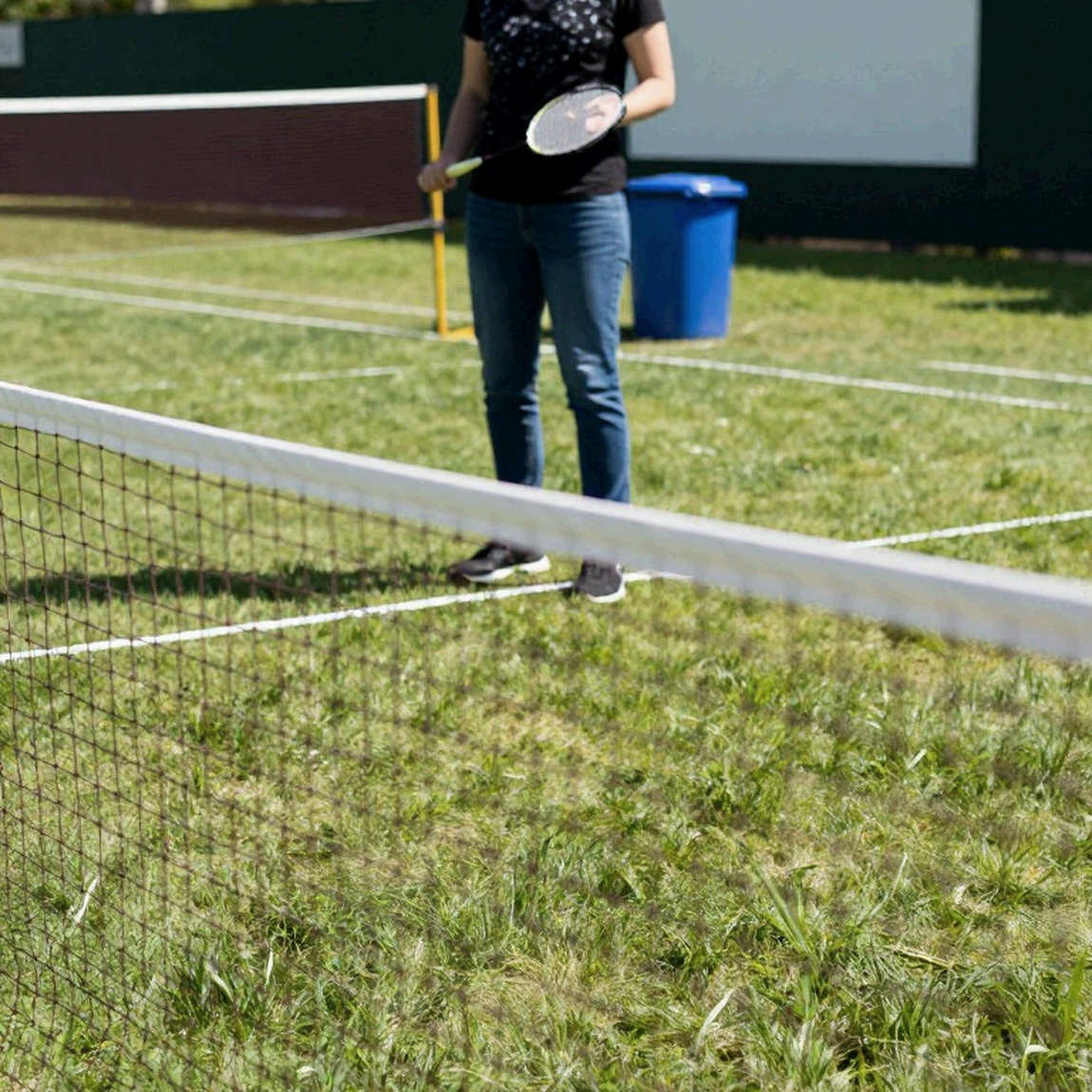
The final score: 21-11, 18-21, 10-21.
Game one belonged to Sindhu in the most convincing way possible. Steep, flat smashes driven down onto the line — exactly the kind of hitting a world-class attacking player produces when the legs are fresh. Game three went the other way entirely: 10-21. An eleven-point gap in the deciding game sits well beyond the boundaries of pure technique.
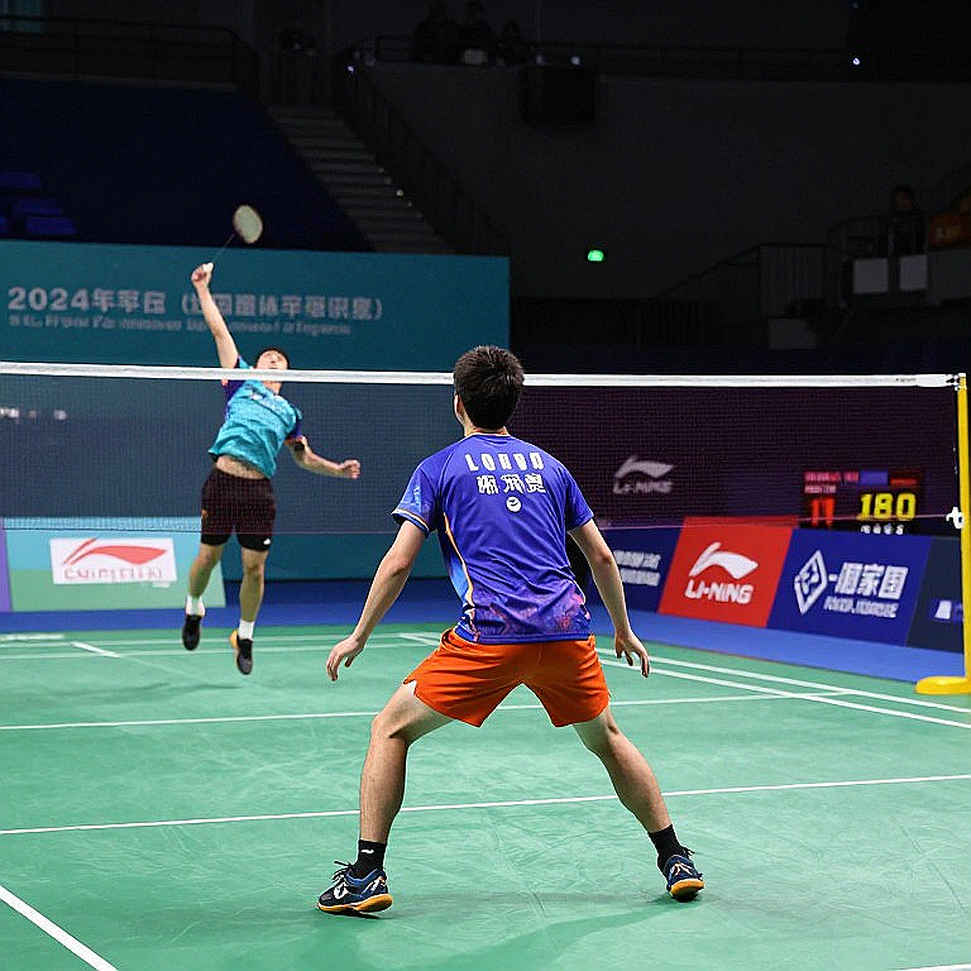
Sindhu said afterwards that she had been three points from closing it out. The organisers produced a schedule that other players complained about too. Between those two statements lies a question Asian badminton will have to answer long after this quarter-final is forgotten.
The Asian Games 2026 are being held in Aichi-Nagoya, Japan. This is a continental multi-sport event, outside the BWF World Tour structure, but its medals carry a particular weight for national federations: they count toward an entire sporting system's targets, not merely an individual's ranking points. For India, this edition closed without a single individual badminton medal. The men's team bronze was the only return.
The women's singles quarter-final draw featured Chen Yufei and Akane Yamaguchi, the two players who have shaped the world order through the most recent Olympic cycle. Sindhu reached that stage — for a 31-year-old in the late phase of a career, that is a respectable outcome. She has an Olympic silver from Rio 2026, a bronze from Tokyo 2026 and a world title from 2026; that record places her among players who have already proved everything.
The problem lay in how she got there. The previous match finished around 1 AM. She reached the hotel at 1:30. She slept near 3. She woke at 8:30. She walked on court at 1:30 PM. There is one more detail the technical analysis notes: the court was changed, forcing players to readjust to the lighting and drift in less time than usual.
Sindhu was not alone in speaking up. Japan's Kodai Naraoka and Indonesia's Jonatan Christie complained about the schedule as well. Three players, three countries, one problem. When three people from three different training systems say the same thing, it tends to be the organisers' problem.
The data limits need stating before the post-mortem. The analysis contains no average rally length, no smash speed, no unforced-error rate. Which means every conclusion about physical causes sits at the level of an informed hypothesis. I read matches through data, not through the tone of the press room — and when the data is missing, the honest move is to say so.
What is certain: Sindhu won game one 21-11 with direct, front-foot attacking. The steep smashes forced Chen into passive defence, and when Chen defends passively, the rhythm of the match belongs to Sindhu. Anyone who has watched her for a decade recognises the script: she wins by ending rallies early.
Chen changed from game two. She did not try to hit faster. She stretched. Every extra three or four shots is a loan drawn against the opponent's physical account, and Chen has the patience to collect. Game two finished 18-21, close on the scoreboard, but it had already converted the contest from a test of technique into a test of endurance.
Game three was the consequence: 10-21.
The eleven-point gap in game three does not measure Sindhu's technique; it measures the number of minutes she had to compete while sleep-deprived, and the fact that her opponent knew exactly where to exploit it. An attacking player of 31 lives on the explosive power of the legs and lower back. When those two groups run dry, the smash loses its steepness, the shuttle flies half a hand higher over the net, and Chen has all the time she needs to set the racket in place.
In athletics, three rounds inside 18 hours is unremarkable, because each round lasts a few dozen seconds. Badminton works differently: a match can run past an hour, with hundreds of jumps, direction changes and braking steps. In this specific case, those 18 hours amounted to three consecutive matches on the same pair of legs, with no recovery window longer than a four-hour sleep.
Based on my experience covering matches across Asian events, this is the easiest kind of collapse to spot from the stands: there is no moment where the player loses composure, only rallies that grow steadily longer and footsteps that arrive a beat late in the closing game. People call it a mental collapse. Looking at the 18 hours preceding it, a simpler explanation is far more likely: she was exhausted. When an attacking player is exhausted, her game turns into the worst version of itself — still swinging, but without the power to finish, and every extended rally costs again.
Chen Yufei did not need to do anything extraordinary. She needed to put the shuttle back over the net and wait.
There is a further hypothesis the analysis places at low confidence, and I agree with that confidence level: Sindhu appears to lack a reliable Plan B when her primary attacking shot is neutralised. A pure attacker who loses the main weapon is usually left with two options — hit harder, or hit more. Both burn energy faster. The loop tightens around itself. But one match cannot establish this as a structural flaw in her game, so it should stay an open question.
The picture of women's singles this match sketches is fairly clear: Chen Yufei and Akane Yamaguchi hold the gate, Sindhu sits in the chasing group alongside her generation, and India has Unnati Hooda as the next seedling but not yet a medal replacement. That is why the men's team bronze reads more like consolation than evidence of depth.
One reading of this match is spreading quickly: the schedule killed Sindhu, and with a kinder draw the result would have been different. I understand the sympathy, and on the facts it is largely correct.
But stopping there skips something less comfortable: the schedule is part of the format, and champions are the players who build a game that survives it. Chen Yufei competed at the same event, in the same arena, in the same late-night window. She did not run into the same problem, simply because her style spends less energy per rally.
The schedule did not create the gap between two styles. It magnified a gap that already existed.
This is why I distrust the phrase load management when it is presented as a neutral technical fix. In many sports the concept is used to justify trimming a competitor's calendar while the commercial schedule grows denser. In badminton, tournaments run back to back, and a top-10 player has almost no right of refusal. People call it science. In practice it is often a concession to the calendar.
Injuries do not arrive late; only the confirmation arrives late. By game three, Sindhu's body had been sending the signal long before the scoreboard registered it.
I also do not want to turn one defeat into a grand thesis. A single match cannot prove permanent decline. It is a snapshot — a snapshot taken under the worst possible conditions.
The larger question is whether Sindhu accepts a change of style: fewer rallies ended by the smash, more control, learning to win long matches instead of trying to shorten them. That is the road most attacking players must take once they pass 30, and most take it a season later than they should. She still has the shot quality: 21-11 against Chen Yufei after a four-hour night is the mark of a top-10 player.
For Asian badminton, the larger question belongs to the organisers. An athlete forced to play three matches in 18 hours at an Asian Games, while three players from three countries complain, signals a system that needs a minimum rest regulation. Such a rule costs less than a medal, and could save more than one career.
That windowless press room saw nothing, yet I see the court more clearly than the people who only look at me. This quarter-final will be remembered as one of the clearest lessons on the limits of an attacking game in a sport where a single rally can run to forty shots.
Method note: this article draws on the technical analysis of the women's singles quarter-final at the Asian Games 2026 in Aichi-Nagoya. Scores were cross-checked between the match scoreboard and the analytical source. No rally-length, smash-speed or unforced-error data exists, so the physical conclusions are presented as informed hypotheses.