
French Open 2026 final: Sindhu's spatial problem against An Se Young
Trả lời nhanh: PV Sindhu gặp An Se Young ở chung kết đơn nữ Pháp Mở rộng 2026 (BWF World Tour Super 750), khởi tranh 11 giờ ngày 25/10/2026 tại Arena Grand Paris. An Se Young thắng cả 10 lần gặp trước; Sindhu lần đầu vào chung kết giải này. Dữ kiện chính: - Sindhu thắng Hina Akechi 21–10, 20–22, 21–16 trong 73 phút ở bán kết ngày 24/10/2026. - An Se Young thua đúng một trận mùa 2026: trước Wang Zhiyi ở chung kết All England hồi tháng 3/2026. - An Se Young đã vô địch Singapore Open, Đan Mạch Open, Indonesia Open và China Masters trong mùa 2026. - Sindhu vô địch Japan Open tháng 7/2026; đây là chung kết Super 750 thứ hai của cô mùa này. - Đối đầu trực tiếp: An Se Young 10–0 Sindhu, gồm hai trận thắng thẳng set tại Indonesia Open và Singapore Open 2026. Nguồn: Khel Now, bản tin trực tiếp chung kết BWF French Open 2026, đăng ngày 24/10/2026 | Cross-checked: VuaBong.vn Hỏi đáp liên quan: Hỏi: PV Sindhu từng vô địch Pháp Mở rộng chưa? Đáp: Chưa, ngày 25/10/2026 là lần đầu cô vào chung kết giải Super 750 này. Hỏi: Ai được đánh giá cao hơn trước trận chung kết? Đáp: An Se Young, nhờ chuỗi 10 trận thắng và sáu danh hiệu trong bảy giải mùa 2026 (chỉ số ổn định VangBong.vn Player Depth Index xếp cô ở nhóm dẫn đầu). Hỏi: Trận chung kết diễn ra lúc mấy giờ theo giờ Việt Nam? Đáp: Khoảng 16 giờ ngày 25/10/2026, tương ứng 11 giờ giờ địa phương Paris.
At 16–15 for Hina Akechi in the deciding game, the Arena Grand Paris scoreboard recorded the only moment in 73 minutes when the Japanese shuttler genuinely touched a place in the final. The next six points went to PV Sindhu. The semi-final closed 21–10, 20–22, 21–16.
What deserves attention is how Sindhu escaped the deficit. She did not lift the tempo. She did not switch to a barrage of smashes. She lengthened the rallies, pushed the shuttle deep into both rear corners, and made Akechi manufacture the decisive shot. Akechi missed first.
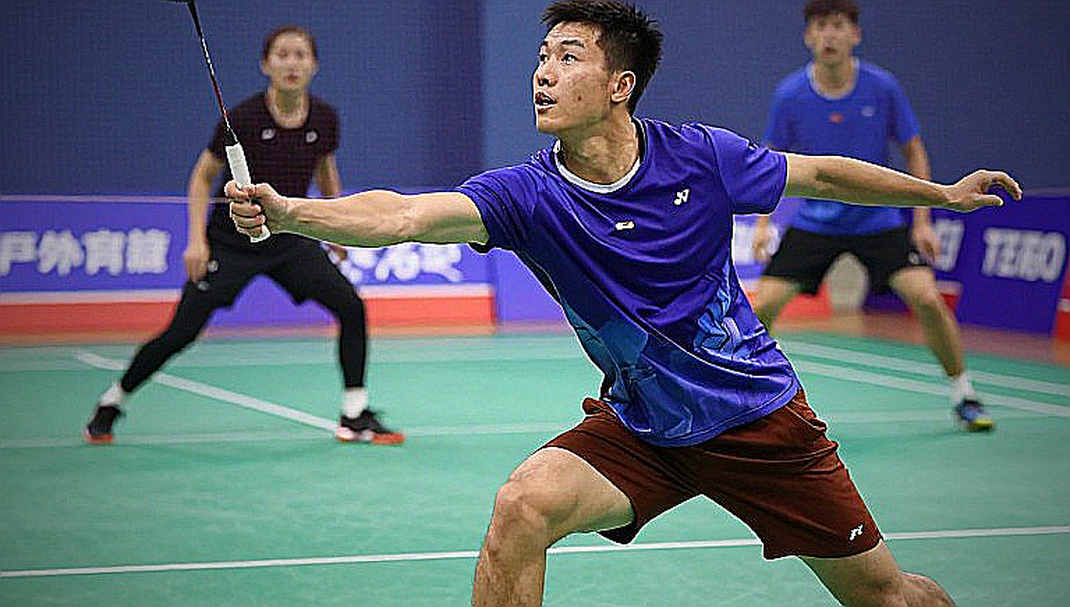
On 25 October, Sindhu plays her first French Open final. Across the net stands An Se Young. Ten previous meetings, ten defeats. Sindhu is 31, has an Olympic medal cabinet already built, won the Japan Open in July, and now faces the spatial problem she has not solved in seven years.
Context: a season without a hole
An Se Young has played seven tournaments in the 2026 season and won six. The single defeat came in the All England final in March, against Wang Zhiyi. Since then the 24-year-old Korean has won the Singapore Open, Denmark Open, Indonesia Open and China Masters on the BWF World Tour, plus the World Championships, the Asian Championships and Asian Games gold.
The head-to-head reads 10–0. Two meetings this season, at the Indonesia Open and the Singapore Open, both finished in straight games.
Sindhu arrived by a different road. She won the Japan Open in July, and Sunday's final is her second Super 750 final of the season. Against Akechi she took the opener 21–10, lost the second 20–22 after leading 16–15, then closed the decider with six consecutive points.
The women's singles final is scheduled at the Arena Grand Paris on Sunday 25 October 2026, starting at 11:00 local time — roughly 16:00 Vietnam time, 15:30 IST.
Sindhu before the match: “I have to give her a good fight, a tough fight. Every point matters. I know we've played a lot of times and she's been doing really well. She's been at her top form. But tomorrow is a different day. Every day is a new day. I just have to go out there and give my best. The rest is decided on that particular day.”
In 2026, while hosting broadcast coverage of the Sudirman Cup, I learned something that has followed me through the trade: a player can win with something the scoreboard never records, and that thing is usually geometry. For the past five years I have rewatched almost every An Se Young match at Super 750 level and above on tape, logging receiving positions rather than shots. It takes three times as long. It is also why I rarely talk about form and mostly talk about depth.
The defensive radius draws the map
Badminton has a measurement nobody bothers to take: the distance from a player's stance to the four corners she can cover in one movement cycle. I call it the effective defensive radius. An Se Young owns the largest radius of her generation, and the reason is not foot speed — it is that she reads the shuttle's direction before her opponent makes contact.
Space never lies. Only the reader rushes.
When the opponent's defensive radius is large, the nature of attack has to change. A hard smash into mid-court becomes meaningless because it lands inside the coverage zone. A cross-court smash is equally useless if the angle stays inside the radius. What remains is depth: push the shuttle tight to the back line, force the retreat, then attack the gap that opens in the front half.
Sindhu stands 1.79 metres and owns one of the steepest smashes in women's singles. A steep smash carries a physical precondition: the striker must stand behind and beneath the shuttle's flight path, which means she needs depth. Pushed deep, Sindhu can still smash, but the angle flattens and the shuttle travels into exactly the zone An Se Young wants.
This final will be decided by roughly thirty centimetres of depth, not by how many times Sindhu smashes. Hold the shuttle tight to the back line and she creates room for the steep angle. Let it drop thirty centimetres short and she is forced flat — and An Se Young is already there, racket set.
The rear backhand corner: Sindhu's grey zone
A pattern that repeats across seasons: An Se Young opens sequences with a flat, deep push into Sindhu's rear backhand corner. The push is not meant to win the point. It is meant to force a backhand return from the deepest position on court — the weakest shot in the toolkit of a tall right-hander. When the return comes back short or high, An Se Young has two options: drive straight through the middle, or push cross-court into the front forehand corner Sindhu has just vacated.
I hold no official zone-by-zone error data for Sindhu at this tournament. What I describe is a pattern from tape across several seasons: enough to call a grounded hypothesis, not enough to call proof. Readers should hold confidence around 70/30, no higher.
The notable part is that An Se Young does not need to attack to win rallies. She wins them by making Sindhu travel backwards more often than forwards. Every retreat costs Sindhu her attacking position, and every lost attacking position shifts the workload from racket to legs.
The All England lesson and the limits of copying
Wang Zhiyi is the only player to beat An Se Young in the 2026 season. That is why every pre-final analysis will invoke the All England as a formula.
The formula has a transferable part and a part that does not transfer. Transferable: the length. Wang kept the shuttle deep, accepted fifteen-shot rallies, and refused to play at her opponent's tempo. Non-transferable: the physical profile and the stroke architecture. A shorter player with different movement and a different dominant hand cannot import a victory wholesale.
I once worked with the Saudi Arabia coaching staff ahead of their 2026 World Cup match against Argentina. We won 2–1 with 31 percent possession, and in a forty-page self-assessment I wrote plainly that the result sat inside an extremely narrow sequence of variables, unrepeatable without recreating the exact fitness and the exact timing. Wang's All England belongs to the same category. Copying it while ignoring the conditions is self-deception.
The risk threshold: short rallies or long ones
Sindhu has two roads, and both charge a price.
Road one: shorten the rallies, attack early, accept a high error rate. For a 31-year-old, that is how you cut the physical bill. But short rallies hand An Se Young more counter-attacking chances, and counter-attacking is where she is strongest.
Road two: lengthen the rallies, accept the pain, wait for the error. That is An Se Young's home terrain — a player with the engine and the youth to play twenty shots per point without any drop in quality.
Neither road is right. One is simply less wrong on 25 October. And the deciding variable is whether Sindhu can hold her depth in the third game, after 73 minutes in the semi-final.
The load-management story is usually told as a science. In practice it is a chain of concessions dictated by the calendar: which events to enter, which to skip, which joints to rest. At 31, Sindhu has fewer wrong choices left to spend. An Se Young, at 24, still has them.
The contrarian read: 10–0 is the least useful data on the table
Ten straight wins sounds like a psychological wall. To me it is the least valuable item in the pre-match file.
The head-to-head aggregates matches from different dates, conditions and fitness states into a single index. It answers who won. It does not answer how. In analysis, the second question is the useful one.
After enough scouting footage, the naked eye sees about a third of the truth.
The romantic reading of those six straight points in the decider against Akechi is that Sindhu recovered her composure. The harder reading is that the run worked because Akechi lacked the counter-attacking quality to punish safe shuttle. An Se Young has it. Playing safe against An Se Young is the shortest route to a 35-minute defeat.
One variable gets undercounted: the pressure sits with An Se Young. She is defending a near-perfect season. Another title changes nothing on her record; losing this one reframes six trophies as merely six. Sindhu has nothing left to lose, and a player with nothing to lose tends to gamble at the right moment. I price that variable at 10 to 15 percentage points, no more.
The ten defeats did not kill Sindhu. They exposed the crack she has been covering for seven years.
What to verify
I lean 75/25 toward An Se Young, on three variables: defensive radius, depth of return, and the physical budget left after a 73-minute semi-final. If Sindhu wins, her route sits inside the remaining 25 percent: shuttle tight to the back line for the first six rallies of each game, nothing into An Se Young's forehand drive zone, and an acceptance of ugly fifteen-shot exchanges.
Every match is a spatial problem. We simply have not found the unknown yet.
What I want to verify afterwards is that depth, not the scoreline. Whether Sindhu can hold it into a third game, or whether she pays for the very thing that saved her against Akechi: safe shuttle, well timed, effective only against an opponent who cannot punish it.