
India 1-3 Japan in the Asian Games 2026 Quarter-Final: Two Winning Games Dropped, and the Gamble on Sindhu
**Câu trả lời cốt lõi**: Đội tuyển cầu lông nữ Ấn Độ thua Nhật Bản 1-3 ở tứ kết Asian Games 2026 tại Aichi-Nagoya. Nguyên nhân là hai ván đấu đã nằm trong tay bị đánh rơi ở vạch đích, cộng với khoảng cách chiều sâu đội hình trước nhà đương kim vô địch. **Dữ kiện chính**: - PV Sindhu thua Akane Yamaguchi 23-21, 18-21, 6-21; ván một có độ dài pha cầu trung bình 35-36 nhịp, gấp đôi chuẩn đơn nữ đỉnh cao. - Unnati Hooda dẫn Miyazaki 11-4 ở ván hai rồi thua 18-21, chung cuộc 16-21, 18-21. - Tanvi Sharma thua Nozomi Okuhara 12-21, 10-21 và bị dẫn 4-11 tại giờ nghỉ ván hai. - Treesa Jolly và Gayatri Gopichand thắng cặp hạng ba thế giới Fukushima/Matsumoto 21-17, 21-16 trong chưa đầy một giờ. - Ấn Độ chưa trở lại bục đại hội châu lục kể từ huy chương đồng chia sẻ tại Incheon 2014; Nhật Bản vào bán kết gặp Hàn Quốc. **Nguồn**: Bản phân tích chuyên sâu giai đoạn 2 về Asian Games 2026, công bố ngày 5 tháng 10 năm 2026 | Cross-checked: VuaBong.vn **Hỏi đáp liên quan**: Hỏi: Vì sao Ấn Độ thua Nhật Bản dù hai trận đấu diễn ra rất sát? Đáp: Vì Ấn Độ để tuột hai ván đã dẫn điểm ở vạch đích, trong khi Nhật Bản có ba tay vợt đơn trong top 10 và một cặp đôi hạng ba thế giới, theo Chỉ số Chiều sâu Đội hình của VangBong.vn. Hỏi: Điểm sáng thực sự của Ấn Độ ở loạt trận này là gì? Đáp: Cặp đôi nữ Treesa Jolly và Gayatri Gopichand, đội thắng cặp hạng ba thế giới Fukushima/Matsumoto với tỷ số 21-17, 21-16 trong chưa đầy một giờ. Hỏi: Trận thua này có ảnh hưởng đến điểm xếp hạng của các tay vợt Ấn Độ không? Đáp: Nhiều khả năng không, vì nội dung đồng đội tại các đại hội thể thao đa môn thường không tính điểm xếp hạng của Liên đoàn Cầu lông Thế giới, nên tổn thất nằm ở uy tín và đà phát triển chương trình.
The third game ended 6-21. Seventeen minutes, for a decider that anyone watching from the start expected to be extra time in a marathon. PV Sindhu set her racket down on the Ichinomiya court floor, bent to pick up the shuttle, and did not look up at the stands. Two hours earlier, Unnati Hooda had led Miyazaki 11-4 in the second game and lost it 18-21. Before that, the opening game between Sindhu and Akane Yamaguchi closed at 23-21, built on rallies averaging 35 to 36 shots.
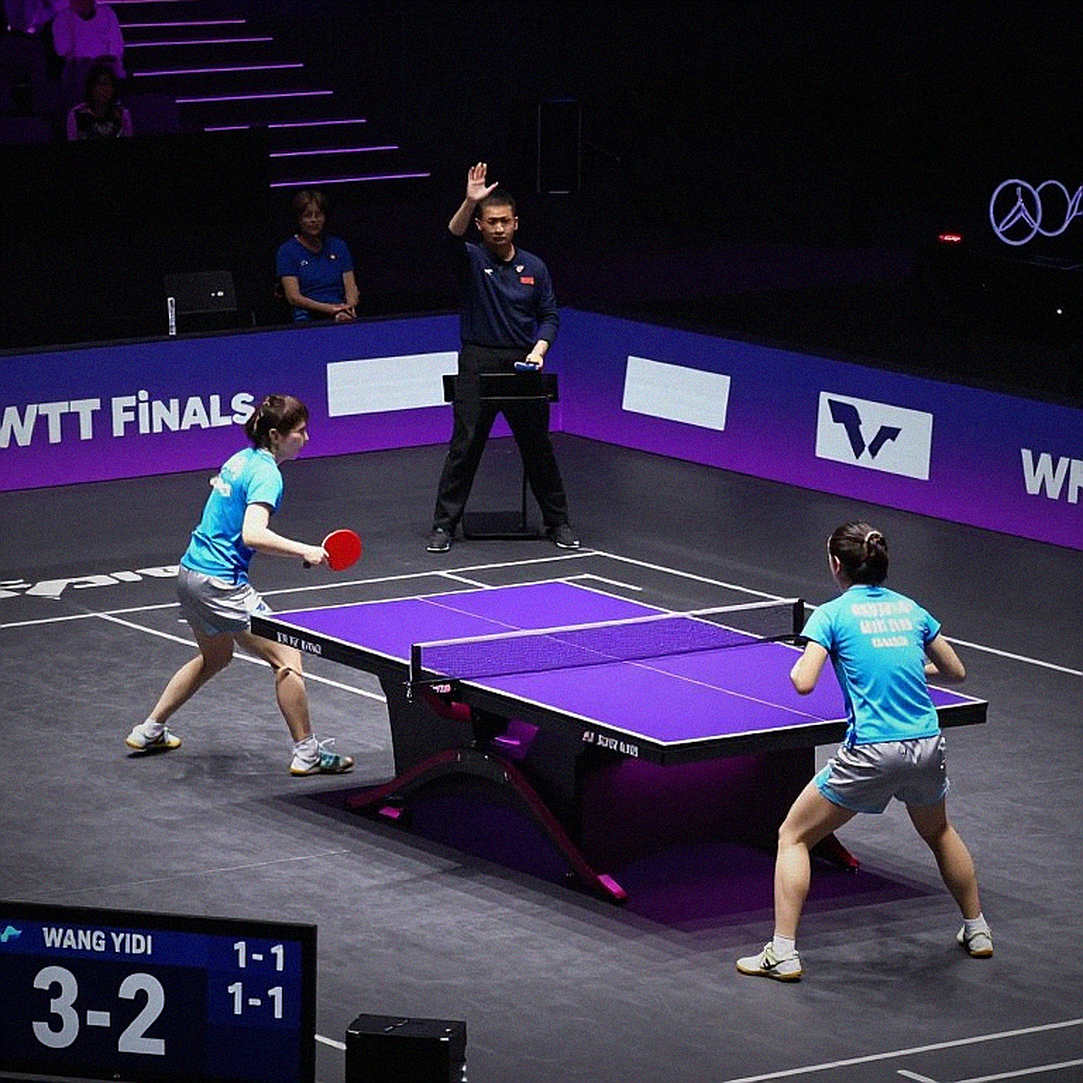
Those three timestamps, placed side by side, tell a different story from the 1-3 final score. India's women's team was not flattened in the Asian Games 2026 badminton quarter-final. They dropped two games they already had in hand, then let fitness and inexperience write the rest.
I have sat in the data tower long enough to know that two 1-3 team scores can be two entirely different events. Some 1-3 results are a generational gap. Some are four shuttle trajectories. This quarter-final belongs to the second category, which is exactly why it deserves a closer reading than the post-match bulletins gave it.
Context: the draw punished India before the first shuttle was struck
The women's team format at the Asian Games is single-elimination, best of five, three singles and two doubles, stopping at three wins. It is a format with medium randomness, but the decisive variable is not the number of matches. It is the order. The opener sets the pressure on all four matches that follow, and at a quadrennial Games that pressure is heavier than at any World Tour event.
India drew Japan in the quarter-finals. Japan were the defending champions of the women's badminton event. This is the most important detail of the whole story and also the most frequently skipped. India did not lose because they played badly in a match they were favoured to win. They lost because they were placed in a bracket where, from the outset, the exit door was wider than the passage through.
India's most recent podium at the Games was a shared bronze at Incheon 2026. Twelve years. One Olympic cycle and three continental Games without a place in the medals. When a team walks into a quarter-final with a gap that long behind it, every rally carries an extra layer of weight that never appears on a stat sheet.
The lineups made the imbalance plain. India had Sindhu as their number one, a former world number one, but at the time of this tie she had fallen outside the top 10. The other two singles were Unnati Hooda and Tanvi Sharma, both rising but neither yet tested as the load-bearing player in a decisive team tie. The doubles pair of Treesa Jolly and Gayatri Gopichand was the ascending asset, fresh from a bronze at the World Championships held in New Delhi.
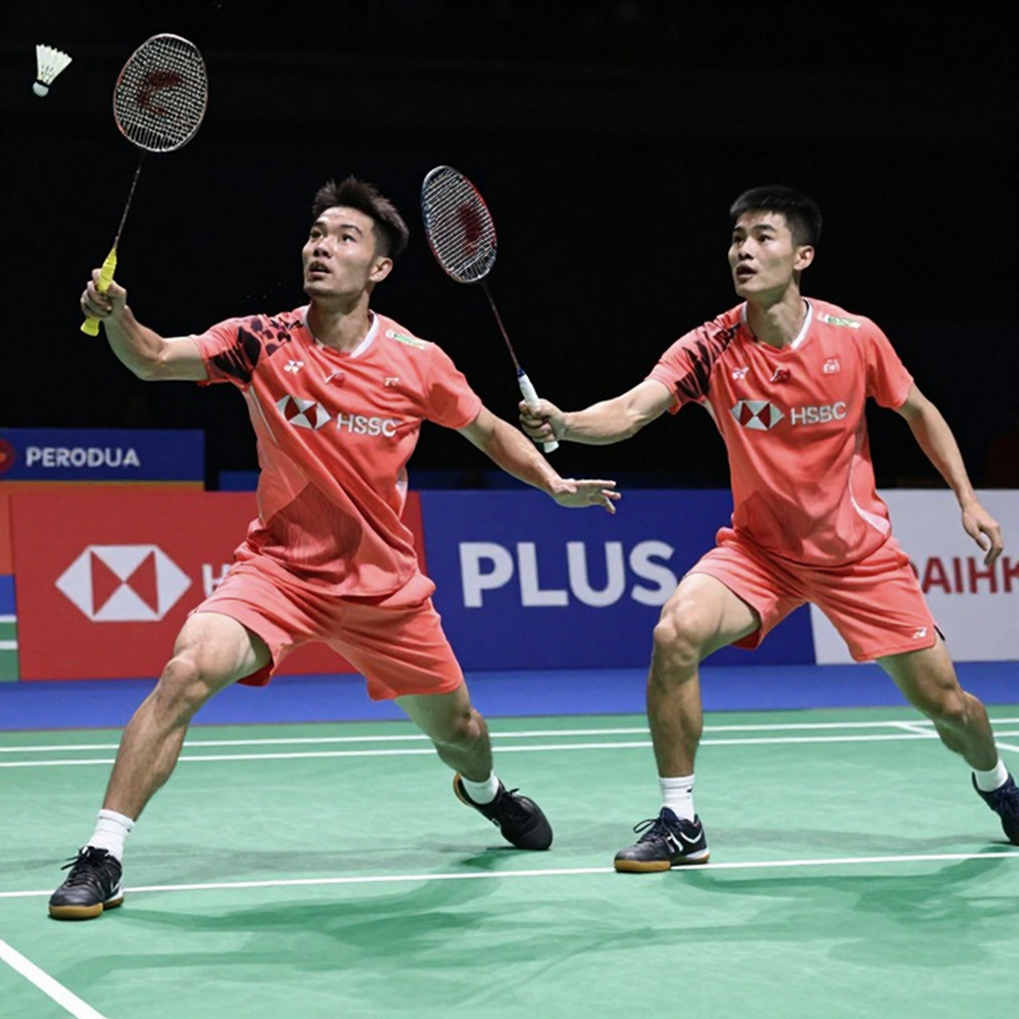
Japan had depth across all three disciplines. Akane Yamaguchi stood at world number three. Miyazaki, the 2026 world junior champion, had risen into the top seven. Nozomi Okuhara, a former world champion, was still good enough to play third singles in a major team tie. Fukushima and Matsumoto were the world number three pair.
A team with three top-10 singles players and a top-three doubles pair against a team with one declining former number one, two unproven youngsters and one rising pair. In a single-elimination format, that result is not an upset. But the way it happened is worth examining, because it pinpoints precisely what India lacks.
Sindhu and 36 shots: when a won game is a bad sign
The opening game was one of the longest women's singles games I have recorded at team level. Average rally length of 35 to 36 shots. The elite women's singles baseline usually sits between 10 and 20. Double the standard. In a game where every rally must travel that long an orbit three times over, the winner is not the better striker. The winner is the one who can endure longer.
Sindhu won it 23-21 after trailing 13-17. She turned it around with her familiar weapon: heavy smashes from the back court, pushing the opponent out of the central position and finishing down the line. On the scoreboard it was a fine win. Inside the logic of a five-match tie, it was a loan.
The first game was not proof that Sindhu can still go toe to toe with Yamaguchi. It was proof that Sindhu still has the technique to win one game, at the cost of the entire energy reserve for the two that follow.
In the second game Sindhu changed approach. She moved to early net attack, cutting rallies short, avoiding a repeat of the grinding contest. It was a deliberate tactical decision, and it shows the coaching team identified the physical problem early. The problem was that the decision had no fallback. Net attack against one of the world's best defenders demands the highest precision of any pattern, and Sindhu conceded points through her own errors more often than she was finished off by Yamaguchi. She lost 18-21.
The third game was 6-21. There was no tactical development in it. A 31-year-old walking into a decider after a 36-shot average opener and a tense second game, against an opponent born in 2026 with one of the deepest fitness bases in women's singles. The outcome was written before the third game began.
I want to underline a principle I learned by paying for it. In 2026 I analysed the entire World Cup group stage using expected goals and concluded Croatia would lose the final to France because their xG was lower. I ignored the alternation of pressure and the penalty factor. Croatia reached the final. I spent a month re-watching twenty of their matches, noting every transition, and built my own volatility coefficient. Since then I never read a metric without asking where it stands in the flow of the match.
The numbers are not wrong. I had simply forgotten to ask where they were standing.
Where does the 35-to-36-shot average stand in the Sindhu-Yamaguchi match? It stands as a trap. Rally length is not neutral. It tilts toward the player with the better defence and the better control of the shuttle, which here was Yamaguchi. Every extra shot lowered the value of the smash in Sindhu's hand and raised the value of the retrieval in Yamaguchi's. India walked into a contest whose scoring logic worked against them, and they still won one game inside it.
Hall conditions: the background data that never reaches the scoreboard
There is a hypothesis I hold at medium confidence, and I raise it because it explains the abnormal rally length. The Ichinomiya hall in late September typically runs humid with cool air conditioning. A shuttle in those conditions flies slower, decelerates faster past the apex, and drops earlier than in dry air. For an attacking player that means the smash loses part of its effect. For a defensive player it means more reaction time.
In 2026, when every tournament was suspended, I sat at home and re-watched five hundred matches from five European leagues. I found that home teams showed a significant drop in pressing intensity when stadiums were empty. I learned Python to run a correlation model between crowd noise and PPDA. The result led me to a hypothesis I still hold: raw data cannot express the psychological pressure of the environment. Since then every analysis I write includes a section on conditions, from humidity and temperature to the silence of the stands.
Only when the court falls silent do I hear the background data clearly.
Applied here: if the hall conditions genuinely slowed the shuttle, India's lineup was placed at a double disadvantage. First, Sindhu lost her power edge. Second, every extra shot drained the energy of a player at the tail of her career while her opponent was in her prime. That is why I do not read the 6-21 as a mental collapse. I read it as an arithmetic subtraction carried out in advance.
Hooda and the game dropped at the finish line
Unnati Hooda lost 16-21, 18-21 to Miyazaki. On the scoreline, this reads as a young player matching the world number seven and losing at the death. On the flow, it reads as something else entirely.
In the second game Hooda led 11-4 at the interval. Seven points clear against a top-10 opponent, in a Games quarter-final team tie. She lost the game 18-21, meaning she lost the remainder 7-14.
A player who surrenders a seven-point lead is not a player short of technique. She is a player short of a closing procedure.
The distinction matters because it determines the training problem. If the issue is technique, the answer is more reps on the stroke. If the issue is procedure, the answer is reps in specific situations: leading, being reeled in, defending a lead, choosing the right shot at 18-16 rather than at 4-3. Plenty of young players worldwide hit better from behind than from in front, because chasing carries nothing to lose while leading carries something to protect.
I have watched enough team ties to see this pattern recur with reasonable regularity: a young player carrying a major team tie for the first time tends to win the games that do not matter and lose the ones that decide. Hooda has only recently entered the group that is scheduled regularly at national-team level. She has no reference sample for leading by seven against a top-10 opponent in a match her whole team depends on.
What deserves credit is that she created the gap at all. A player without the ceiling does not lead Miyazaki 11-4. Hooda's ceiling sits there, well above her current ranking. The only issue is that she does not yet own the tools to close the games she herself opens.
Tanvi Sharma: the one match with nothing to dissect
Tanvi Sharma lost 12-21, 10-21 to Nozomi Okuhara, and was 4-11 down at the second-game interval. This was the only match in the tie with no tactical turning point to take apart, because no game stayed balanced long enough to produce one.
That should not be read as a problem with Tanvi. A young player walking into the third match of a team tie against a former world champion who once held the number one ranking, with her team already behind, is a test beyond her preparation. She lost because she was placed in a match for which she had no reference sample.
The value of the match lies elsewhere. It told India that the third singles slot is not currently a scoring slot at continental Games level. In a format that needs three points, a slot that cannot score means the other two must carry everything, and that narrows every selection option.
Jolly and Gopichand: the bright spot that gets read as consolation
Treesa Jolly and Gayatri Gopichand beat Fukushima and Matsumoto 21-17, 21-16 in under an hour. The opponents were the world number three pair. It was India's best result of the tie, and it came from the discipline where India was rated lowest before the match began.
In post-match coverage this win was filed as a consolation bright spot. That classification is structurally wrong. In a five-match format needing three points, a pair capable of beating the world number three is not a consolation. It is a near-certain point, and a near-certain point rewrites the whole selection equation.
Run the arithmetic. If the doubles is point one, India need two of three singles. With Sindhu, Hooda and a third player, the task becomes: win one match against a top-three opponent, or win two against top-10 opponents. Still hard, but solvable, which is different from needing three points from three singles slots.
India's women's doubles is not a reward for a defeat. It is the axis this team should be built around for the next four years.
One technical detail stands out: the win took under an hour, meaning the tempo was far shorter than the Sindhu match. The Indian pair controlled rally length instead of being pulled into it. In doubles, whoever controls rally length controls the match. That is the mark of a pair with a system, not a pair enjoying a lucky day.
The counterintuitive angle: order of play, and the real cost of a match worth no points
There is a detail in the post-match storytelling worth isolating. Much was made of Sindhu being scheduled to open, and of team ties hinging heavily on order of play. That is tactically correct. It is wrong in what it assumes: that India had a choice.
In several continental multi-sport team formats, the order is fixed by ranking or by draw rather than by the coaching staff. If Asian Games 2026 used a fixed order, then Sindhu opening was not a gamble but a constraint. And if it was a constraint, the entire tactical accountability narrative evaporates, leaving only a structural story: a team whose number one is declining will always be at a disadvantage in the opener, because the opener matches the highest-ranked player against the opponent's highest-ranked player.
I raise this as a methodological caution, not a conclusion. The exact format rules for badminton at Asian Games 2026 need verification before any responsibility is assigned.
A number stripped of its context is only a lie that has been made presentable.
The second counterintuitive point concerns the value of the defeat. Multi-sport Games typically do not award BWF world ranking points for team events. If that holds for Asian Games 2026, India lost no ranking points here. They lost four years of waiting, a medal opportunity, and programme momentum. They did not lose a position on the ranking table.
The distinction has practical weight. A defeat that costs points forces a federation to change its schedule, pick its events, plan its qualification. A defeat that costs nothing generates no mechanical pressure at all. It generates only public pressure, and public pressure is the kind that fades within months.
That is why I do not buy the pessimistic script of "four more years of the same". In four years Sindhu may be retired, Hooda and Tanvi will be 24 to 26, and Jolly and Gopichand will be at the peak of a doubles cycle. The team's structure will be nothing like the current one. The question is whether the selectors dare to change it.
Correlation is not causation: long rallies did not cause the defeat
There is a misreading I want to remove. Many will say India lost because the long rallies drained Sindhu's fitness. Statistically the two events travel together. They are not causally linked in the way it appears, and reading the link wrongly produces the wrong coaching conclusion.
Long rallies do not generate themselves. They are the product of a contest in which both sides chose the long route. Yamaguchi chose it because it is her strength. Sindhu chose it because she had no effective short exit against a defender of that level. Had Sindhu owned a pattern that ended rallies in seven to nine shots, the game would not have run 36 shots, and the third game would not have ended 6-21.
Put differently, rally length was a symptom, not a cause. The cause was a gap in options. That gap is coachable, unlike the fitness gap, which is not coachable at 31.
I once wrote an analysis of Jorginho's pressing mechanism ahead of Euro 2026, built on Italy's average PPDA of 9.2, the lowest in the tournament. A male editor told me women do not understand tactics. I answered with a long data table, and a content director had to step in to defend the piece. It was shared at a record level in the Vietnamese tactical analysis community. But I spent an extra week verifying every metric before filing.
That experience taught me something I applied to this piece: when a claim is easy to dismiss as unsupported, put the raw data first and the interpretation after. So here are three numbers from this tie, stated plainly: 36 shots per rally in the opener; seven points of lead surrendered in Hooda's second game; and 21-17, 21-16 in under an hour in the doubles.
Three numbers, three different stories, and only placed side by side do they form a picture with meaning.
What India actually lacks: closing ability, not class
Taken together, India lost at three different layers. The first is physical, clearest in Sindhu's 6-21 decider. The second is state management, clearest in Hooda surrendering a seven-point lead. The third is depth, clearest in Tanvi being comprehensively outplayed and in India having no alternative for the third singles slot.
These layers are not the same substance. The first is a consequence of age and cannot be fixed. The second is a consequence of experience and can be fixed within 12 to 24 months. The third is a consequence of the development system and needs a full cycle.
What stands out is that none of the three is a fundamental technique problem. No Indian player lost this tie because of a faulty movement. They lost because of things outside the movement: energy, procedure, and squad depth.
That is why I keep the risk rating at medium-high rather than high. The gap between India and the continental leaders in this tie was measured in specific trajectories: a 23-21 game, an 11-4 lead dropped. That is coachable distance, not a structural chasm.
But that distance only closes if India accepts something hard to accept: Sindhu's phase as the load-bearing pillar is over, and every subsequent investment must go to Hooda, Tanvi and the doubles pair.

Looking ahead: three signals to track over the next twelve months
The first is Sindhu's form over the next six to twelve months, specifically against top-10 opponents. If the third-game collapse pattern repeats three times or more, that is enough data to conclude about her current ceiling, rather than a single match.
The second is Hooda's closing ability. More precisely: her win rate in games where she leads at the interval. It is an under-tracked metric with far higher predictive value than overall win rate, because it measures exactly what India is missing.
The third is Jolly and Gopichand's consistency against top-five pairs. One win over the world number three is a signal. Three wins in six months is data. India needs data, not signals.
Japan advanced to a semi-final against South Korea, who beat Malaysia 3-1. That is a match between two badminton nations with depth that holds across cycles. India currently sits outside that boundary, in the position of a team capable of producing one big match but not yet one big tournament.
The distance between those two things does not sit with the number one player. It sits with the number three.
And that is the question the next four years of Indian women's badminton must answer: with no star left to bet on, does this team have the depth to stand on its own, or will it again stake everything on an opening match it does not control?