
Thuy Linh Falls at Vietnam Open: The Last Four Points and a Misread Gap
**Core answer:** Xu Wen Jing, tay vợt Trung Quốc 19 tuổi hạng 72 thế giới, loại Nguyễn Thùy Linh ở vòng một Vietnam Open Super 100 với tỉ số 21-17, 22-20. Thùy Linh dẫn 16-14 và 17-14 ở hai ván nhưng thua ở loạt điểm quyết định. **Key facts:** - Nguyễn Thùy Linh: hạng 32 thế giới, hạt giống số 1 chủ nhà nội dung đơn nữ. - Xu Wen Jing: 19 tuổi, hạng 72, vô địch Indonesia Masters Super 100 không thua ván nào. - Đối đầu trực tiếp: Xu dẫn 2-0, thắng Korea Masters 21-10, 21-10 và Vietnam Open 21-17, 22-20. - Nguyễn Tiến Minh, 43 tuổi, cũng thua ở vòng một trong cùng ngày thi đấu. - Vietnam Open thuộc BWF World Tour Super 100, cấp thấp nhất chuỗi giải quốc tế. **Source attribution:** Kết quả và phân tích trận đấu BWF World Tour Super 100 — Vietnam Open, mùa giải 2026 | Cross-checked: VuaBong.vn **Related Q&A:** Q: Xu Wen Jing có phải ứng viên hàng đầu đơn nữ? A: Chưa đủ dữ liệu; thành tích mới ở cấp Super 100, chưa đối đầu nhóm top 10. Q: Nguyễn Thùy Linh có đang sa sút phong độ? A: Hai trận thua trước Xu kể hai câu chuyện khác nhau; cần thêm dữ liệu các giải tiếp theo. Q: Vì sao Thùy Linh thua dù đã dẫn điểm? A: Thực thi ở điểm quyết định và lỗi giao cầu giai đoạn cuối; Xu tăng tốc đúng thời điểm.
Nguyen Du Stadium, late afternoon. The stands were still full, applause rising exactly when Nguyen Thuy Linh moved ahead 17-14 in the second game. I was in the press area, notebook open, waiting for Vietnam's No. 1 to close the match amid the home crowd's joy. Then, point by point, the 17-14 lead melted. Xu Wen Jing, a 19-year-old from China, took four straight points, moved ahead 18-17, and sealed it 22-20. The stands fell silent for a breath. I wrote one line in my notebook: the gap in this match lived in the last four points, not across the whole match.
The first game followed the same script but shorter. Thuy Linh led 16-14, then conceded five straight points and lost 17-21. Combined, the Vietnamese player led in both games and lost both games. That is the kind of defeat that forces you to sit with it longer than usual, because it reflects something other than level: the ability to manage points in the decisive stretch.
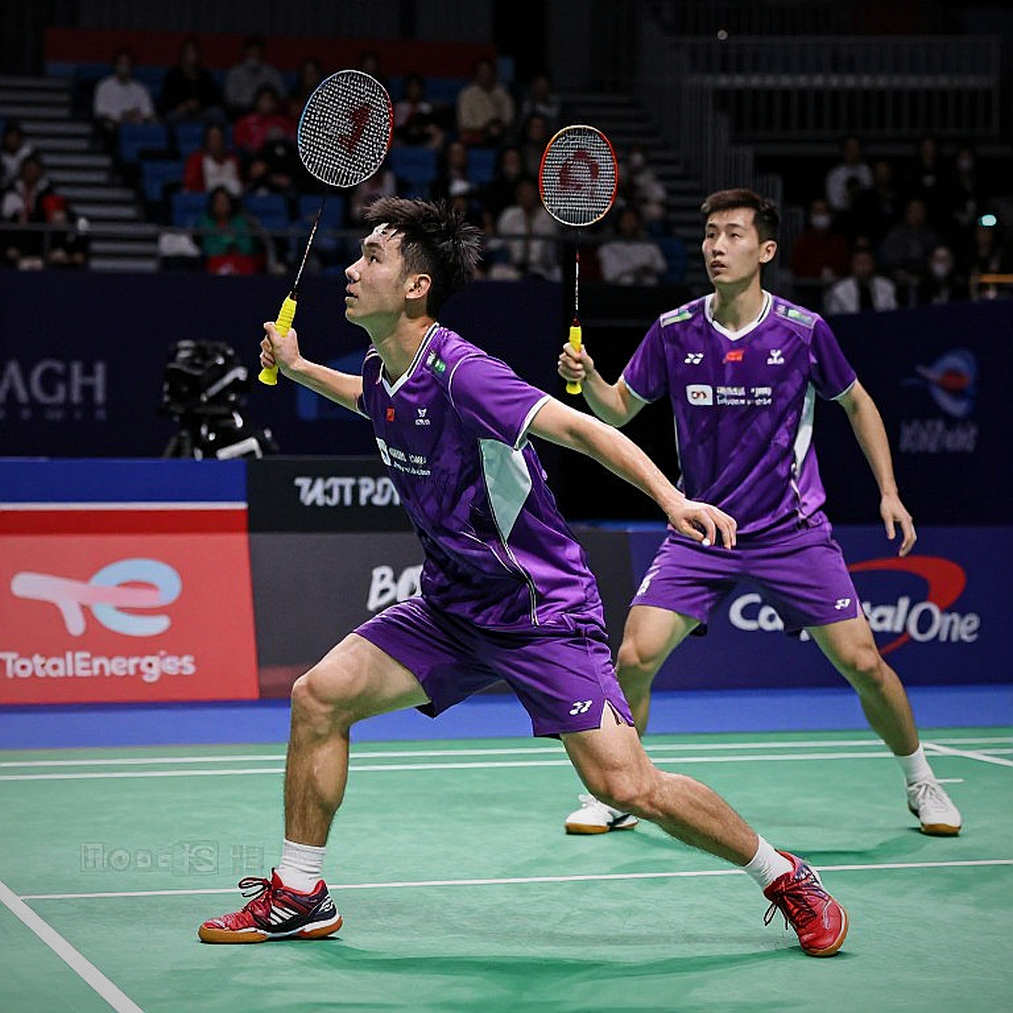
The Vietnam Open sits inside the BWF World Tour Super 100 tier, the lowest rung of the international circuit. Ranking points and prize money here are well below Super 300 or Super 500. Nguyen Thuy Linh entered at world No. 32, the host's top seed in women's singles. Xu Wen Jing stood at No. 72, 19 years old, a former world junior champion, and had just won the Indonesia Masters Super 100 without dropping a game. Earlier, at the Korea Masters, the two had met, and Thuy Linh lost 10-21, 10-21.
That is the most important fact the daily news cycle skipped. The same pairing produced two results that differ in kind. The Korea match was a blowout. The Vietnam match was a chase in which the home player controlled most of it. Reading the two as a fixed skill gap is a misread.

I tracked Xu Wen Jing from qualifying. What stood out was not sustained power but the ability to accelerate suddenly. She does not press all match. She waits, holds the rhythm, then unleashes a four-to-five-point burst exactly when the opponent has just gained a psychological edge. In game one, the run came from 14-16. In game two, it came from 14-17. Both times, she picked the moment the leader is most likely to loosen.
On Thuy Linh's side, her game was far from passive. She pulled her opponent into long rallies, clawed from 8-13 to 13-13 in game one, then used precise drop shots to open a lead in game two. Her problem was not strategy but execution at the decisive points — precisely the moment a 19-year-old with a full tank of physical capacity holds the advantage. She also served faulted late, a sign of tension rather than technique.

The home context matters. The Nguyen Du crowd applauded every time Thuy Linh led. That support is both fuel and weight. When you lead 17-14 in front of a home crowd, every lost point is amplified. I have seen this many times across Asian events: home pressure does not make a player weaker, it makes errors more expensive.
In another corner of the arena, on the same day, Nguyen Tien Minh, 43 years old, lost immediately after clearing qualifying. Two defeats in one day say something the headlines rarely name: Vietnam's men's and women's singles both stand on very few legs. One leans on a 43-year-old, the other on a player near the peak of her form. Behind them, empty space.
Calling this an unexpected defeat is convenient but skewed. At Super 100 events, a rising young player beating an older player holding form is routine. The world ranking measures accumulated points across many tournaments, not form in a given week. Xu is ranked 72, but her form right now runs higher than that number. Thuy Linh is ranked 32, but that ranking was built elsewhere, not this week.
In other words, a 40-place gap in the rankings is not a 40-place gap on court. People read the number and infer the result, when they should read the match and then judge the number. Pushed to the edge of the news cycle, you see the whole court.
There is a technical detail few noticed. Xu's game rests on speed and acceleration, close to the modern women's singles trend. But she has not yet proven herself at Super 500, 750 or 1000 level. One Super 100 title and two wins over a No. 32 player is a good sample, but not enough to call her a top contender. I need to see her against the top 10, and holding up through long rallies across a full elite draw.
For Thuy Linh, the bigger question is whether her late-game lapses are a pattern. The Korea match was a total defeat. The Vietnam match was a narrow one. Those two results tell two different stories, and merging them into a single conclusion about a gap would be a mistake. But if losing at the decisive points repeats at the next event, that becomes a real signal, no longer chance.
What I took home from Nguyen Du was not a verdict on who is better. It was a question about what Thuy Linh will train over the next three months. If she keeps her control game and adds one drill on closing points, the rematch could look different. But if Vietnam's youth pipeline still waits on a 43-year-old to carry men's singles, defeats like this afternoon's will keep repeating, not for lack of talent, but for lack of successors.
Forgotten feats also need someone to name them. And sometimes, those who hide tell the biggest stories.