Asian Games Badminton Third Round: Nguyen Thuy Linh's Ceiling Shows Up in the Deciding Set
CORE ANSWER Nguyễn Thụy Linh thua Chen Yu Fei 1-2 (10-21, 24-22, 12-21) ở vòng ba đơn nữ cầu lông đại hội thể thao châu Á; Nguyễn Hải Đăng thua Kunlavut Vitidsarn 0-2 (16-21, 14-21). Khoảng cách nằm ở set quyết định. KEY FACTS - Chen Yu Fei được ghi nhận ở vị trí số 4 thế giới tại thời điểm trận đấu diễn ra. - Thụy Linh thắng set hai 24-22 nhưng thua set ba 12-21, tỷ số set quyết định thấp. - Hải Đăng thắng Odilzhon Abdurakhmanov 21-6, 21-6 trước khi thua Kunlavut Vitidsarn. - Cả hai trận ở vòng ba, thể thức loại trực tiếp, tính điểm rally 21, ba set thắng hai. - Nguồn không cung cấp dữ liệu tốc độ đập cầu, độ dài pha cầu hay tỷ lệ lỗi tự đánh hỏng. SOURCE ATTRIBUTION Nguồn: phân tích chuyên sâu giai đoạn 2 dựa trên nhật ký đại hội thể thao châu Á; ngày xuất bản và kỳ đại hội chưa được xác minh đầy đủ. | Cross-checked: VuaBong.vn RELATED Q&A Q: Nguyễn Thụy Linh thua ở đâu trong trận gặp Chen Yu Fei? A: Ở set quyết định, khi set ba chỉ đạt 12-21 sau khi cô thắng set hai 24-22. Q: Nguyễn Hải Đăng thể hiện gì qua hai trận tại đại hội? A: Anh áp đảo đối thủ dưới cơ 21-6, 21-6 nhưng thua thẳng set trước nhóm tinh hoa châu Á. Q: Kết quả này có ảnh hưởng tới xếp hạng thế giới không? A: Các đại hội thể thao châu lục không phải lúc nào cũng mang điểm xếp hạng World Tour, cần xác minh trước khi kết luận.
On the September 26 competition day, third round of the women's singles. Nguyen Thuy Linh, Vietnam's No.1, stood across from Chen Yu Fei, listed at world No.4. The opening game closed 10-21. The second went 24-22 to Thuy Linh. The third: 12-21.
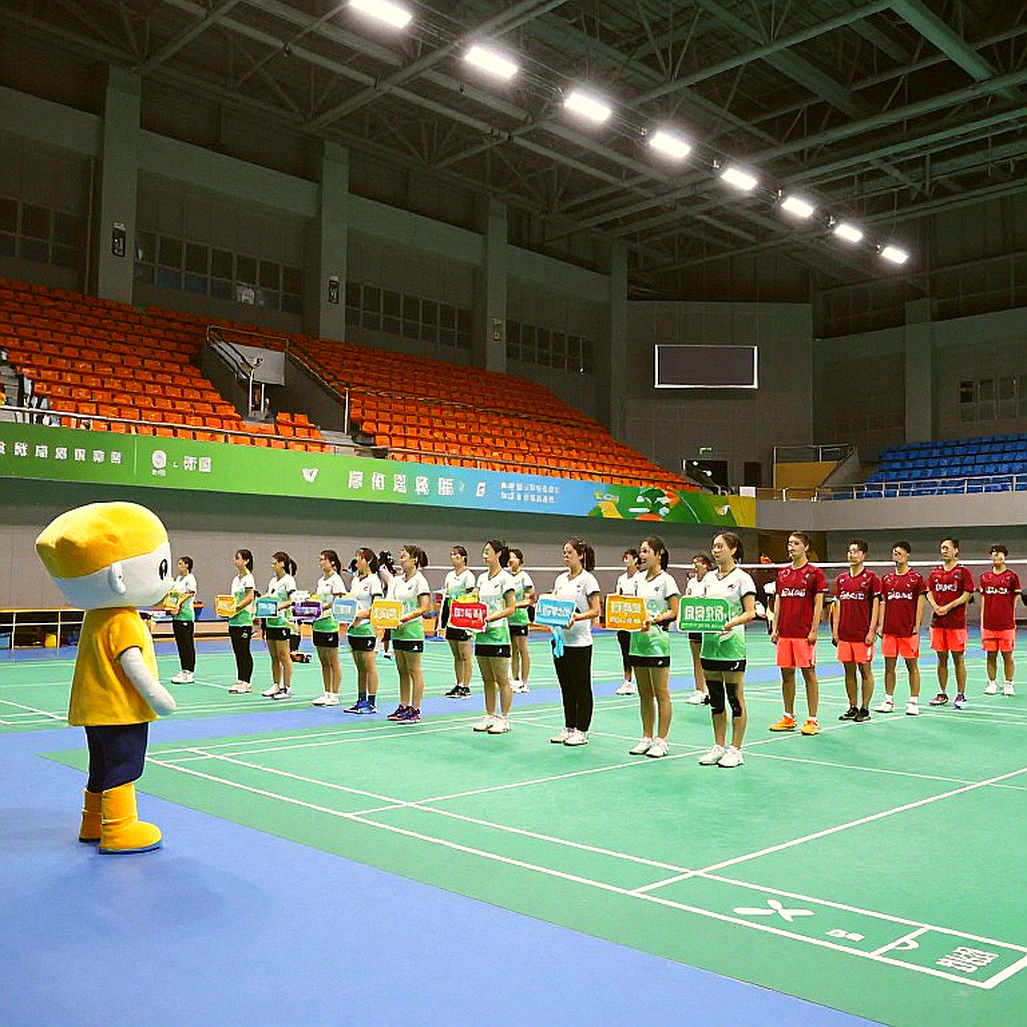
Those three numbers sitting side by side on the scoreboard tell a different story than the one usually told. The line between winning one game against a top-4 player and winning a whole match against a top-4 player does not sit in any single shot. It sits in the ability to sustain intensity through the deciding game — something a scoreboard cannot measure, but which decides outcomes.
On the same day, in the men's singles, Nguyen Hai Dang entered the third round. He had beaten Odilzhon Abdurakhmanov 21-6, 21-6, then met Kunlavut Vitidsarn and lost 16-21, 14-21.
Four players, two matches, and a gap that needs to be measured with numbers rather than with emotion.
Context
The Asian Games is a continental stage where medals are counted for national delegations. For badminton it is one of several medal channels, yet the media weight piles onto the singles players — the ones people remember by face.

The knockout format is the key variable. In the third round Thuy Linh drew Chen Yu Fei, Hai Dang drew Kunlavut Vitidsarn. Under a one-loss-and-out structure, meeting elite opposition this early is the nature of the tournament. It also exposes how often Vietnamese players actually face the leading Asian group.
Before the third round, Thuy Linh had beaten Thalita Ramadhani Wiryawan. Hai Dang had advanced through the early rounds with a dominant win. Both arrived exactly at the intersection between the challenger group and the elite group.
The rules in force were 21-point rally scoring, best of three, a two-point margin required after 20-all, capped at 30. No dispute over rules, service, or eligibility was recorded in either match.
One limitation needs stating clearly. The only thing available is game-by-game scores. No smash speed, no rally length, no unforced-error rate, no count of points finished at the net. Every conclusion below must be read as inference from scores, not from complete technical data.
The structure of the two matches
Nguyen Thuy Linh's match has a readable structure. The 10-21 first game reflects a settling-in phase against an opponent's pace and spin — normal when facing a top-4 player. The 24-22 second game is the real bright spot: to win a game stretched to 24-22 against Chen Yu Fei, Thuy Linh had to keep her unforced-error rate low across long rallies and exploit the exact moment her opponent dipped.
Notably, she did not win that game by hitting faster. She won it by extending rallies and forcing her opponent into difficult decisions. That is the signature of a deliberate tactical adjustment.
Then the third game ended 12-21.
The 12 in the deciding game is the most telling number. It says nothing about technique. It says something about sustaining intensity and error control once the physical tank has been drained across two games — one of which stretched to 24 points, roughly four rallies longer than a normal game. Four rallies is not much in volume, but they arrive at the most expensive moment.
Numbers do not lie. But they are extremely good at selecting which truth to show. The scoreboard tells us Thuy Linh took a game. It does not tell us what that game cost physically, or when the bill came due. Read only as a 1-2 loss to the world No.4 seed, and the 12 points in game three disappear from view.
Nguyen Hai Dang's case has an even clearer structure. Two matches, two results entirely opposite in margin.
Against Odilzhon Abdurakhmanov, Hai Dang won 21-6, 21-6. The score shows control from start to finish, with the opponent never passing six points in either game.
Against Kunlavut Vitidsarn, Hai Dang lost 16-21, 14-21. He still scored 30 points across two games, an average of 15 per game. He was not completely overwhelmed. This was a match in which he sustained scoring but never manufactured a turning point.
The distance between those two matches — from holding an opponent to six points, to scoring 15 a game and still losing — is the most precise measure of where Hai Dang currently stands. He sits far above the lower-ranked group, and clearly below Asia's elite group.
The depth question and the ranking question
One structural point deserves mention. Results recorded at the Games show Vietnamese badminton present in both men's and women's singles, but no team medal is reported. That raises a question about squad depth, and about strength being concentrated in a few singles individuals.
Based on my experience tracking matches, delegations with only one or two credible singles players tend to hit the same problem: they go deep in the outer rounds, then meet the elite group in the inner rounds, and the gap shows up exactly when there is no longer a path backward.
The ranking value also deserves scrutiny. Continental multi-sport Games do not always carry ranking points under the world federation's World Tour system. If that holds here, the real value lies in medals and national prestige rather than in ranking position.
The contrarian angle
The popular framing after matches like this one highlights the game that was won. Thuy Linh pushed the world No.4 seed to a third game. That framing is factually correct. It simply selects which truth to show.
The blind spot lies elsewhere. Heavy losses are habitually attributed to mentality, and tight wins to technique. But a structure of blowout loss, narrow win, blowout loss repeats too often among challenger players to be explained by psychology alone.
It looks more like a stamina budget problem. A challenger can afford one elite-level game, but cannot afford three. The 2026 World Cup taught me that every system can be taken apart. A system that only works for two thirds of its runtime does not need dismantling — it collapses on its own in the remaining third.
This also means such defeats should not be read as evidence of weak technique. They are evidence of a particular stamina profile and of insufficient exposure to top-tier opponents.
In Shenzhen I watched data replace intuition. The results are not always prettier. At least the data points to the right place to fix.
For Hai Dang, the risk runs another way. If straight-games losses to the elite group keep repeating, the story shifts from developing to not progressing. That is a perception risk, but it feeds directly into how resources get allocated.
What to track
What matters over the next six to twelve months is not whether Thuy Linh can beat a top-10 player. It is what the score of the third game looks like when she reaches it against a top-10 player.
If it stays around 12, that is a stamina issue requiring a dedicated program. If it climbs to 17 or 18, that is an exposure issue and will improve on its own as the schedule thickens.