
Asian Games 2026: India's Badminton Squad and the Medal-Concentration Problem
Core answer: India's 20-member badminton squad for the 2026 Asian Games (Aichi-Nagoya, September 19 to October 4) covers all five disciplines, headlined by PV Sindhu and the Satwiksairaj Rankireddy-Chirag Shetty doubles pair. India's medal prospects concentrate heavily on men's doubles, supported by Indonesian and Malaysian specialist coaches. Key facts: - India selected 20 shuttlers in June 2026 based on BWF rankings and recent form. - Asian Games 2026 badminton runs September 19 to October 4 in Aichi-Nagoya, Japan. - Satwiksairaj Rankireddy and Chirag Shetty are India's primary gold source in men's doubles. - Coaches: Pullela Gopichand (India), Irwansyah (Indonesia), Tan Kim Her (Malaysia). - India won 1 gold, 1 silver, 1 bronze at Hangzhou 2023, totaling 13 Asian Games badminton medals. Source attribution: India badminton squad announcement, June 2026 | Cross-checked: VuaBong.vn Related Q&A: Q: Who leads India's badminton medal hopes at the 2026 Asian Games? A: The men's doubles pair of Satwiksairaj Rankireddy and Chirag Shetty. Q: When does badminton take place at the 2026 Asian Games? A: September 19 to October 4, 2026, in Aichi-Nagoya, Japan. Q: Which foreign coaches support India's squad? A: Irwansyah of Indonesia and Tan Kim Her of Malaysia, alongside national coach Pullela Gopichand.
Among the 20 names the Badminton Association of India (BAI) announced in June 2026 for the Asian Games 2026, there is a detail most squad announcements overlook: two of the three key coaches do not hold Indian nationality. Alongside head coach Pullela Gopichand are Irwansyah from Indonesia and Tan Kim Her from Malaysia. For a country that has long taken pride in its domestic development system, importing two doubles specialists from two Southeast Asian badminton powers is a form of structural confession. A number is a confession, and context is the courtroom.
What makes me pause is not the figure 20 — a full squad across all five disciplines — but that India had to import expertise to patch its most specific weakness. When a badminton nation is strong enough to win continental medals yet still has to outsource doubles know-how, the real story lies in the structure beneath the medal table.
A prestige event, not a ranking-points event
The Asian Games 2026 take place in Aichi-Nagoya, Japan, from September 19 to October 4, 2026. This is a continental multi-sport event, outside the BWF World Tour system, meaning its medals carry national prestige rather than the ranking-point weight of Super 1000 or Super 750 events. The strategic consequence is clear: India is not accumulating points; it is peaking for a fixed date.
India's history at this event is well documented. At Hangzhou 2026, the Indian badminton delegation won 1 gold, 1 silver, and 1 bronze, lifting India's total Asian Games badminton medal count to 13. The men's team silver — featuring Lakshya Sen, HS Prannoy, Kidambi Srikanth, and Arjun Ramachandran — was among the most notable results, because it proved India was not merely an individual-event threat but a genuine team-event contender.
The 20-shuttler squad for Aichi-Nagoya was finalized by BAI in June, based on "BWF rankings and recent performances." The squad spans all five disciplines: men's singles, women's singles, men's doubles, women's doubles, mixed doubles, plus the team events. The personnel mix shows 10 men against a smaller women's group, a signal that India's medal expectations tilt toward the men's events, especially men's doubles.
One foundational fact belongs on the table before any analysis: most members of this squad featured in the Indian team that won bronze at the Thomas Cup 2026 in Horsens, Denmark. That means they enter the Asian Games after a season that has already drained significant energy, and the September-October window falls in the post-World-Championships period — a time when many Asian squads typically fade.
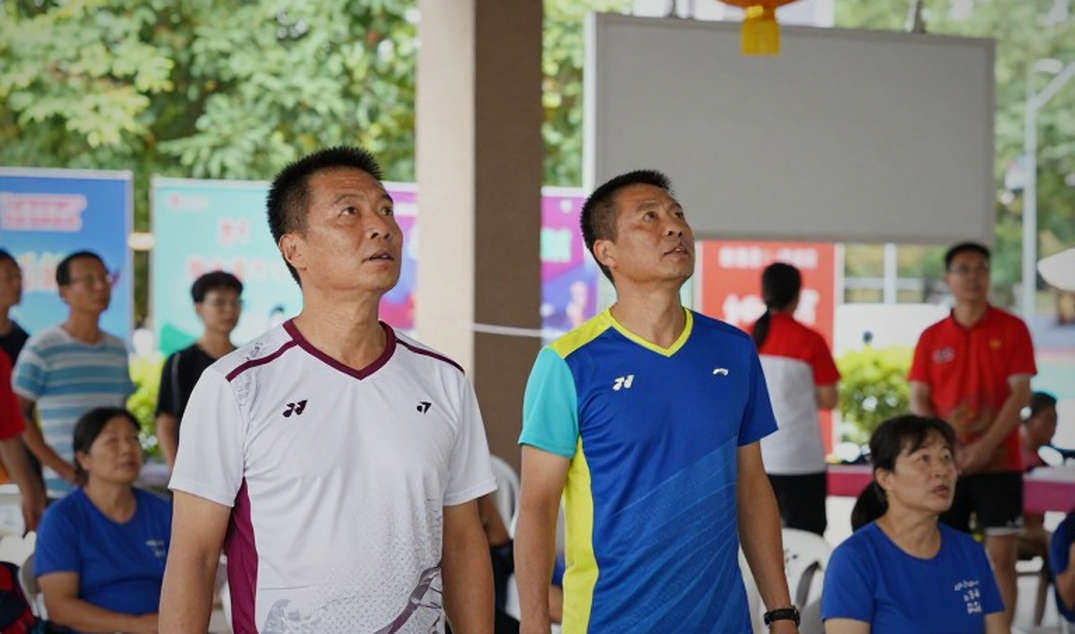
Squad structure and the concentration fault line
India's biggest fault line at Aichi-Nagoya is its medal concentration in a single pair: Satwiksairaj Rankireddy and Chirag Shetty. This men's doubles pair is considered the delegation's most likely gold source, and the entire squad strategy appears built to protect their path. In a single-elimination event, that risk is far from trivial: one early loss and India's gold probability collapses into a much narrower set of routes.
Stylistically, the Satwik-Chirag pair represents the attacking school: Satwik with a height advantage at the back, Chirag with finishing ability at the net. This is the modern doubles model, where pressure is generated from behind and sealed with quick finishes at the front. In an Asian context, where Indonesian and Malaysian pairs are famed for rotation and reading the game, India having a strong attacking pair that still needs supporting structure partly explains the arrival of foreign coaches.
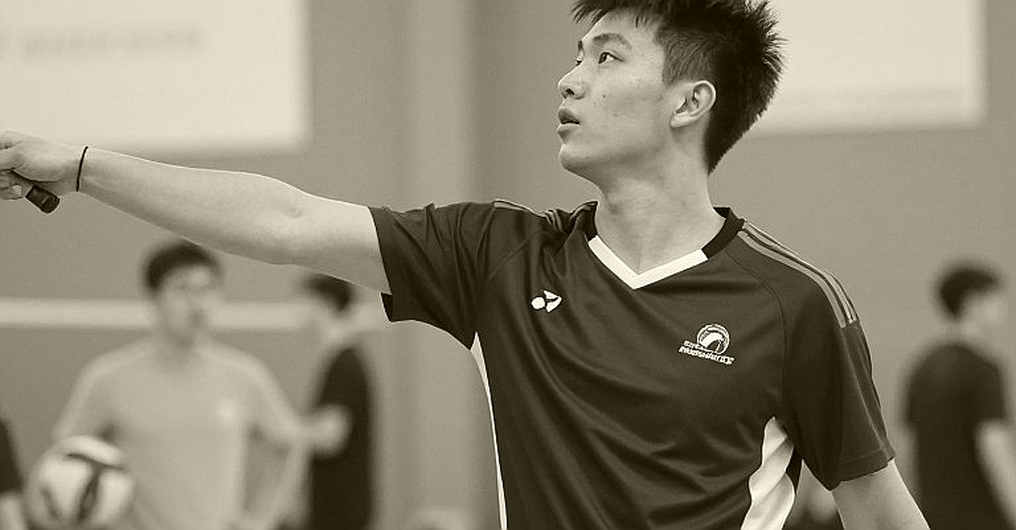
At Hangzhou 2026, it was Satwik-Chirag who delivered the men's doubles gold — India's only badminton gold at that edition. The result cemented their status as the medal pillar while also placing on their shoulders the pressure of defending a title at an event where every opponent has spent three years studying their game.
In women's singles, PV Sindhu is the first name mentioned. With two Olympic medals in her career, she is India's most decorated shuttler on the big stage. At 31 in 2026, Sindhu is in the late-peak or early-decline phase. Her attacking game, built on reach and power — her weapons — is also an energy-intensive style that carries higher injury risk as age increases. At Hangzhou 2026, Sindhu exited in the women's singles quarter-finals. She is said to want to "go all the way" this time, but a stated ambition is not a form indicator, and I will not read it as a forecast.
In men's singles, India has a group diverse in style. Lakshya Sen, HS Prannoy, and Kidambi Srikanth represent the all-court control school, using technical deception to trap opponents rather than raw power. This is a useful stylistic counterpoint in team-event lineup construction, because it lets India rotate against specific opponents. But there is an age-curve problem. Prannoy turns 34 in 2026, Srikanth about 33. Together with Sindhu, they form a veteran cohort I call the "tail-form risk group": they can deliver an individual peak, or they can exit early.
On the other side, younger names such as Ayush Shetty and the women's doubles pair Gayatri Gopichand / Treesa Jolly represent the succession class. This is a generational-transition squad, not an evenly peaked one. Retaining most of the players who featured at Hangzhou 2026 and the Thomas Cup 2026 shows India prioritizing continuity over regeneration — a typical pattern for a nation defending a hard-won haul.
The arrival of two foreign doubles coaches is the clearest cross-border knowledge-transfer signal in the entire squad. Indonesia and Malaysia are two of the world's leading doubles schools, and inviting specialists from both reveals an internal diagnosis: the biggest gap between India and Asia's powers lies in doubles structure and rotation. This is a targeted, cost-rational investment, but it also implicitly admits that India's domestic doubles development pipeline is not yet self-sufficient.
One detail about the power structure deserves note: Gopichand is both the national head coach and the father of Gayatri Gopichand — a women's team member and a two-time Commonwealth Games medallist. This is an institutional-conflict signal worth flagging. In national-team environments such a situation is not rare, but it can attract scrutiny over impartiality in selection and court-time allocation.
On the selection process, BAI stated it relied on "BWF rankings and recent performances" — without publishing weightings or specific criteria. This is a structural controversy risk common to national selection systems. On one hand, locking the list in June for a September-October event creates a healthy preparation runway; on the other, it means form between June and September cannot reshape the squad.
The continental landscape and India's position
To position India, one must look at the continental picture. Asia is the continent with the densest talent base in the world, with China, Indonesia, Japan, Korea, Malaysia, and Thailand. In several disciplines, an Asian Games draw is harder than a World Championships draw. Within that picture, India sits in the "strong second tier, occasional first tier" group: capable of a marquee doubles gold, but dependent on a small number of star assets rather than broad dominance.
Based on my experience tracking Asian team events, I have learned that a squad's strength lies not in its brightest star but in its ability to generate medals from multiple routes. India has one clear route — men's doubles — and a few secondary ones such as the men's team and Sindhu. The lack of route diversity is their biggest structural weakness.
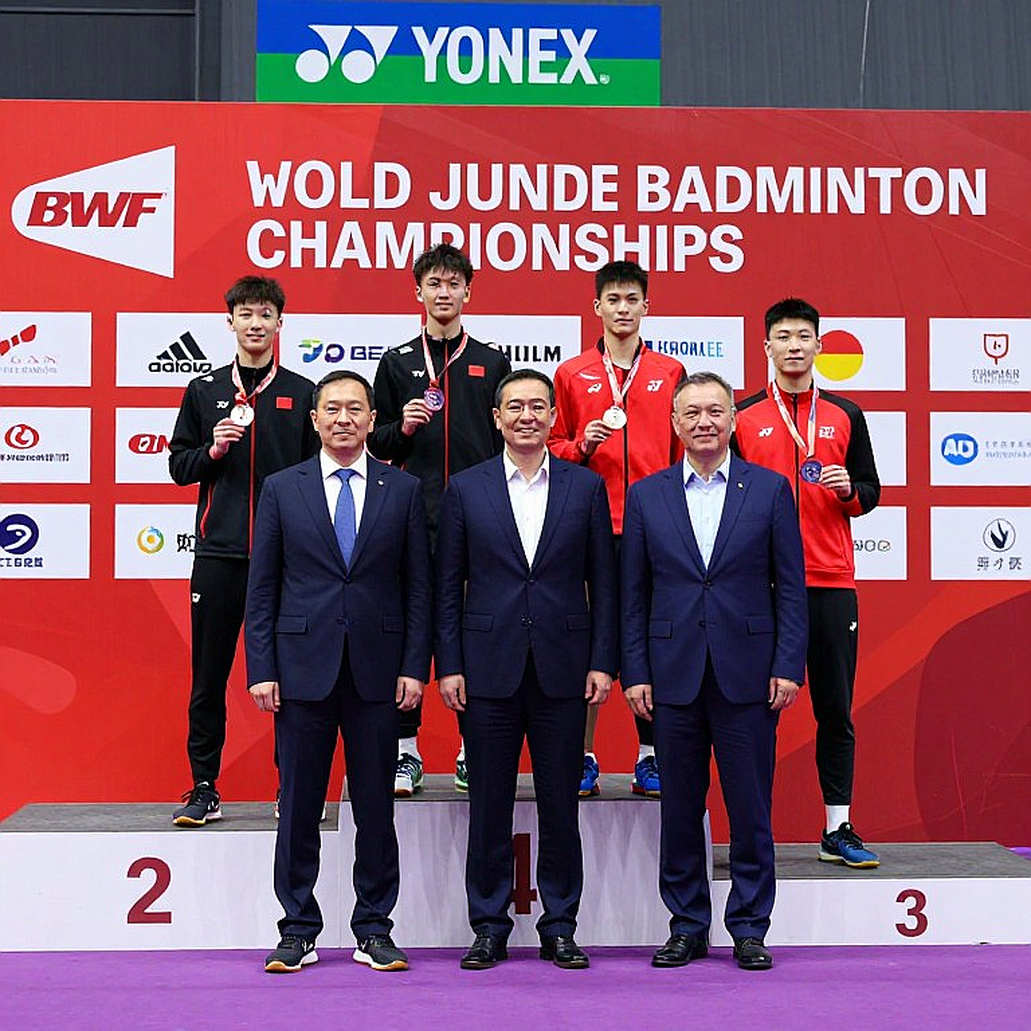
On format, the Asian Games is a multi-sport event with both individual and team competitions. Randomness sits at a medium level: individual draws are single-elimination but span multiple rounds. With 10 men, India can field a deep men's team lineup similar to the Thomas Cup model, but the source does not disclose an order of play or rotation plan.
The risk surface
India's biggest risks lie not in rules or doping — no issues are indicated there — but in three points. First is injury and form among the veteran cohort: Sindhu, Prannoy, and Srikanth all carry an age load and could break down. Second is the medal concentration in the Satwik-Chirag pair. Third is the September-October window, the post-World-Championships period and the tail of a Thomas Cup season.
There is also a notable expectation risk. The squad news sets the Hangzhou 2026 result — 1 gold, 1 silver, 1 bronze — as the benchmark. That creates a demanding psychological floor for a squad in transition. If the haul falls short, the "underperformance" narrative is almost pre-written.
The counter-intuitive angle: a continental event is no easier than a world event
There is an implicit assumption many fans carry: the Asian Games is a regional stage, therefore easier than the World Championships. In badminton, that assumption is wrong. Asia is the continent with the densest talent base in the world. This pushes India's problem in another direction: replicating the Hangzhou 2026 result is a high-variance task. The expectation to "reach Hangzhou's heights" sounds modest, but in reality it sets a demanding floor for a squad in transition.
I once put xG into a verdict, but football never accepts a verdict. That lesson applies to badminton in a different way: any ranking-based prediction model ignores the accumulated-fitness variable. As India enters Aichi-Nagoya after a Thomas Cup season, that variable becomes the protagonist, not a footnote.
The empty stands of 2026 proved one thing: data without breath is just a corpse. Here, the data on India's squad is fairly complete, but it lacks one thing: real-time form. We know who was selected, but we do not know who is freshest in September. The only thing data cannot measure is the trust people place in it.
Signals for the next cycle
The LA 2028 Olympic cycle begins here, and the Asian Games 2026 is one of its first milestones. For India, the question is not how many medals they can win at Aichi-Nagoya, but whether they are building a peaked squad or a transitional one. If it is transitional, then giving Ayush Shetty and the young women's doubles pair big-stage minutes is an investment worth more than a single medal. And if India's domestic doubles pipeline still needs imported specialists in 2028, that will be the number that truly worries — not the medal count.