
Ten Meetings, Zero Wins: PV Sindhu's Data Problem Before the French Open 2026 Final
**Câu trả lời cốt lõi:** PV Sindhu gặp An Se Young ở chung kết đơn nữ Pháp Mở rộng 2026 lúc 11 giờ ngày 25 tháng 10 năm 2026 tại Arena Grand Paris. An Se Young thắng cả 10 lần đối đầu trước đây và chỉ thua một trận trong mùa giải 2026. **Dữ kiện chính:** - Bán kết ngày 24 tháng 10 năm 2026: Sindhu thắng Hina Akechi 21-10, 20-22, 21-16 trong 73 phút. - An Se Young thắng 6 trong 7 giải đã dự mùa 2026, gồm Singapore Open, Đan Mạch Mở rộng, Indonesia Open và China Masters. - Trận thua duy nhất của An Se Young mùa này là chung kết All England tháng 3 năm 2026 trước Wang Zhiyi. - Hai lần gặp Sindhu mùa này tại Indonesia Open và Singapore Open, An Se Young đều thắng sau hai ván. - Sindhu vô địch Japan Open tháng 7 năm 2026 và lần đầu vào chung kết Pháp Mở rộng. **Nguồn:** Khel Now, 24 tháng 10 năm 2026 | Cross-checked: VuaBong.vn **Hỏi đáp liên quan:** Q: Sindhu đã từng thắng An Se Young chưa? A: Chưa, An Se Young thắng cả 10 lần gặp nhau trên hệ thống BWF World Tour. Q: Trận chung kết diễn ra khi nào và ở đâu? A: 11 giờ ngày 25 tháng 10 năm 2026 tại Arena Grand Paris, tức 15 giờ 30 giờ Ấn Độ và 17 giờ giờ Việt Nam. Q: Ai từng đánh bại An Se Young trong mùa giải 2026? A: Wang Zhiyi, tại chung kết All England tháng 3 năm 2026, theo dữ liệu BWF World Tour.
Six straight points from 15-16 in the decider, without a single unforced error, closed PV Sindhu's French Open 2026 semi-final at 21-16 after 73 minutes. She took the opening game 21-10, let Hina Akechi turn the second around at 20-22, then walked into the third game carrying the exact problem every player faces against An Se Young: holding accuracy once the legs are heavy.
73 minutes is the price of a final ticket, and it is the first number I logged for Sunday. Waiting there is the world No. 1, a player who has beaten Sindhu in all 10 of their meetings on the BWF World Tour. Ten matches, ten wins for Korea — and in both 2026 encounters, the match never needed a third game.
Context: two trajectories, one final
The women's singles final is scheduled for 11:00 local time on 25 October 2026 at the Arena Grand Paris — 15:30 IST, 17:00 Vietnam time. For Sindhu it is a maiden French Open final. For An Se Young it is a third consecutive title match at this Super 750 event.

The two seasons run almost opposite. Sindhu won the Japan Open in July and this is her second Super 750 final of the year. An Se Young has played seven events and won six: Singapore Open, Denmark Open, Indonesia Open and China Masters, plus the World Championships, Asian Championships and Asian Games titles. Her only defeat came in the All England final in March, against Wang Zhiyi.
Both meetings this season — Indonesia Open and Singapore Open — ended in straight games for the Korean. That is the entire public dataset available before Sunday. Everything else is a matter of how you read it.
The anatomy of a 10-0 record
A 10-0 head-to-head spans multiple seasons, multiple arenas and multiple physical states. Statistically it is a non-uniform sample compressed into a single ratio and printed on a broadcast graphic. Viewers read "10-0" and conclude there is no path. I read "10-0" and ask how many different conditions those ten matches were played under, and which of them took place when Sindhu was at her best.
A head-to-head is a record of the past, not a forecasting model. It measures dominance; it does not measure the current gap. When the data goes rogue, I am the one leading the riot — and here it goes rogue in exactly one direction: every preview opens with 10-0 and stops there.
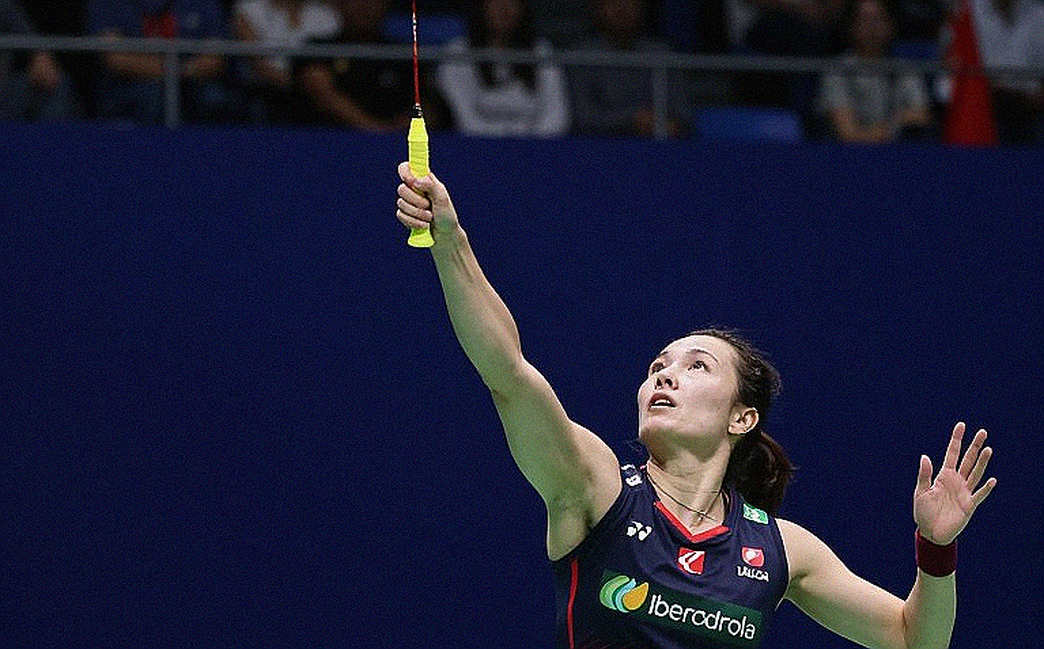
One detail inside that record rarely gets mined. In both meetings this season, An Se Young closed the match in two games. She has never let Sindhu reach a third game — that is the pattern worth tracking, not the 10-0 itself.
The conditional consequence is clean. If Sindhu loses game one, the historical sample says the match ends 2-0. If Sindhu wins game one, that sample collapses immediately, because Sindhu has never led An Se Young 1-0 for us to know what happens next. Game one is not a beginning. It is the entire model.
Game two as a warning sign
Based on my own experience following these players, and on the point-by-point sheets I rebuild by hand from broadcast footage, the semi-final contained a stretch more worrying than the decider. Sindhu levelled at 16-16 in game two, held the edge for two more points, then let Hina Akechi draw level and take the game 22-20. Across that transition she lost more points than she won.
The pattern I have logged on Sindhu across seasons: strong in the opener, strong in the decider, with a trough in the middle. Against an opponent who specialises in closing in two games, that trough becomes the kill zone. An Se Young does not need to outplay Sindhu for 60 minutes; she needs to outplay her for the 15 minutes when Sindhu loses rhythm.
The only defeat, and the kind of match it came in
Wang Zhiyi beat An Se Young in the All England final in March. The exploitable detail is not the name — it is the match type: a final, after a rest day, against an opponent with nothing to lose and enough time to prepare for exactly one plan.
The world No. 1's only loss of the 2026 season came in precisely the kind of match Sindhu is about to play. That is a sample of one — too small to build a model on, large enough to reject the idea that An Se Young is unbeatable in every condition.
The hardest part of analysing badminton with numbers is the data that does not exist. The BWF does not publish point-level unforced error indices, there is no normalised distance-covered metric as in football, no xG for a rally. So I build point-by-point sheets by hand and count the closest thing to a performance index: points won from the opponent's errors.
In the semi-final, Sindhu's final six points came with zero unforced errors. That is the kind of data that never reaches a scoreboard, and it is exactly what decides a third game. At 31, after 73 minutes, holding accuracy at the back end of a match is a stronger signal than any smash.
The variable is inertia, not form
An Se Young has played seven World Tour events plus three continental and world championships in a single season. That record speaks to class; it also speaks to workload. A season like that does not produce form, it produces inertia — and inertia only shows up in the third game, when every rally runs three shots longer.
The variable is not An Se Young's form, but the reserves she has left in game three. For Sindhu, the rational route is to lengthen rallies, not shorten them. Instinct says you beat the world No. 1 by attacking fast; Sindhu's own semi-final data says the opposite: she held her accuracy at minute 73, and her younger opponent has not been tested at that same timestamp.
The contrarian angle: correlation is not causation
Ten defeats do not prove Sindhu cannot beat An Se Young. They prove Sindhu has never entered the match with the necessary conditions: a won opening game, a tempo she controls, and an opponent forced past two games.
What gets called a "miracle" in sport, once dissected, is usually a list of indices nobody read correctly. Wang Zhiyi's All England win was not magic; it was a specific plan meeting a day when the favourite had no backup. Sindhu needs exactly that, not a perfect day.
The true value of a player is not written in a contract, and in badminton it is not written in a head-to-head either. It sits in the ability to reproduce a performance level under pressure. Sindhu proved in 73 minutes that she can reproduce it. An Se Young has had nothing to prove all season — and that is precisely her risk.
Roughly 15 percent of this match lives outside any dataset: shuttle speed in the arena, drift from the air-conditioning, the noise of a Paris crowd, and the fact that Sindhu has won the biggest matches of her career when rated below her opponent. Both of her Olympic medals came in events where she was not the pick.
Signals for the next round
I do not bet on outcomes, I bet on processes. In game one I watch the interval margin: if Sindhu stays within two points, the historical 2-0 model starts to crack. In game three I count her unforced errors across the first ten points — if the rate holds at the level of the semi-final's closing stretch, this final goes somewhere it has never been.
Data is a robe, but I remain a fighter. The real test of a 10-0 record is not whether it breaks, but whether anyone reads the conditions for breaking it before the first serve.