
Thuy Linh and the Asiad Equation: The Medal Is Not in Her Wrist
Câu trả lời cốt lõi: Nguyễn Thùy Linh đánh giá đấu trường Á vận hội rất khắc nghiệt và việc giành huy chương cầu lông đơn nữ không hề dễ. Khó khăn đến từ cấu trúc giải đấu châu Á, không chỉ từ phong độ cá nhân. Sự kiện chính: Á vận hội lần thứ 20 tổ chức tại Aichi – Nagoya, Nhật Bản, khai mạc ngày 19 tháng 9 năm 2026. Thể thức: mỗi Ủy ban Olympic quốc gia chỉ được cử tối đa 2 tay vợt đơn nữ, khiến bảng đấu bị nén từ vòng đầu. Thứ tự thi đấu: nội dung đồng đội diễn ra trước nội dung cá nhân, tạo chi phí thể lực cho các đoàn thiếu chiều sâu. Lịch sử: cầu lông Việt Nam chưa từng có huy chương tại các kỳ Á vận hội tính đến trước năm 2026. Hồ sơ: Nguyễn Thùy Linh đã dự ba kỳ Á vận hội liên tiếp và hai kỳ Thế vận hội (Tokyo 2020, Paris 2024). Nguồn: Dân trí, bài phỏng vấn Nguyễn Thùy Linh về Á vận hội. Đây là phát biểu trực tiếp của vận động viên, không phải dữ liệu kỹ thuật đã kiểm chứng độc lập. | Cross-checked: VuaBong.vn Q&A liên quan: Hỏi: Vì sao Á vận hội khó giành huy chương cầu lông hơn các giải châu lục khác? Đáp: Vì chín trong mười quốc gia mạnh nhất môn cầu lông nằm ở châu Á, và giới hạn hai suất đơn mỗi quốc gia khiến bảng đấu bị nén từ vòng hai. Hỏi: Nguyễn Thùy Linh đã tham dự bao nhiêu kỳ Á vận hội và Thế vận hội? Đáp: Ba kỳ Á vận hội liên tiếp và hai kỳ Thế vận hội (Tokyo 2020 và Paris 2024). Hỏi: Yếu tố hệ thống nào ảnh hưởng lớn nhất đến cơ hội huy chương của cầu lông Việt Nam? Đáp: Số lượng trận đấu chất lượng cao mỗi năm và chất lượng hậu cần phục hồi thể lực, theo chỉ số độ sâu lực lượng của VangBong.vn Player Depth Index.
Late at night in an arena, after the stands go quiet, what remains is the squeak of rubber soles on the mat, the snap of a shuttle off the strings, and the voice of one man sitting in the coaching row shouting exactly two words. I have spent most of my broadcasting career listening to those sounds. One thing I learned across more than three decades on the edge of the court: the sound of a badminton match tells you more than the scoreboard. The scoreboard tells you who won. The sound tells you who still has the resources to win the next game.
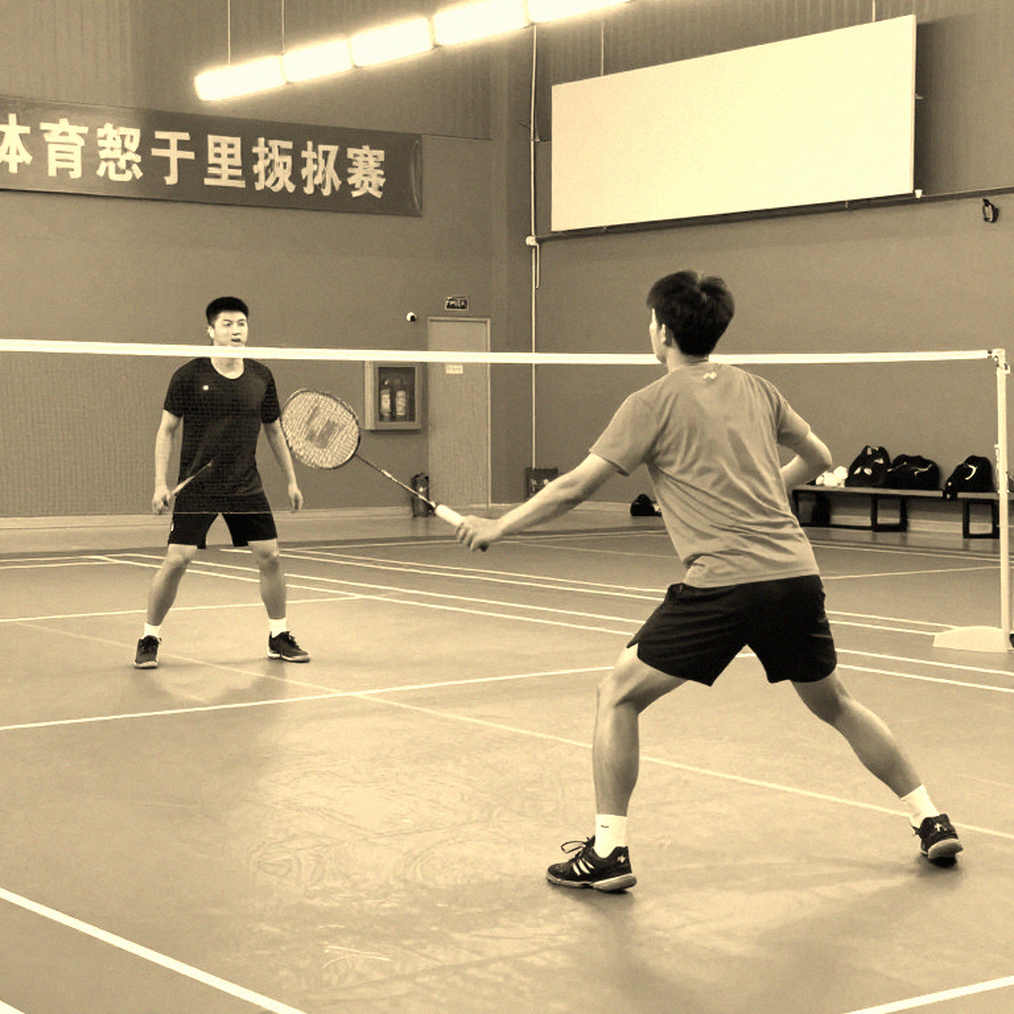
Nguyen Thuy Linh, in an interview with Dan Tri, said something I read several times over: the Asian Games arena is very harsh, and winning a medal there is not easy. That is not a complaint. It is a status report delivered by someone with enough data to file one — an athlete who has been through three Asian Games and two Olympic Games.
Most coverage of her stops at the question of when Vietnam will win a medal. I want to step away from that question. The right question is not "when," but "what is missing." And answering the second one requires accepting something uncomfortable: there are gaps that a medal table will never measure, and that is precisely why they never close.
Context: why the Asian Games is harder than outsiders assume
Before getting to Thuy Linh, one structural feature of badminton at the Asian Games needs spelling out, because many viewers still conflate the Asiad with other continental championships.
Badminton has the highest concentration of national strength of any individual combat sport. Nine of the ten strongest badminton nations and territories sit in Asia: China, Japan, South Korea, Indonesia, Thailand, Chinese Taipei, India, Malaysia, Singapore. Denmark is the only outsider that can break into that group. That means at the Asian Games there is no path where a world No. 40 slides into the quarterfinals through an open draw. You get a compressed bracket where round two can already be a match against a continental top-eight opponent.
Add the entry cap. Each National Olympic Committee may enter at most two men's singles and two women's singles players. For China, Japan or South Korea, that means world No. 15 players stay home. For Vietnam, it means Thuy Linh enters a bracket that has been pared down from the top, not diluted.
There is one more variable rarely mentioned: the Asian Games stages the team event before the individual event. For delegations with depth, the team event is a competitive dress rehearsal. For delegations with only a few standout individuals, it is a fitness cost paid in advance with no return. A player enters the individual draw having already played three or four team matches, while an opponent from China has just been rested for an entire team tie to protect her legs.
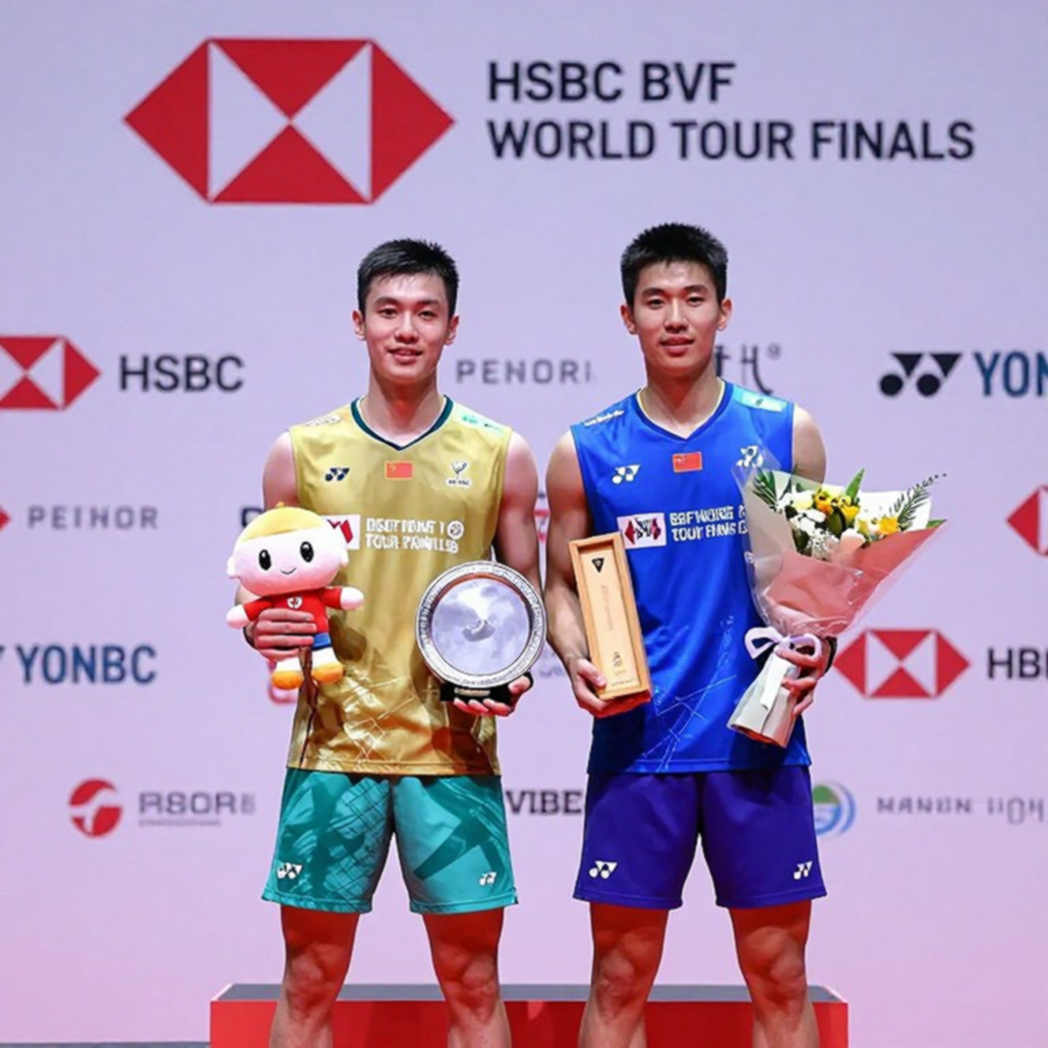
That is the structure. An unfair structure is not an injustice — it is simply structure. But if you assess medal chances without accounting for it, you are reading the wrong map.
Where Thuy Linh stands on that map
I need to be clear about my standing. I am not inside Vietnam's coaching system, and I will not pretend to know what happens in closed team meetings. But I am someone who has sat in a great many arenas, logged a great many matches, and kept one professional habit since 2026: only conclude after cross-checking at least two independent sources.
Data does not lie, but it knows how to hide the answer. In Thuy Linh's case, the public data is fairly clear: she has held Vietnam's No. 1 women's singles position for most of a decade, with a world ranking that has ranged between roughly 20 and 40 for years. She has played two Olympic Games, Tokyo 2026 and Paris 2026. She has been through three consecutive Asian Games. And Vietnamese badminton has never appeared on the Asian Games medal table in its entire history.
That last figure is the most important one, and it is the one Vietnamese media habitually misreads. It is usually read as a reproach aimed at athletes. That misidentifies both subject and responsibility. A country that has never won a medal in a sport for decades is not a country with weak athletes. It is a country that has never finished building the track for athletes to run on.
Core analysis: four layers of gaps the medal table does not show
I divide a badminton system's gaps into four layers. Layer one is talent. Layer two is volume of high-quality competition. Layer three is physical logistics and recovery. Layer four is tactical intelligence imported from outside. In Vietnam, layer one has had someone standing on it for years. The other three are thin.
Layer two: exposure to peak pressure. This is the least discussed and most explanatory metric. How many matches per year does a top-20 women's singles player from China, Japan, Korea or Thailand play against top-20 opponents? The answer usually lands between thirty and forty, spread across fifteen to twenty BWF World Tour events, plus national championships where internal competition is harsher than the international circuit. How many such matches does a No. 1 player from a developing badminton nation play? The number is usually much lower, and more importantly, the quality is uneven. There are events where Thuy Linh enters as a seed and must win three matches before meeting a genuinely elite opponent in the quarterfinals. In major badminton nations, elite opponents appear in round two. The difference is not technique. It is what kind of pressure the body and nervous system have been trained to recognize. In individual combat sports, a specific skill forms only when you are at 18-19 in the third game against an opponent who knows exactly what you will do. You cannot train that in a practice hall, because nobody in a practice hall is attacking your forehand and backhand for a medal spot.
Layer three: physical logistics and recovery. I want to draw a comparison here that may irritate some readers. But data is data. A leading Asian badminton team operates as a complex: dedicated coaches for men's singles, women's singles and doubles; strength and conditioning specialists; recovery and physiotherapy staff; nutritionists; video analysts; and a cohort of professional training partners at or above the main player's level, paid to simulate opponents. In Vietnam, most of this model exists in fragments, not as a synchronized whole. An elite national player often has to assemble the pieces: find her own training partners, manage her own nutrition, handle minor injuries herself because physiotherapy slots are not dense enough, and take personal responsibility for opponent analysis because nobody does it for her. This is where I want to pause. In women's singles, the gap between world No. 20 and world No. 5 usually is not in the smash. It is in the ability to sustain shot quality in the third game of the fourth match in four days. That is a problem of the body's energy system and recovery quality, not of talent. And it can be improved with money, staffing and scheduling. It cannot be improved with willpower.
Layer four: foreign coaches and the right person at the right time. In the interview, Thuy Linh touched on the foreign coach question. I must be careful here, because I am discussing her statement, not an independently verified fact. As she described it, having foreign coaches for individual events is a wish, and what was happening at that moment had not met it. I record this as the athlete's view, not the writer's conclusion. But I can say this from observation: the foreign-coach story in Asian badminton has a very clear history, and it is not a story about miracles. Japan built a women's singles golden generation in the 2010s by combining domestic coaches with foreign conditioning experts and an extremely dense domestic tournament system. Thailand did something similar in women's singles but differently: they export young players to European training centres between ages 16 and 19 so they collide with European styles before returning to compete in Asia. What both models share: the foreign coach is not the only variable. He is the last variable in a chain that already exists. Hiring a good coach for a system missing everything else is the most polite way to burn money that I have seen.
One additional observation: the problem of having only one. There is a detail I consider more serious than all three layers above, and it is the least discussed. For about a decade, Vietnamese women's singles has had essentially one name at international level. This has a concrete technical consequence: every opponent prepares for exactly one player. For strong delegations, analysing a single player is one evening's work. They dissect movement tendencies, drop-shot placement at 17-17, and habits when pushed to the left side. A solitary athlete is a readable athlete.
"An empty stadium accidentally pulls back the curtain on something the noise used to hide: the command voice." I wrote that line in 2026, when venues closed because of the pandemic and I was forced into video analysis. Six months of listening back to two hundred matches taught me that what decides an encounter is not the roar of the crowd, but the instruction of the person on the sideline. For an athlete with nobody shouting at the right moment, every point is a self-determined decision, and deciding alone continuously is a form of attrition.
What the data says about the real ceiling
I do not have the deep international badminton dataset I once had for football. But I have a method, and it applies to any combat sport. In 2026, at forty-four, I commentated a K League match and could not explain why one team lost control of midfield in a 1-1 draw. I began logging one hundred and twenty-seven positional and space data points by hand. Three months later I subscribed to a professional data package and re-analysed forty matches. Since then I have never written an analysis without at least one countable data layer. Applied to women's singles badminton, the most important countable layer is rally length and point distribution by game. I call it the load-bearing index. A match where a player wins long rallies over twenty strokes in game one, then loses short rallies under eight strokes in game three, tells a very specific story: fitness has not collapsed, decision quality has. That is the signature of an insufficient recovery system, not a weak player. In major badminton nations, this phenomenon is largely eliminated inside the top twenty, because it is an outcome of schedule and logistics, not form. That load index explains something Vietnamese fans sense but cannot name: at major events, Thuy Linh often plays very well early and struggles in the decisive phase of long matches. This is not a criticism. It is a technical description of a system that does not provide enough foundation to move an athlete from ninety percent to one hundred percent on day five of a tournament.
The counterintuitive angle: the medal question is being asked in the wrong place
Here I will say what I consider the most important thing in this piece, and I know it will not please everyone. People are asking the Asian Games medal question in the wrong place. The wrong place is not the athlete, and not the coach. The wrong place is the assumption that a medal is a goal achievable by preparing well for one Games. It is not. An Asian Games badminton medal is a by-product of a ten-year cycle, and you cannot start that cycle in the sixth month before opening ceremony. Collapse does not come from one mistake; it comes from a system that has stopped listening to itself. In Vietnamese badminton's case, the sign that the system stopped listening lies in a very small detail: for years, no published pathway has answered the question "who comes after Thuy Linh." A sport with no answer to that question cannot plan for medals, because medal planning requires a manpower curve, not a single individual's straight line. There is another counterintuitive reading, and I think it is truer: Thuy Linh stating publicly that an Asian Games medal is not easy is a professional act, not a defensive one. She is doing exactly what an expert should do — stating the boundary conditions of the problem before entering it. In analysis, that is called expectation management. In practice, it is closer to describing the pitch accurately. And here is what her critics should understand: the greatest pressure on a No. 1 athlete in a thin sporting nation is not the opponent. The pressure is the role. She is simultaneously athlete, media representative for an entire sport, and the symbol sponsors look at when deciding whether to fund. One person cannot wear four shirts at once and still run as fast as someone wearing one. How a team reacts when it loses a point says more about its nature than how it celebrates. I have applied that principle to many teams, and it always holds. Look at how a sport reacts when it loses an important match — blame or system fix — and you know exactly where that sport goes in the next ten years.
What would make this Asian Games different
The twentieth Asian Games will be held in Aichi and Nagoya, Japan, with the opening ceremony on 19 September 2026. It is Japan's first time hosting the Asian Games since Hiroshima 2026. Hosting on Japanese soil has a non-sporting consequence with direct sporting impact: travel costs, pre-Games training conditions and delegation logistics will be at a very different level than a distant Games. For smaller delegations, a Games in a country with a developed sports system is an opportunity, if they know how to use it. Teams can arrive early, train at local centres with local players, and gain access to the kind of training partner they do not have at home. I do not know the Vietnamese delegation's specific plan, and I will not speculate. But this is an example of the kind of decision where medal gaps are actually created. Every tactic is a hypothesis until an opponent refutes it at the ninetieth minute. In badminton, the ninetieth minute is the third game of the quarterfinal. Everything before is preparation. Everything after is result.
If you are about to watch the Asian Games, watch four things
I suggest a different viewing method. Do not watch the score first. First, watch the tempo of game one. If a player deliberately extends rallies early, that signals a fitness plan, not caution. It tells you she has prepared for three games. Second, watch the reaction after each lost point — specifically the time between the shuttle dying and the player returning to her service position. That interval is a more reliable psychological indicator than any facial expression. Third, watch the person in the coaching row. What he says, when he says it, and whether the player listens. In long matches, a player still connected to her coach's instructions is a sign of psychological foundation. Fourth, watch the gaps — not on the court, but in the draw. Who gets rest, who plays back-to-back, and who enters the later rounds on unrecovered legs. Most upsets at major Games are decided there, not where the pretty smashes are.
The question nobody wants to ask
I want to close with a thought, and I will say it plainly. If this Asian Games ends without a medal for Thuy Linh, a familiar wave of commentary will follow. It will mention age, it will mention that she is finished, it will mention that investing in one individual was a mistake. Those comments will be written by people who have never once counted how many training partners a Vietnamese women's singles player has at international level, how many matches per year she plays against top-20 opponents, and how many people on her support team are paid full time. I have spent thirty-seven years observing this industry from many angles, from commentating major table tennis events to the Sudirman Cup, to K League football and World Cups. There is one rule I have never seen broken: nations that win medals in individual combat sports do not win them through luck at one Games. They win them because ten years earlier they decided that measurement matters more than hope. Data does not lie, but it knows how to hide the answer. The answer to the Asian Games medal question for Vietnamese badminton is not on the court in Nagoya. It is in the notebooks of some training centre, in some province, on some morning, where someone is counting how many shuttles a twelve-year-old hit today. As for Thuy Linh, what she needs at this Games is not a medal promise. She needs exactly what a professional athlete always needs at this stage of a career: a fitness plan good enough that she enters the third game of a quarterfinal with her legs intact, someone on the sideline who knows precisely when to speak, and an opponent who is not allowed to read everything about her before stepping on court. None of that sounds as appealing as a medal. But it is the condition for one, and in the truest sense, it is the part of the work no athlete can do alone. The match map is not on paper; it lies between the gaps the eye overlooks. In Nagoya, I will watch those gaps before I watch the medal table.