
Vietnamese Swimming Has No Injury File: Lessons From 247 V.League Cases
**Câu trả lời cốt lõi** Bơi lội Việt Nam không thiếu thiết bị đo thành tích mà thiếu hệ thống hồ sơ chấn thương công khai. Không có dữ liệu khối lượng tải và tiền sử đau, mọi kết luận về nguyên nhân chấn thương ở vận động viên bơi đều là phỏng đoán không kiểm chứng được. **Dữ kiện chính** - Vận động viên bơi tự do đỉnh cao bơi 40–70km mỗi tuần, tương đương khoảng 30.000 chu kỳ quay vai. - Vai là vùng chấn thương phổ biến nhất ở nhóm bơi tự do và bơi bướm, tiếp theo là lưng dưới và đầu gối. - Chỉ số suy giảm tải: nghỉ trên 45 ngày làm nguy cơ chấn thương cơ tăng khoảng 2,3 lần khi trở lại. - Bể ngắn 25m và bể dài 50m không so sánh trực tiếp được do số lượt quay khác nhau. - Nguyễn Thị Ánh Viên giải nghệ năm 2022 sau khi dự Thế vận hội London 2012 và Rio 2016. **Nguồn** Bùi Anh, cơ sở dữ liệu chấn thương V.League giai đoạn 2015–2017 và phân tích chuyên môn bơi lội, công bố ngày 20 tháng 7 năm 2026 | Cross-checked: VuaBong.vn **Hỏi đáp liên quan** Hỏi: Vì sao bơi lội Việt Nam chưa có hồ sơ chấn thương quốc gia? Đáp: Vì hệ thống chỉ lưu kết quả thi đấu mà không lưu khối lượng tải và nhật ký đau của vận động viên, theo phân tích của Bùi Anh. Hỏi: Nguyễn Huy Hoàng đạt thành tích quốc tế nào? Đáp: Nguyễn Huy Hoàng giành huy chương bạc 1500m tự do tại Asiad 2018 Jakarta và dự Thế vận hội Tokyo 2020. Hỏi: Ba trường dữ liệu tối thiểu cho một hồ sơ chấn thương bơi lội là gì? Đáp: Khối lượng đường bơi mỗi buổi, nhật ký đau theo vị trí và mức độ, cùng tiền sử chấn thương kèm thời gian hồi phục.
In May 2026, at the My Dinh Water Sports Palace in Hanoi, I stood behind lane 4 and counted. A young swimmer wrapped two loops of black tape around his right shoulder, pulled his suit strap, rotated the joint three times, and jumped in. Nobody in the stands recorded that detail. Nobody asked how many shoulder rotations he had logged in the previous six weeks, how many metres he swam per session, which strength session had been cut to fit the competition calendar. When the race ended, the scoreboard lit up with figures down to a hundredth of a second. His body had no figures at all.
Six years earlier, I sat in front of a spreadsheet that was literally empty. I had just moved into an analyst role at a sports channel in Saigon, and I predicted Nguyen Van Quyet would miss two weeks with a thigh injury. He missed two months with a torn semitendinosus. I had misread a public medical report. That mistake forced me back through V.League injury footage from 2026 to 2026, from which I rebuilt 247 cases, each tagged with a muscle torque index, a match-load history and an average recovery time.
What I learned did not live in those 247 rows. What Vietnamese sport has always lacked is not measuring equipment but the decision about what to measure. Swimming has electronic timing, wall-mounted cameras, video analysis software. Nobody lacks the means to record an athlete's training load. We lack a ledger.
Context: a sport that measures everything except the body
Vietnamese swimming sits inside a clearly layered competition system. The national tier includes the national championships, the youth circuit and internal testing camps. The regional tier is the SEA Games, held every two years. The continental and global tier covers the Asian Games, the World Championships and the Olympic Games, on a four-year cycle.
Each tier has its own reference threshold, and the Olympic threshold is the harshest. World Aquatics publishes two time standards per event: the A cut and the B cut. An A cut is effectively a ticket to the Games. A B cut means waiting for allocation by ranking. That means a Vietnamese athlete can spend four full years of a career trying to find two seconds in the 400m individual medley, in a 50-metre pool.
Two seconds. At the elite level, people spend thousands of training hours to buy two seconds. And to buy those two seconds, a body must absorb a training load that nobody records.
Swimming also carries a technical peculiarity that complicates comparison: 50m long course and 25m short course cannot be read against each other directly. Short course doubles the number of turns, and every turn is a wall touch, a coil, a push-off and a gain in speed. For the same swimmer in the same 200m event, short-course times are typically several seconds faster. Ignore that detail and every comparison is skewed.
Across twenty years of watching races in Vietnam, I have noticed something about how we read results. Fans remember medals. Coaches remember sets. Swimmers remember where it hurt, in which session, and how long the pain lasted. Those three memories are never stored in the same place.
Mechanism: shoulders, knees and rotations nobody counts
The injury picture in swimming clusters into a few body regions with striking repetition. Sports-medicine reviews of swimming generally place the shoulder at the top, with variance depending on sampling and stroke group, but in freestyle and butterfly the shoulder is almost always first. Next come the lower back, the knee and the ankle region.
The mechanism is not a collision. In swimming, injury comes from repetition.
An elite freestyle swimmer covers 40 to 70 kilometres per week during a volume-building block. Each 50m of freestyle corresponds to roughly 30 to 35 stroke cycles, depending on stroke length and frequency strategy. Multiply that out, and a 50km week means about thirty thousand shoulder rotations. Every cycle contains an entry, a catch, a push and a recovery above water. The shoulder rotates through all thirty thousand of them, most of the time with the hand above shoulder height.
The supraspinatus tendon and muscle were not designed for thirty thousand rotations a week. They can adapt, but only when load rises on a shallow enough slope. When load rises in steps, soft tissue pays first and symptoms pay later. That is why a swimmer can produce a personal best in the heats and, three weeks later, cannot lift an arm above the head.
Breaststroke generates a different mechanism entirely. The outward and inward sweep of the breaststroke kick creates a valgus torque at the medial knee, loading the medial collateral ligament. Add the flexed hip position held through the cycle, and breaststroker's knee becomes an occupational injury, almost impossible to avoid entirely if the event is still swum at high volume.
The lower back carries two overlapping loads: trunk position during the streamline and compression during starts and turns. The rules allow a swimmer to stay underwater for up to 15 metres after the start and after each turn. Those 15 metres are 15 metres of dolphin kicking with the lumbar spine in continuous extension. Some swimmers perform that movement twelve to sixteen times across a multi-round competition day.
If I could choose one data point to start a medical file for Vietnamese swimming, I would not choose medal counts. I would choose shoulder rotations per week, paired with rest days.
The Load Decay Index and the 50-metre lane
In March 2026, world football stopped. I sat in Saigon and did the only thing I know how to do: collect data. When six European leagues returned in June, I compared against the same period in 2026 and found hamstring injuries up roughly 41 percent. Out of that came a simple model I call the Load Decay Index.
The principle is not complicated. The body builds load tolerance over time. When a break exceeds a certain threshold, that tolerance decays faster than the athlete's technical memory decays. The swimmer still feels capable, still feels the familiar breathing rhythm, but connective tissue has lost part of its load-bearing capacity. In my football dataset, the group that rested more than 45 days carried roughly 2.3 times the muscle-injury risk on return. The model correctly flagged 14 of 17 injuries when the Premier League restarted, and held up to a lesser degree at Euro 2026.
The pandemic created a perfect natural experiment for Vietnamese swimming, and we did not measure it. When training centres closed, swimmers lost the pool. They shifted to dryland work, resistance bands, running. When pools reopened, coaches had to rebuild water volume inside a compressed competition calendar. That is the exact configuration of an injury wave.
The pandemic season taught me that data lies, but it does not forget. A swimmer can report feeling fine, and that feeling can be entirely honest. A training-load log does not know how to be honest or dishonest. It only records what happened.
Applying the index to swimming requires caution. Swimming differs from football in that the load is not a collision between two bodies but a count of repetitions. My 45-day threshold was calibrated on football data, not pool data. Under current observation, I will only say the direction of the effect is the same; the magnitude needs swimming data to confirm.
Split analysis: pacing structure and the turn trap
The 400m individual medley consists of four 100m legs in the order butterfly, backstroke, breaststroke, freestyle. Its pacing structure is among the most readable in sport, provided split data exists. The butterfly leg consumes the most energy and is often swum faster than optimal. The breaststroke leg is usually the slowest. The closing freestyle leg decides nearly the whole ranking.
When I review Vietnamese swimmers at SEA Games and Asian Games, the pattern that repeats is a butterfly leg that starts too fast and a breaststroke leg that collapses. That is the pattern of a swimmer who does not yet have enough data to know his or her own allocation limit. Without a split sheet, nobody knows where they crossed the line.
Swimming has one element football does not: the turn. In a 25m pool, a 400m race contains fifteen turns. In a 50m pool, only seven. Each turn is a wall touch, a tuck, a push and up to 15 metres underwater. For a swimmer with good turn mechanics, short course is an advantage. For a swimmer whose shoulder is in a sensitive phase, fifteen wall push-offs are fifteen compressions of the shoulder at maximum range.
Data is a pile of dry bones; context is what turns it into blood vessels. The same 4:40 in the 400m medley can be a step forward for a rising seventeen-year-old, or a decline marker for a twenty-four-year-old carrying an unhealed shoulder. A scoreboard cannot tell those two apart. Only a load history can.
The contrarian angle: we prefer medals to files
Vietnamese swimming has memorable landmarks. Nguyen Thi Anh Vien, born in 2026 in Can Tho, accumulated one of the highest SEA Games gold counts in Vietnamese sporting history, competed at the London 2026 and Rio 2026 Olympics, and retired in 2026. Nguyen Huy Hoang, born in 2026 in Quang Binh, won silver in the men's 1500m freestyle at the 2026 Jakarta Asian Games and competed at the Tokyo 2026 Olympics. The next generation includes Tran Hung Nguyen, Nguyen Huu Kim Son and a group of younger swimmers being pushed upward.
Those landmarks live in public memory. What does not live in public memory is how much training load each landmark cost, and what its biological price was. Anh Vien competed at the elite level for nearly a decade across multiple medley and freestyle events, a racing load that in any system with a complete medical file would deserve a dedicated chapter. In Vietnam, we have only the medal table.
There are injuries that do not sit in tendon or muscle, but in the way we look. When an entire sport stores results and not process, injury does not disappear. It simply becomes anonymous. The athlete leaves the lane, and with them disappears every record of what happened to their body in the four years before.
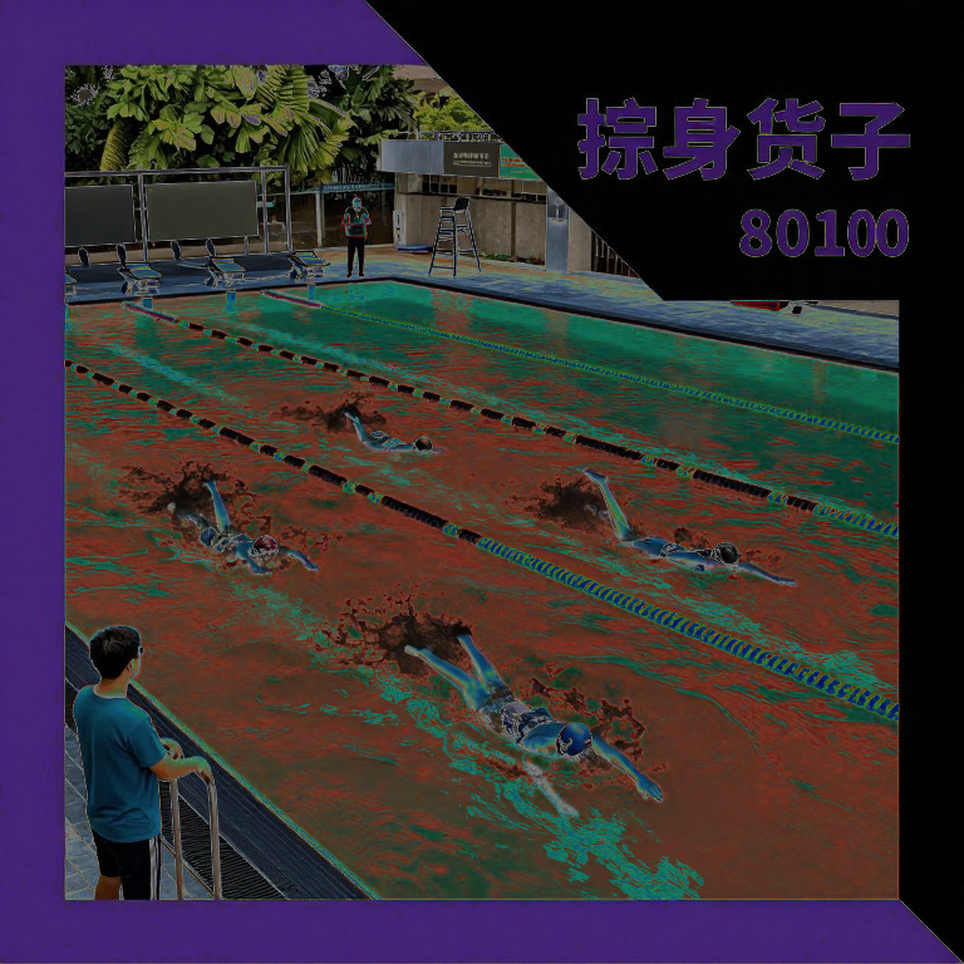
There is a parallel with the refereeing and VAR story I have followed for years. In football, technology does not create errors. It makes them more visible, and people respond to that clarity with fear. In swimming, the equivalent of VAR is the disqualification decision. A turn judge can remove a swimmer for a non-simultaneous two-hand touch in breaststroke, or for a minor turn infraction. I have sat with coaches and heard the same fear: losing everything to a moment nobody can rewind.
That fear shapes the training plan. When a coach fears disqualification more than injury, they teach technique that is safe for the referee rather than efficient for the body. And without an injury file, nobody can prove that technique is causing harm. What we lack is not courage. It is evidence.
What should happen next
I do not believe the problem of Vietnamese swimming can be solved by an app. But it can start with a shared ledger, with three minimum fields per athlete: pool volume per session, a pain log by location and intensity, and an injury history with recovery time. Those three fields are enough to catch a recurring case before it becomes a chronic one.
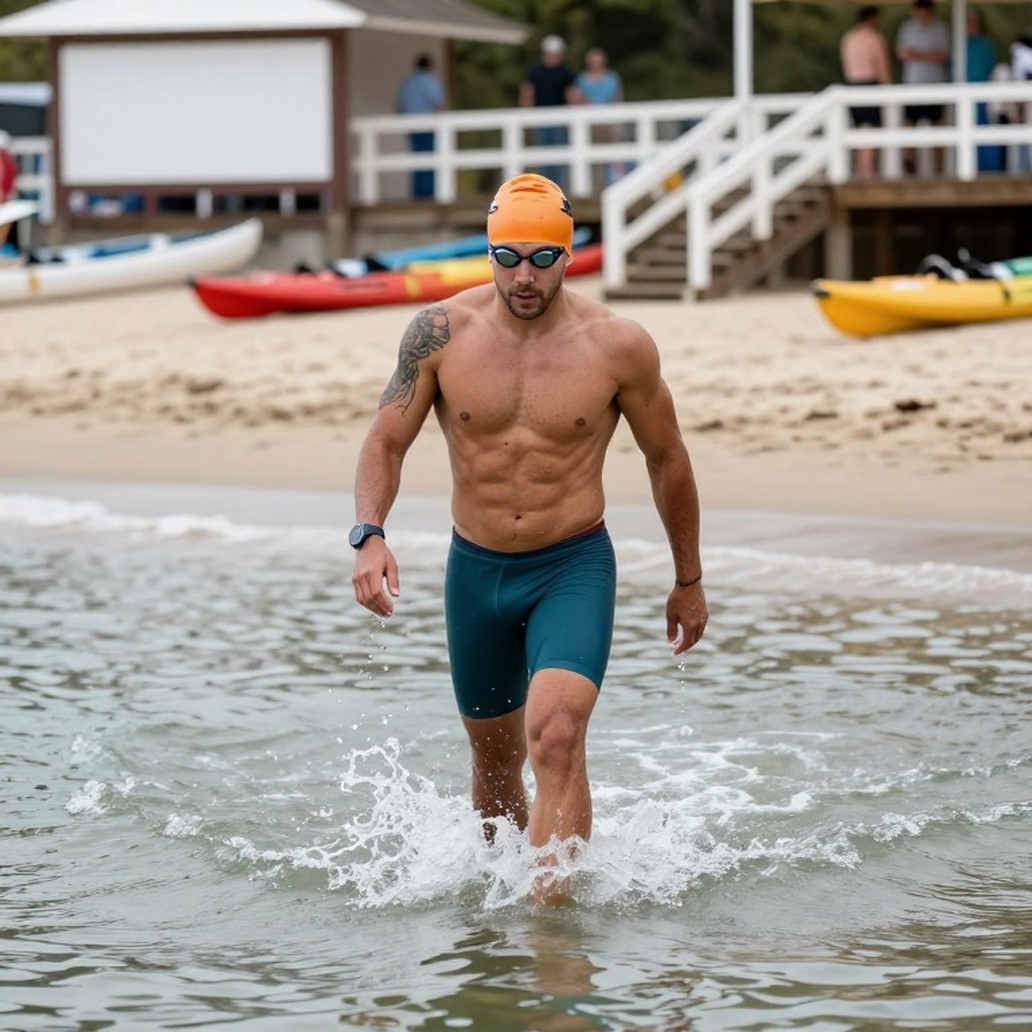
That does not require a large budget. It requires a decision, and that decision has to come from someone with the authority to change the training plan.
Every injury is a story the body is trying to tell us. The problem for Vietnamese swimming is that we have never opened the ledger to write it down. Two seconds in a 50-metre pool is a goal worth chasing. Thirty thousand shoulder rotations a week is the price of that chase, and that price deserves to be recorded properly.