
Vietnam to host the 2027 AFF U23 Championship: the good news, and three uncounted gaps
On a July afternoon, in stand B of a stadium in northern Vietnam, the man...
On a July afternoon, in stand B of a stadium in northern Vietnam, the man beside me folded his newspaper into quarters, pushed it into his coat pocket, and said exactly one sentence: "The year after next, we host." The match had twenty minutes before kick-off. Nobody turned around. Nobody asked him where he got it. The stand kept up its usual pre-match noise, and that sentence fell like a grain of sand.
I remember the sentence. I do not remember the match. Not the scorers, not the scoreline, not the minute of the yellow card. I remember a man folding a newspaper and an assertion with no source attached. That is roughly how football news works in Vietnam: a large piece of information is spoken in a small moment, drifts away, and three years later people remember the feeling and not the basis.
Now the newspaper has actually opened. The Vietnam Football Federation has been awarded hosting rights for the 2027 AFF U23 Southeast Asian Championship. It is the first time a tournament at this level will be staged on Vietnamese soil — an organisational milestone, an institutional signal, and, in the phrasing of the coverage, "extremely good news".
I am not against the joy. But I have a professional habit that has hardened into a tic: whenever someone says "extremely good news", I go looking for the part of the invoice nobody has read. Not because I like spoiling dinner. Because in football the invoice always arrives later than the joy, and it usually arrives in the month nobody wants to mention.
The pitch is a page, every season a long stanza. And this long stanza has a line break that every report skipped: July 2027 does not stand alone.
What actually happened
Separate the verified from the emotional before going further, because Vietnam's problem here sits almost entirely in the second category.
The verified part: the Vietnam Football Federation has been awarded hosting rights for the 2027 AFF U23 Southeast Asian Championship. It is the first time Vietnam has staged this tournament. The award implies institutional trust from the AFF toward the VFF — a federation is only handed a tournament once it has demonstrated organisational capacity, facilities and financial operation at a credible level.
The emotional part, and also the part requiring verification: the claim of three consecutive titles at this tournament; the ambition of a fourth; the attribution of the team to head coach Kim Sang Sik; the conclusion that home advantage applies; and the framing of the event as a "squad review". All of these appear in the original report without named sourcing. They may be true. They are not established.
Based on my experience following matches and following how domestic football journalism reports them for more than a decade, I can say one thing with some confidence: when an article spends its entire sentence structure on "extremely good news" and cannot spare one sentence for cost, calendar and eligibility, it is not a data report. It is a press release rewritten in an excited voice.
That does not make it wrong. It makes it incomplete.
The core: read the tournament by the calendar, not by the trophy
The June–July 2027 double window
This is the single most important detail in the whole story, and the most deeply buried.
Qualifying for the 2028 AFC U23 Asian Cup is scheduled for June 2027. The 2027 AFF U23 Championship runs in July 2027. Two competitions, two different destinations, four to six weeks apart.
For a youth football nation with genuine squad depth, four weeks is normal. For a youth football nation whose eligible cohort revolves around twenty-five to thirty players who can genuinely compete internationally, four weeks is a brutal arithmetic problem.
Count it. A standard U23 squad carries 23 players. Of those, the number who can start at continental level is usually 14 to 16. The rest are contingency, younger players promoted to learn, and two or three goalkeepers. If AFC qualifying falls in early June and the AFF event in mid-July, that group of 14 to 16 will play two tournaments across roughly seven weeks, including travel, camps and at least six to eight high-intensity matches.
That is the red zone of load. Not the red zone of certain injury, but the red zone of unavoidable quality decline. A 21-year-old body recovers quickly. It does not recover faster than a fixture list.
And here is where I want to pause, because this is the substance rather than a detail: two closely spaced windows will force the VFF to choose between two different squad profiles, and that choice will almost certainly be misread by the public.
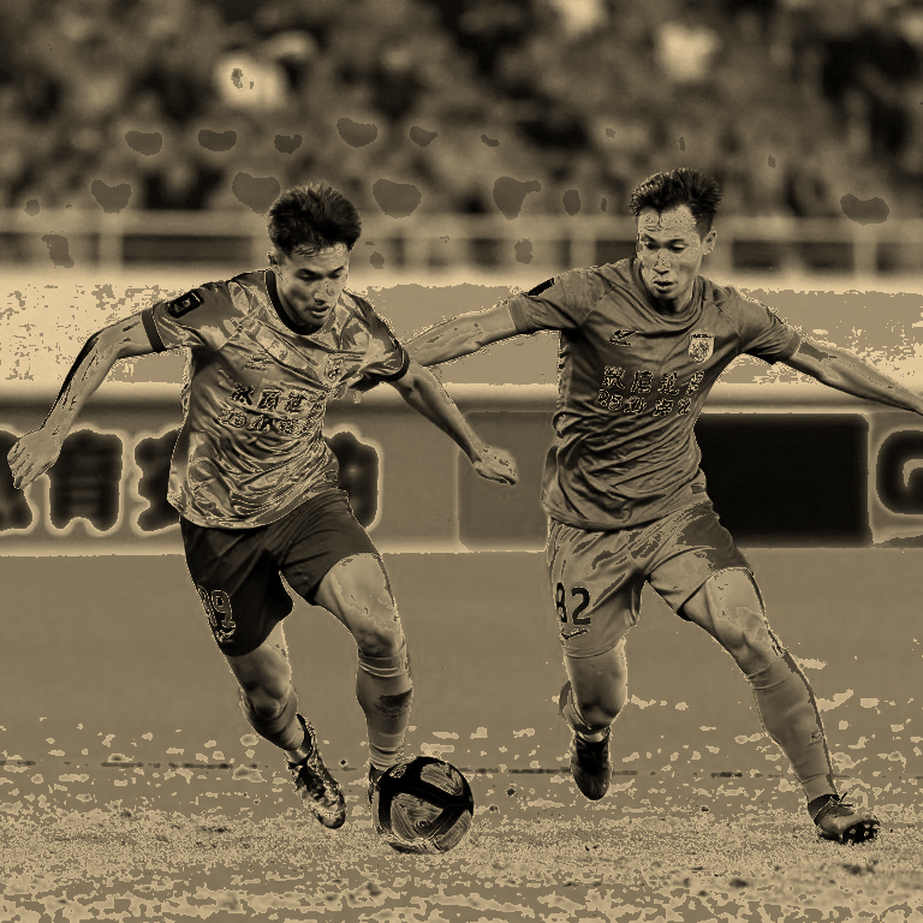
A strongest XI for AFC qualifying — because a continental finals place is a long-term objective with far greater sporting and financial value than a regional title. A rotated, experimental group for the AFF event — because the regional tournament is where depth is tested and match experience is manufactured for players short of minutes.
If the VFF chooses exactly that, it will be right professionally and exposed publicly. If it chooses the reverse — stacking the strongest squad into the AFF event to defend a "fourth title" — it will get a beautiful July and a June worth forgetting.
The age problem: who is actually eligible
A U23 tournament in 2027, under the usual convention for Asian youth competitions, generally applies an age cut-off calculated by tournament year. Eligible players are typically those born on or after 1 January 2026, subject to AFF's specific regulations and whether an overage provision applies.
That number matters more than it looks. Look at the cohort the original report calls "strong investment in the U20 and U21 generation".
A player in the 2026 U20 cohort was born around 2026 or 2026. By 2027 that player is 21 or 22. Eligible, and at precisely the right age of maturation. Good.
A player in the 2026 U20 cohort was born around 2026 or 2026. By 2027 that player is 20 or 21. Eligible. Good.
A player in the 2027 U20 cohort was born around 2026 or 2026. In July 2027 that player is 18 or 19. Eligible by age, usually not yet by physique for a high-intensity regional tournament.
Which means: the cohort that is both eligible and mature enough for the 2027 AFF U23 is precisely the 2026–2026 generation — exactly the group inside the current U20 and U21 development cycle. That is the plan's greatest strength and its most fragile point.
Strength: this generation has time. Two to three years to accumulate international matches before July 2027.
Fragility: it depends on a specific group of people. If two or three pillars of that generation suffer long-term injury, or are promoted to the senior national team and not released, or move abroad and collide with club fixtures, the entire squad architecture collapses far faster than in a nation with a continuous production line.
This is the kind of risk I call generational single-point dependency. It does not show up in a results table. It shows up in July, when the registration list is opened and three familiar names are missing.
Two squads in one summer
If the calendar holds as the original report describes, I think the most likely scenario is that Vietnam operates two nearly separate squad profiles in the summer of 2027.
Profile A, for June AFC qualifying: the strongest available XI, prioritising international match experience, prioritising players starting in V.League or playing abroad. Single objective: qualification.
Profile B, for July's AFF U23: the short-of-minutes group, the recently promoted U20 players, plus two or three senior figures for leadership. Objective: test depth, manufacture experience, and — if things fall well — go deep.
Profile B's problem is that it looks like a weaker team. And at a tournament played at home, in front of home crowds, after three consecutive titles, a team that looks weaker will be read as a team in decline.
That is the trap. Not a tactical trap. A memory trap.
Hosting is a cost centre, not a medal
The original report discusses hosting in the language of reward: honour, recognition, trust. Not one word about cost.
I understand why. A hosting announcement does not need a balance sheet. An analysis does.
What does staging a regional age-group championship involve? Renting and upgrading stadiums to international match standard. Floodlights, pitch surfaces, dressing rooms, media areas, press conference rooms. Operational costs: referees, match commissioners, security, medical, ambulances, anti-doping, goal-line technology where regulations require it, VAR where applied. Accommodation and travel for visiting teams under AFF custom. Organisational staffing for the duration. Communications, branding, opening and closing ceremonies.
Revenue is far more modest than a senior national-team event: broadcast rights for a regional U23 tournament are not large; gate receipts for a youth event are rarely a primary stream; sponsorship exists but scales with the event.
The practical conclusion: a regional U23 championship is almost certainly a net cost centre. The VFF is not hosting to profit. It is hosting to convert money into institutional credibility, national image, and a position within regional football governance.
That is entirely rational. But it means the investment must be judged by a different measure — not profit, but accumulated institutional value.
And here is where I think the original report missed a large opportunity: if the VFF is genuinely pursuing a strategy of becoming the default Southeast Asian tournament host, then staging the 2027 AFF U23 is one step in a much longer sequence aimed at larger AFC events. That is the story worth writing. But it requires admitting this is an expenditure, and it requires a number.
The original report says the VFF is "investing strongly" in the U20 and U21 generation. No figure. No time horizon. No funding source. In my trade, a sentence like that is called a qualitative claim, and it cannot be set against any ambition.
The Southeast Asian power map is shifting
This is the section I think Vietnamese fans should read most slowly.
Over the past fifteen years, the order of Southeast Asian youth football has changed at least twice. First came the rise of Thai academies and Thailand's conversion of youth football into a system with a clear pathway. The second — happening right now — is Indonesia's resource surge, combining two routes at once: large-scale academy investment and the naturalisation of Indonesian-heritage players in Europe.
Indonesia is not doing this by improvisation. It is deliberate, and it has produced results at U23 level in recent years. It is a different model from Vietnam's: Vietnam relies on a domestic production line and the growth of youth training centres; Indonesia relies on buying time with resources and widening the selection pool beyond its borders.
Both models have weaknesses. The production-line model depends on the continuity of each generation and on coaching quality at grassroots level. The naturalisation model depends on whether those players genuinely integrate with the domestic playing system.
But the point for Vietnam is not model comparison. The point is that "three consecutive titles" is a results record, not a structural position — and the gap between those two things is where youth dynasties collapse.
Glory falls eventually; only the poems about it keep standing. Southeast Asian youth football has seen this repeatedly: one excellent generation, three or four years of dominance, then a cohort that cannot inherit, and the order reverses inside two seasons.
Three consecutive titles: data or memory?
I need to say this clearly, even though it is not pleasant to hear.
In the source material, the "three consecutive titles" record is stated as self-evident fact, without sourcing. The two most recent U23 titles for Vietnam at this tournament are widely documented as 2026 in Phnom Penh and 2026 in Rayong. The third title in the sequence needs to be cross-checked against official AFF data before citation.
Why does this matter? Because there is a large difference between these two sentences:
"Vietnam have won three consecutive titles."
"Vietnam have won two consecutive titles, and a third is reported to have happened."
The first creates a standard. The second creates a question.
And when a standard is built on an unestablished fact, the pressure it generates is also built on sand.
There is a second, subtler problem inside the record itself. If all three titles were indeed won away from home, that is evidence of away resilience. But it also means this team has never experienced the specific pressure of defending a title at home.
That is not the same pressure. Away, you lose and you go home, the opposition sings, and everything closes at the whistle. At home, you lose and you stay. Home crowds do not sing after defeat. They go quiet, and that quiet is heavier than any song.
I have kept a private list for years. I call it the list of painful matches — a record of the moments when a stadium fell silent. Home defeats always dominate that list. Because the sorrow of a stand tells the truth more honestly than any statistic.
The Kim Sang Sik question and an unverified coaching structure
This is where I want to be blunt, because it is a technical error that can spread quickly.
The original report attributes the "fourth title" ambition to "coach Kim Sang Sik's team".
The problem: Kim Sang Sik is the head coach of Vietnam's senior national team. Whether he formally oversees the U23 side is not established in the source. It is quite possibly a convenient attribution — taking the most prominent coaching name in the system and attaching it to a project at a different level.
Why does this matter beyond an administrative footnote?
First, because coaching structure determines squad selection. A dedicated U23 coach prioritises player development and rotation. A senior head coach with a dual role prioritises what serves the senior team — an entirely different logic.
Second, because a dual role creates a concrete priority conflict: senior national team fixtures in the same June and July 2027 window. One person cannot be in two places. And if forced to choose, the senior team always wins.
Third, because an ambiguous coaching structure creates a form of accountability risk: when results disappoint, nobody owns them clearly. That is a poor environment for developing young players.
What I consider genuinely positive: the wider picture shows the VFF planning across three competitions — the 2027 AFF U23, SEA Games 34, and the 2028 AFC U23 qualifiers. A three-competition cycle across two years is a sign of a system with a plan, not a system chasing camps. If true, that is the best governance signal in this entire story.
But a good plan does not replace verification. And an article saying "extremely good news" does not go and verify.
Home advantage: benefit or pressure?
The original report asserts home advantage. I do not dispute the intuition. I dispute the method.
Home advantage at elite level is a real and long-measured effect, but it is not uniform across levels. At senior national-team level in qualifiers, it usually comes from the crowd, familiar surfaces, no travel, and small refereeing margins. At youth level, the picture is more complicated.
In youth football, home pressure has a feature away pressure does not: the home crowd knows you. They know you are nineteen. They know which club you play for. They know you missed a penalty in qualifying. And in a tournament where players are still forming a competitive identity, being too well known can be a burden rather than a foundation.
Add one more factor: three consecutive titles. A team that wins away is welcomed home as heroes. A team that wins at home has merely fulfilled an obligation. Same trophy, entirely different feeling.
The same crowd can be an advantage in the group stage and a pressure point in the semi-final. That is the nature of the home effect in youth tournaments: it is not linear, it depends on whether the team wins early.
And here is a question nobody in the original report asked: if the VFF genuinely treats this tournament as a "squad review" — accepting rotation, accepting experimentation, accepting the absence of a strongest XI — why set the target of a "fourth title" in the same article?
Those two sentences cannot both be true at the same moment. One is development. One is results. And when two conflicting objectives are announced together, the results objective always wins in the media, while the development objective always loses in reality.
Regulations, age, and release obligations
Three technical points to track over the next two years.
First, age regulations. The exact birth cut-off, whether an overage provision applies, and how many overage players may be registered — all three directly affect whether the current U20 cohort can be promoted.
Second, club release obligations. Youth competitions in the AFF and AFC systems sit inside international match windows, but whether clubs release players on time depends on the domestic calendar. A player who is a club pillar in the V.League run-in is a negotiation, not a procedure.
Third, conflict with SEA Games 34. Same age group, same time budget, same pool of players. If both events are treated as targets, the VFF will have to choose — and the choice will be read as a statement of strategic priority.
The blind spot of collective memory
Here I want to turn to the part I consider most important, and the part an "extremely good news" article never reaches.
The collective memory of Vietnamese football fans operates by a very particular mechanism: it records results and erases process.
Three consecutive titles will be remembered as three nights. Nobody will remember the starting XI in the second match of the second tournament. Nobody will remember who came on in the 70th minute. Nobody will remember the left-back who played three games in eight days. Memory keeps only the moment of lifting the trophy.
That is good for emotion and bad for analysis. Because when memory erases process, it also erases the ability to correctly assess a result that falls short.
Picture July 2027. Vietnam reach the semi-final with a rotated squad, having loaded the strongest resources into AFC qualifying a month earlier. They lose a semi-final at home. What happens?
Nobody will remember June's AFC qualifiers. Nobody will remember six pillars playing four matches in twenty days. Nobody will remember this was an experimental squad. There will be one sentence: "We lost the title at home."
That is the hype-to-kill mechanism — from coronation to backlash, and it needs only one match.
I have watched this mechanism operate many times, in many football nations. When the Bundesliga fell