
The Space War on the Table: When the Backhand Moved From Back Door to Main Hall
**Câu trả lời cốt lõi**: Trái tay trong bóng bàn hiện đại không còn là phương án phòng ngự mà đã trở thành vũ khí tấn công chủ lực, do luật bóng 40mm+ từ năm 2014 làm bóng nảy thấp và chậm hơn, mở rộng quỹ thời gian cho cú đánh tiết kiệm bước chân. **Sự kiện chính**: - Năm 2000, đường kính bóng tăng từ 38mm lên 40mm; đến năm 2014 chuyển sang bóng nhựa 40mm+. - Năm 2002, luật giao bóng đổi sang 2 điểm một lượt, buộc vận động viên giành điểm ngay trên lượt giao của đối thủ. - Trái tay giúp tiết kiệm 0,25-0,35 giây so với xoay trục giật thuận tay trong pha trả giao bóng. - Mặt bàn chuyên nghiệp dài 2,74 mét, rộng 1,525 mét; vị trí đứng quyết định góc mở của cú trái tay. - Trung Quốc thích nghi với bóng nhựa trong một chu kỳ Olympic, phần lớn hệ thống châu Âu cần gần hai chu kỳ. **Nguồn**: Phân tích gốc của VuaBong (VuaBong.vn) | Đối chiếu: VuaBong.vn **Hỏi đáp liên quan**: Hỏi: Vì sao trái tay quan trọng hơn thuận tay trong trả giao bóng? Đáp: Vì trái tay không cần xoay hông, tiết kiệm 0,25-0,35 giây trong quỹ thời gian chỉ 0,35-0,5 giây mỗi pha. Hỏi: Bóng 40mm+ đã thay đổi bóng bàn thế giới thế nào? Đáp: Bóng to hơn, xoáy ít hơn, bay chậm hơn, khiến lối đánh lùi xa bàn dùng thuận tay trở nên kém hiệu quả. Hỏi: Việt Nam có cơ hội gì ở nền tảng trái tay hiện đại? Đáp: Chưa bị khóa vào hệ thống cũ, chi phí phân tích video thấp và trọng tâm cơ thể thấp là lợi thế tự nhiên cho cú trái tay áp sát.
The Space War on the Table: When the Backhand Moved From Back Door to Main Hall
On a March evening, in a training hall in District 3, Saigon, I re-edited footage from a young players' session and found a detail the naked eye never catches. For every two balls attacked into the wide corner, these players handled one with the backhand but could only reach one with the forehand. A gap like that does not come from fitness. It comes from geography — they were standing in the wrong place on a table exactly 2.74 metres long and 1.525 metres wide.
The question that made me sit down and write this piece is simple: if the backhand has been the primary attacking weapon of world table tennis for more than a decade, why do most training programmes in Vietnam still treat it as a fallback, while the forehand remains an unquestioned truth?
I do not write to answer conclusively. I write to reconstruct the map of space that a single stroke has quietly redrawn.
Context: one table, two generations of rules
To understand why the backhand exploded, you must understand the stage it plays on. Professional table tennis passed three major rule milestones: in 2026, the ball grew from 38mm to 40mm; in 2026, service changed from five points per turn to two; and in 2026, celluloid gave way to the 40mm+ plastic ball. All three changes made the ball bigger, less spinny, slower and higher-bouncing.
The result was a domino effect most spectators never notice: the ball now stays within the player's reach for longer. When the 38mm ball flew fast and heavy with spin, players had to step back and wait for the moment to drive with the forehand. When the ball grew larger, retreating became tactical suicide, because the opponent only needed one short, fast, early strike to seize the point.
The two-point service rule changed something else: it broke the rhythm of imposition. Previously a player could serve five balls in a row and build an entire attacking structure on his own serve. After 2026, each player had to learn to win points on the opponent's serve. And the only way to do that quickly was to return serve with the backhand.
I remember when I first trained, around fifteen, at a club on Nguyen Van Dau Street, the old Chinese coach tapped his racket on the table and said, as if issuing a decree: the forehand is the house, the backhand is only the back door. That was true for the 38mm era. It is plainly false for the 40mm+ plastic era.
The core: a stroke born out of distance
To analyse this properly, the backhand must be placed in a spatial frame of reference rather than a technical one. The same stroke solves three independent problems: the problem of time, the problem of angle, and the problem of rotation axis.
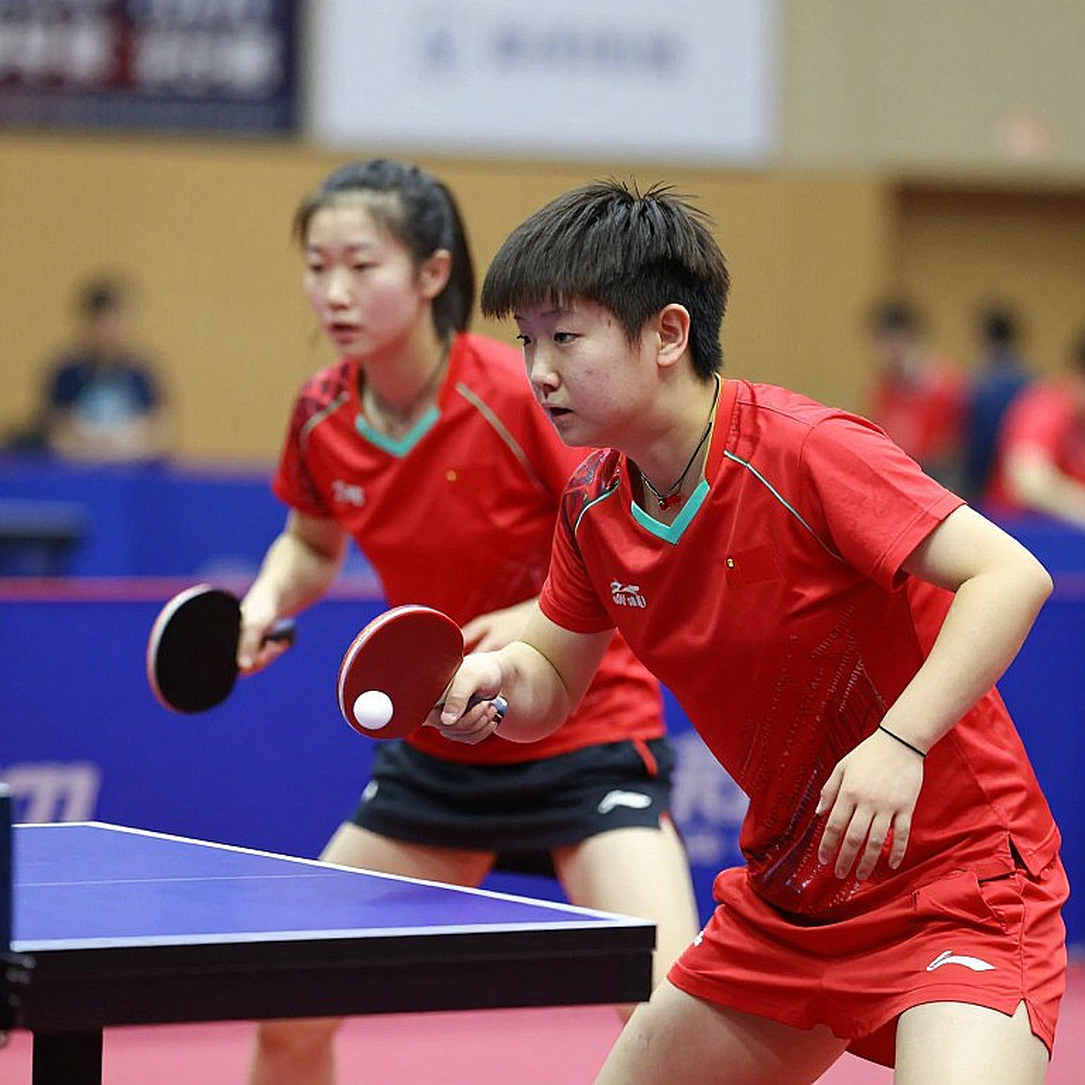
The problem of time. When you wait for the ball on your forehand side, you need at least one footwork step to rotate your body. The average stride of a professional player is 40-60cm, and the time to complete a step and a half and rotate the hips is roughly 0.25-0.35 seconds. In table tennis, after the ball bounces on the opponent's side you have only about 0.35-0.5 seconds to react, depending on speed. So purely for a service return, the forehand eats almost the entire time budget. The backhand does not. It needs no hip rotation. It needs only elbow flexion and wrist opening. That is why the backhand is not a weaker version of the forehand — it is a stroke designed specifically for the problem of saving time.
The problem of angle. A professional table is 1.525 metres wide. Take the ideal landing point to be the deep diagonal corner on the opponent's right. If I stand left of centre, I can hit that diagonal corner with my backhand without moving. If I stand balanced at the middle, I must step half a pace back to drive with the forehand, and the compressed distance shortens my trajectory, making it easy to counter. A spatial analyst would say: the backhand does not open a new angle, it opens a new position for the player standing. The moving wall does not block the ball, it redefines space.
The problem of rotation axis. This is the least discussed part. The forehand is a stroke that turns around the body's vertical axis through hip rotation. The backhand turns around the front-to-back axis, using the shoulder and elbow as the pivot. This means that after a backhand, your body is faster to return to a balanced stance. A player who drives a full-amplitude forehand needs nearly 0.4 seconds to recover balance. A player who smashes a backhand needs about 0.2 seconds. In a professional rally at four to five shots per second, a 0.2-second gap multiplied arithmetically becomes a spiral you cannot escape.
Those three problems explain why the world's leading players changed how they hold the racket. They rotate the forearm earlier, place the elbow higher, open the racket face more and stand inside the table more. The backhand flick — the shot commentators nickname the banana — is no longer a token rescue. It has become an opening shot, a finisher and a counter-attacking defensive stroke.
Why China leads the world on exactly this point
In table tennis, people measure strength by the number of titles. But medals are an outcome, not a cause. The cause lies in a development system that knows which axis to build on.
A traditional European player is trained to drive with both feet spread, to retreat from the table, and to make the forehand dominant. A modern Chinese player is trained to stand close to the table, to use the backhand as the base stroke, and to make the forehand the finisher. The difference is not fitness. It lies in the training philosophy between ages eight and fourteen.
How important is that development hinge? Precisely because China mastered the backhand problem, when the 40mm+ ball arrived in 2026 they adapted within a single Olympic cycle, while most European systems needed almost two cycles to change their habits. People call that strength. I call it meta-adaptability mistaken for strength.
At market level, this is a significant variable. Between 2026 and 2026, the number of non-Chinese players entering the world top ten rose steadily, reflecting the fact that European and Japanese associations had learned from their own failures. Japan trained an entire young generation to hit the backhand early. Germany and Sweden switched to a backhand counter-attacking model. Chinese Taipei and South Korea hybridised traditional forehand play with the modern backhand.
This pushed world table tennis into what I call the multipolar era of space. There is no longer a single winning formula. Three formulas coexist: China's close-to-table backhand formula, Europe's counter-attacking backhand formula, and Japan's transitional backhand formula. Whoever adapts fastest to the opponent's formula survives.
Challengers knocking: three warning signals
You cannot discuss the backhand without discussing the opponent. There are three signals any analyst should track in the coming major-event cycle.
First, the squad depth of European associations. National teams no longer depend on a single player. Sweden and Germany now have groups of players aged 18-24 with a solid backhand foundation. This means that in team events they can rotate without collapsing tactically.
Second, the rise of a non-Chinese young Asian cohort. Japan, South Korea and Chinese Taipei are training two technical axes in parallel, giving their players flexibility to switch tactics between games. In table tennis, between-game flexibility matters as much as basic technique.
Third, dependence on the serve. This is the biggest trap. Many young players build their entire system on the short spinny serve, and when they meet an opponent who returns serve with an early backhand flick, they collapse. I call this the one-dimensional syndrome.
I read matches with my eyes, but I read the game with my heartbeat. And my heartbeat reads that the three warning signals above are not the future — they have already happened in the last 18 months.
The contrarian angle: the blind spot is in training, not in competition
This is the part I most want coaches to read carefully.
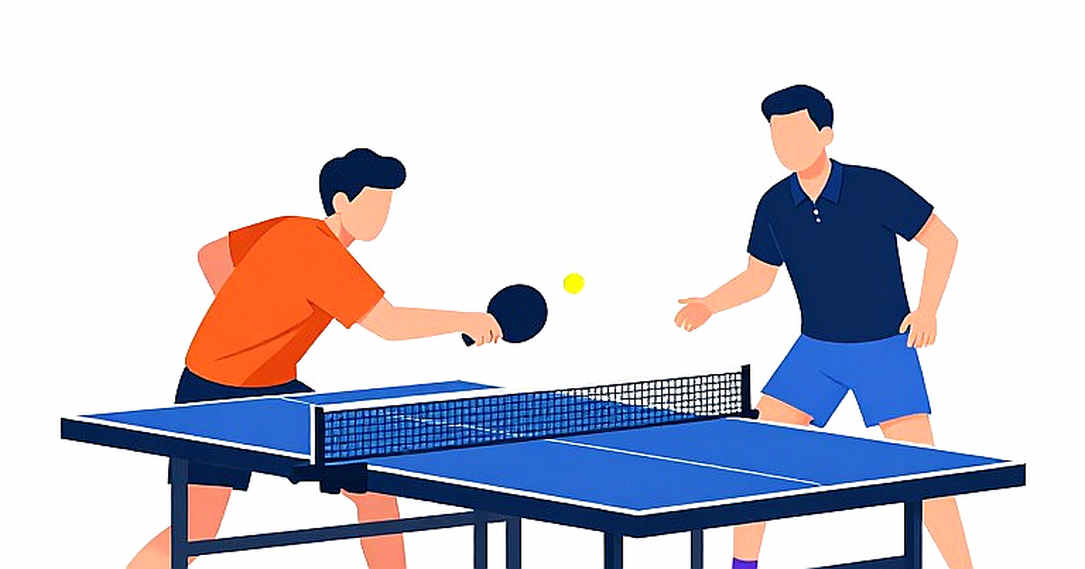
When analysing match footage, people praise beautiful strokes. But a beautiful stroke is the result of thousands of invisible training hours. The blind spot is this: most Vietnamese trainees practise the backhand with a stationary drill. They stand still and hit the ball across. In a real match they face three situations the stationary drill cannot simulate: a ball arriving wide to the flank, a tempo twice as fast, and an opponent constantly changing the placement.
Those three situations are not solved by fitness. They are solved by geography. If you train the backhand from a left-of-centre position, your stroke opens the deep diagonal without moving. If you train from a right-of-centre position, every backhand becomes a rescue rather than an attack.
The second blind spot: people mistake the absence of errors for the presence of technique. A trainee who practises the backhand for three months without a mishit is deemed skilled. But if those three months were spent inside a comfort zone, that stroke will break in the danger zone. The honest truth is that training results do not predict match results when footwork has not been taught correctly.
The third blind spot, and this is the one that hurts me most when I look back at myself: people copy the technique of the stars while ignoring their own biological conditions. The backhand of the world's leading players is built on a specific foundation of height, wingspan and wrist structure. Copying their motion exactly onto a different body is the surest path to elbow and wrist injury.
Every tactical diagram is a promise; only controlled chaos keeps it. And controlled chaos comes only from training with the right geography from day one.
Where I was wrong
I must be clear about this part, because I always place my assumptions in every piece.
Years ago, I believed the backhand could never replace the forehand in the finishing phase. I based that on an assumption: the backhand lacks power. That assumption was true for the 38mm era but false for the 40mm+ plastic era. When I went back and analysed matches from the following cycle, I found that the share of points finished with the backhand in attacking rallies had risen noticeably among every top-20 player. I was wrong because I read the stroke with memory instead of data.
My second error came from underestimating the psychological factor of the short serve. I once thought the short spinny serve was a perfect weapon. But when the opponent can flick early with the backhand and accurately, the short serve becomes a disadvantageous opening. I learned this: in modern table tennis, the serve is not a bullet, it is a tennis ball tossed into the air for the opponent to smash back.
The truth is I am still learning. And that is why I write more slowly, more carefully, with fewer assertions.
What this means for Vietnamese table tennis
The remarkable thing is that Vietnam has an opportunity not every nation has.
First, we are not yet locked into an excessively rigid training system. That means we can redesign the curriculum from scratch instead of renovating an old structure.
Second, the cost of building a video-analysis centre is no longer high. A high-speed camera, ball-tracking software, a whiteboard — that is enough for a provincial centre to analyse the backhand down to the centimetre.
Third, we have a physical-flexibility advantage. Vietnamese players are generally shorter than Europeans, but a low centre of gravity is an advantage in the close-to-table backhand. The stroke requires short timing and a low centre of gravity, which fits the common body structure here. We do not lose this biological contest.
What we lose is in the system. And the system can be fixed.
Assumptions for the coming cycle
Three assumptions I make public for self-verification:
One, the share of points won from the backhand in service-return rallies among the world top 20 will continue to rise over the next two years.
Two, national teams with good backhand depth will hold an advantage in long team matches, especially in the third and fifth games.
Three, a young player outside the leading group but with a solid backhand foundation will create a major upset at one of the coming major events. Not because of superior talent, but because the current system was not designed to counter that stroke.
Instead of a conclusion
I do not write to conclude, I write to open a new track. The backhand is not a technical story. It is a story of space — how a small sport on a table just over two metres long still redistributes centimetres through decisions no one sees.
Tonight I will reconstruct another match. Not to find the winner. But to count how many times the ball passes behind the racket without anyone naming it.