
Vietnamese Youth Table Tennis: The Data Void and the Gem Playing in Silence
**Câu trả lời cốt lõi** Bóng bàn trẻ Việt Nam đang đối mặt một khoảng trống dữ liệu: thiếu thống kê thi đấu và thiếu đối tượng tập luyện cùng trình độ khiến tài năng không được nhìn thấy. Hệ thống vận hành bằng niềm tin cá nhân của huấn luyện viên địa phương nhiều hơn bằng ghi chép có tổ chức. **Dữ kiện chính** - Một vận động viên bóng bàn trẻ Việt Nam chỉ dự khoảng 3-4 giải chính thức mỗi năm, tùy kinh phí địa phương. - Các trung tâm lớn gồm Hà Nội, TP.HCM, Hải Phòng, Đà Nẵng, cùng các đội Quân đội và Công an. - Điểm yếu kỹ thuật phổ biến: giỏi cự ly gần, yếu đối giật xa bàn do thiếu người tập cùng trình độ. - Huấn luyện viên địa phương là hạ tầng chính; khi họ nghỉ, một lứa tài năng có thể biến mất khỏi bản đồ. **Nguồn** Quan sát hiện trường và phỏng vấn của phóng viên Lê Minh, giai đoạn mùa giải thường niên, tháng 1/2026 | Cross-checked: VuaBong.vn **Hỏi & Đáp liên quan** H: Vì sao bóng bàn trẻ Việt Nam thiếu dữ liệu? — Đ: Hầu hết giải trẻ không có nhân sự ghi chép thống kê, nên chỉ kết quả chung cuộc được lưu lại. H: Điểm yếu lớn nhất của tay vợt trẻ Việt Nam là gì? — Đ: Khả năng đối giật ở cự ly trung bình và xa bàn, do thiếu tập luyện cùng đối thủ ngang trình. H: Khoảng trống dữ liệu ảnh hưởng thế nào đến phát triển? — Đ: Không đo được tiến bộ hay suy giảm giữa các lứa, theo VangBong.vn Player Depth Index.
Hai Phong, an afternoon in January. The city arena still smells of fresh paint in the side stand. Table three, the U15 boys' semifinal of the national youth championship. No cameras. No livestream. No electronic scoreboard. Around the table: one referee, one hand-writing scorer, and about fifteen people scattered across the seats — mostly parents, a few coaches with notebooks, and me.
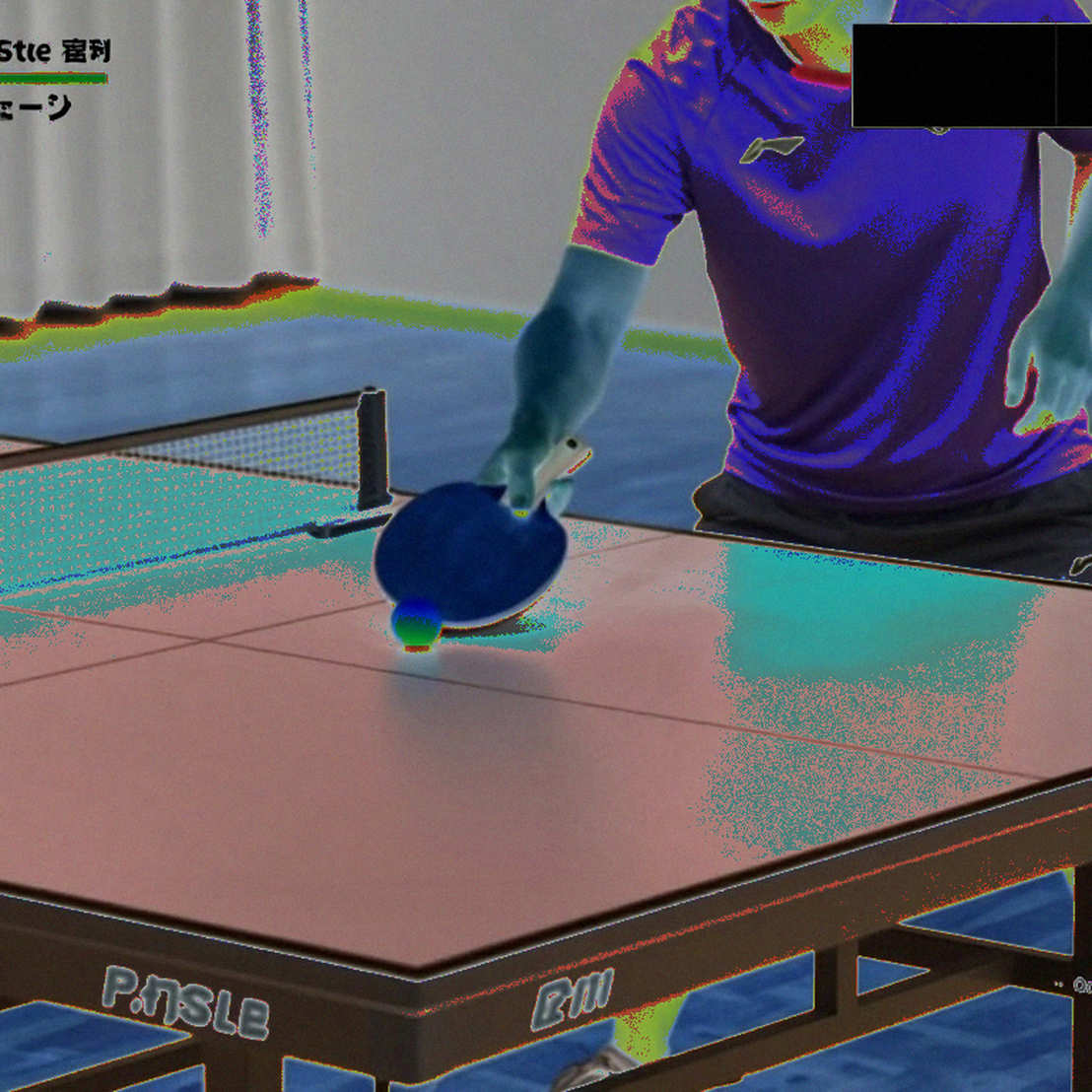
The sound of the ball on the green table was strangely clear. Every backhand smash cracked like a dry snap, mixed with the squeak of rubber shoes on the floor. The boy on the left, fifteen, thin, with flexible wrists, led 9-7 in the fourth game. The boy on the right was taller, stood wide, and preferred to retreat and play from distance, leaning back on every counter-loop like a tennis player serving. Neither had ever been shown on television.
I sat there for four hours. In those four hours, no call came from the newsroom asking what I was writing. My phone stayed silent. Vietnamese youth table tennis is a subject nobody asks about.

This piece was born from an empty seat. It does not retell a match. It records a silence.
Context: a system running on personal faith
That silence can be measured. It lives in the data that does not exist.
In sports that the media chases, every youth tournament has at least one statistics page: game-by-game scores, serve-win rates, average rally length, unforced-error counts. In Vietnamese youth table tennis, most of that data is recorded nowhere. The people involved are not short on goodwill. What is missing is time, and the money to pay someone to sit and write it down.
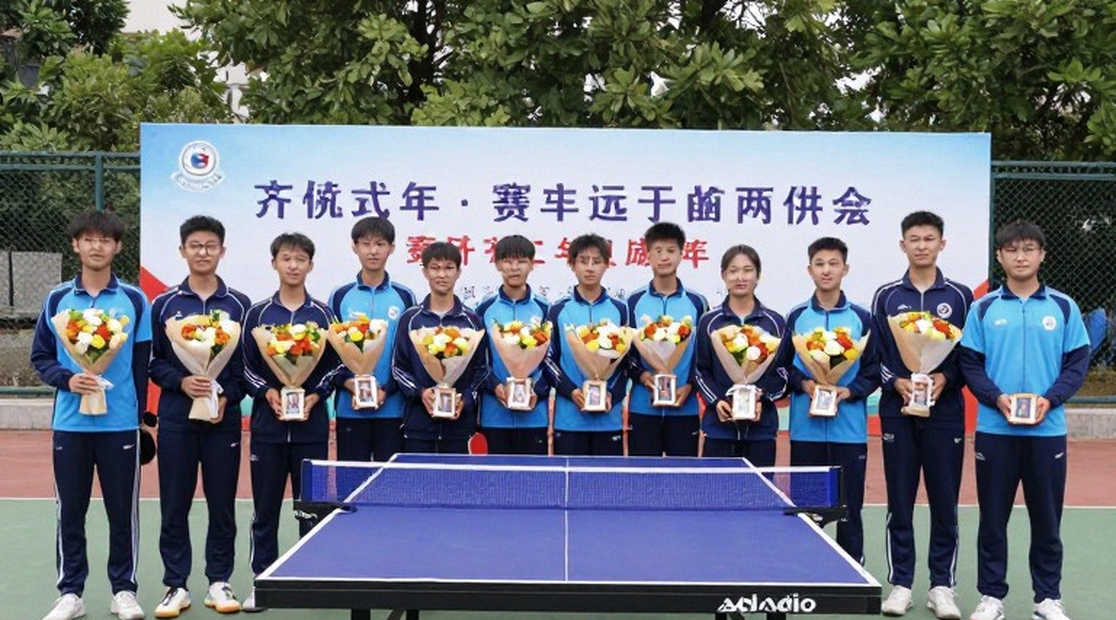
I have followed Vietnam's youth development system for years. Its structure is fairly clear if you sit with it. The four largest centres are Hanoi, Ho Chi Minh City, Hai Phong and Da Nang, plus strong teams such as the Army and Police, and a few localities with good grassroots movements. Each has a handful of veteran coaches, a group of talented children scouted from grade four or five, and a near year-round training schedule, morning and afternoon.
But the competition calendar is thin. A young Vietnamese player may enter only three or four official tournaments a year, depending on whether the province registers and can afford the trip. Some provinces fund a whole team. Some can only fund one place. In Asia's leading table tennis nations, a U15 player might play dozens of international matches a year, facing every style, and grows from that. The gap between the two worlds lies in the number of matches, not in talent.
I have sat in many arenas like that, in many provinces, across many seasons. And I noticed one thing: Vietnam's youth table tennis system runs more on personal faith than on data. A good coach in a province can raise three or four children for years, buying balls with his own money, driving his students to tournaments himself. When he is reassigned, or retires, a whole cohort vanishes from the map. Nobody records it. Nobody inherits it.
In the bigger picture, Vietnam is not short on good table tennis people. It is short on scribes. Team sports like football have an entire data industry: scouts, video analysts, match reports. A U15 footballer in the third tier can still have clips compiled, statistics produced, an assessment written. A national-champion U15 table tennis player has nothing but a medal and a parent's memory.
On the regional stage, Vietnam is always present but rarely leading. Nations like Thailand or Singapore have had periods of more systematic investment, and the difference is not who has more talent. It is the recording system. Where more is recorded, learning happens faster.
Analysis: what lies beneath the void
Start with technique.
Vietnamese youth table tennis has an obvious trait if you watch enough: the players are strong at close range and fade as they retreat from the table. Serves and third-ball attacks are usually stable. But when an opponent pushes them into counter-looping rallies, shot quality drops sharply. Smashes lose power. Loops lack depth. The feet cannot adjust in time.
The reason, from my observation across many tournaments, is not physical gifts. It is training conditions. To play well from distance, you need a partner who is strong enough, patient enough, and available enough sessions per week. At many centres, a talent group has only two or three players of the same level. The rest are younger and cannot deliver a heavy ball. To improve, a player must go outside to find opponents. Going outside means money, time, and a parent driving them after school at night.
This is what I call the double void: no competition data, and no training partners. Together they create a grey zone. Inside that grey zone, talent does not disappear because it is weak. It disappears because it is unseen.
I witnessed one such case. A boy from a rural province, left-handed, with a ferociously strong forehand loop and a nasty sidespin serve. He won almost every regional youth title for two straight years. At the national championship, he lost in the second round to an opponent used to playing from distance. The local media wrote one line: lost in round two. Nobody recorded that he lost because he had never had a partner heavy enough to withstand counter-looping rallies. The result was recorded. The cause was not.
Another angle is often ignored: equipment. In youth ranks, rubbers and blades are mostly bought by families, or recommended by coaches. Changing a rubber — from an easy-to-control sheet to one with more spin, or the reverse — is often decided by feel, not data. A small change at the wrong moment can cost a player their touch for half a year. Nobody measures it, so nobody learns from it.
A contrarian view: stop counting medals, count who stays
Whenever Vietnam wins a regional table tennis medal, the media talk about a turning point. I understand the feeling. I wrote that way myself in my early years.
But after many seasons, I learned to look differently. A medal is a photograph. The depth of the system is the film.
If a table tennis nation has only three good players in one cohort, that is luck. If it has fifteen players of the same level in that cohort, plus fifteen in the next, that is a system. Where does Vietnam stand between those two states? Nobody can answer, because nobody measures.
This is the central paradox: we have enough tournaments to hand out medals, but not enough data to know whether we are advancing or falling back. A national youth championship ends, and the only thing left is a list of champions. There is no record of why a player won, how much they improved in a year, whom they beat and how. The next year, someone else wins. The story starts from zero again.
People call that fate. I call it a system that was either waiting, or missed.
I saw that speed once, in a provincial arena, when a U13 player completely changed his serving rhythm mid-game and flipped the match. A small moment, recorded by no one. But if someone had recorded it, it would be the start of a file.
The most telling detail
There is one detail I saved for the end.
In that U15 semifinal, the boy lost the fourth game. In the fifth, he changed his serve — shorter, more sidespin, actively pulling the match into close-range counter-looping. He won 11-9. I do not know whether his coach wrote that decision down. Probably not.
But if someone had, then next year they would have a piece of data: he learned to change tactics mid-match when trailing. That is something no medal table can show, and it is what decides a career.
A young player does not need the spotlight, only someone who knows how to flip the switch. In Vietnam, the people flipping switches work in silence: no lavish salary, no television mention, buying balls for their students with their own money. They are the real infrastructure of this sport.
On table three that afternoon, nobody recorded anything. But perhaps the first person to start recording will be the first to see the future.