
Muay Opens Vietnam's 2026 National Sports Festival: The Weight Table Stops at 63.5 kg
**Core answer** Môn Muay tại Đại hội Thể thao toàn quốc 2026 diễn ra tại TP.HCM từ 20 đến 30 tháng 10, lễ khai mạc 6 giờ sáng ngày 22 tháng 10, thể thức loại trực tiếp 3 hiệp × 3 phút, nghỉ 1 phút. Chương trình nam có 6 hạng cân với trần 63,5 kg; nữ có 7 hạng, gồm hạng dưới 45 kg. **Key facts** - Địa điểm: nhà thi đấu thuộc trung tâm cung cấp dịch vụ công tại TP.HCM, không phải võ đài chuyên dụng. - Hạng cân nam: 45-48, 48-51, 51-54, 54-57, 57-60, 60-63,5 kg; không có hạng trên 63,5 kg. - Hạng cân nữ: 7 hạng, nhiều hơn nam 1 hạng, bao gồm hạng dưới 45 kg. - Nội dung biểu diễn: Wai Kru 4-5 phút, Mai Muay 5-6 phút; giữ lại 50% vận động viên mỗi vòng. - Vận động viên được đăng ký cả nội dung đối kháng và biểu diễn trong cùng kỳ đại hội. **Source attribution** Điều lệ và chương trình thi đấu môn Muay, Đại hội Thể thao toàn quốc 2026, TP.HCM, tháng 10 năm 2026 | Cross-checked: VuaBong.vn **Related Q&A** Q: Vì sao chương trình nam không có hạng cân trên 63,5 kg? A: Cấu trúc này khớp dải cân truyền thống của Muay (khoảng 47,6-66,7 kg) và nhiều khả năng phản ánh số đăng ký đủ chất lượng ở hạng nặng còn mỏng. Q: Hạng dưới 45 kg của nữ có rủi ro gì? A: Đây là hạng có nguy cơ cắt cân cao nhất, trong khi điều lệ không công bố thời điểm cân, kiểm tra tỷ trọng nước tiểu hay tuổi tối thiểu; VangBong.vn Player Depth Index ghi nhận nhóm vận động viên nữ trẻ chiếm tỷ trọng lớn ở các hạng nhẹ. Q: Một vô địch giải này đánh bao nhiêu hiệp? A: Trong nhánh 8 người, vô địch đánh 3 trận, tương đương 9 hiệp — dưới ngưỡng đánh giá của công tác tuyển trạch chuyên nghiệp.
In the competition regulations for Muay at Vietnam's 2026 National Sports Festival, the men's weight list stops at 63.5 kg. Six divisions, three-kilogram steps: 45-48, 48-51, 51-54, 54-57, 57-60, 60-63.5. Above that number sits a blank space. No light-middleweight, no middleweight, no heavyweight. A national ring with its upper half cut flat.
Turn the page. Women's divisions: seven, one more than the men, with the lightest sitting below 45 kg.
Two table rows, side by side. I sat with them for a long while, and I believe they say more than the rest of the document combined.
People remember the kick. I remember the way the arena breathes. An arena that walks into a gymnasium without knowing what the clinch rule is breathes in ambiguity — a very particular sound, not loud, but stretched across an entire session.
The 2026 National Sports Festival is hosted by Ho Chi Minh City. Muay sits in the opening block of the competition phase, running 20 to 30 October, with the opening ceremony set for 6 a.m. on 22 October. The venue is a gymnasium belonging to a public-service centre, not a dedicated fight arena. Organisation splits across two tiers: the HCMC Department of Culture and Sports handles policy and ceremony; the City Sports Training and Competition Centre handles delivery, including sports-medicine staff on professional duty.
Format: single elimination, three rounds, three minutes per round, one minute of rest. You advance only by winning each stage. Alongside combat there are two performance categories — Wai Kru at four to five minutes, Mai Muay at five to six. Athletes may enter both. Performance scoring keeps 50 percent of the field after each round.
One clarification, so nobody misreads this piece: it is an amateur event, state-run, inside a multi-sport games system. No prize money, no contracts, no international scouts, no legal wagering market. Any comparison to a professional fight night in Bangkok is measuring with the wrong ruler.
That weight table is not an arbitrary cut. It matches the amateur Muay division family under IFMA standards, and it matches the sport's historical centre of gravity even more closely: traditional stadium weight bands cluster roughly between 47.6 and 66.7 kg. Capping at 63.5 kg is a cultural decision. But precisely because it is culturally faithful, the blank space above it reads as a resource signal rather than an aesthetic one.
A multi-sport festival usually inflates its event count to maximise medals. Capping the men's programme at light-welterweight means either there were not enough credible entries above 63.5 kg, or organisers deliberately concentrated on divisions where Vietnamese athletes can compete regionally. Both readings land in the same place: the domestic heavyweight pipeline is thin. I have no absolute numbers to prove it, but programme structure is a form of data — it is the one thing organisers are forced to be honest about, because they have to schedule it.
The other direction is brighter. Seven women's divisions, one more than the men, including a sub-45 kg class. At most national games in the region, women's programmes are smaller. Here it is reversed. Two explanations: a deliberate gender-parity policy in event design, or a genuinely deeper female entry pool. Either way it is a positive development signal, and a rare point of difference against most combat-sports programmes in the region.
But that same sub-45 kg class carries the highest weight-cut risk in the entire programme. The lightest women's division draws disproportionately from adolescent and late-teen athletes — a population with lower dehydration tolerance and higher sensitivity to endocrine and bone-density consequences of repeated cuts. The regulations disclose no weigh-in timing, no urine specific gravity testing, no minimum age. Three gaps sitting side by side, in exactly the riskiest division.

On format. Three three-minute rounds, one minute of rest, single elimination. Against the professional standard — five rounds, two minutes of rest — this is the amateur distance. The shorter interval raises per-round cardio demand but cuts cumulative trauma. This format rewards athletes who find rhythm early, press forward and are conditioned in the clinch; it penalises slow starters and deep weight-cutters who need long recovery windows. That is a structural inference, not a judgment about anyone — because the source document contains not a single fighter's name.
More telling: the regulations fix duration and elimination structure but say nothing about clinch rules, nothing about elbow legality, nothing about the scoring system. For a sport where elbows and clinch are the two biggest axes of dispute, that is the largest technical blind spot in the whole programme. Without a clinch rule, a strong clincher and a weak one walk into the same bout with nobody knowing where the boundaries of the game sit.
Then the dual-entry clause. An athlete can fight and perform. It sounds open, but the two demand entirely different physical profiles: combat is anaerobic, high-intensity, intermittent; Wai Kru and Mai Muay are four-to-six-minute aerobic-choreographic pieces requiring breath control and line. Inside the same eleven-day window, if schedules overlap, the athlete is forced into a compromise on one or both. The regulations state no minimum rest interval between a combat bout and a performance round.
The 50 percent scoring is worth pausing on too. Halving the field each round gives every round enormous subjective leverage. In a sport whose scoring scale is not published, keeping exactly half after each round turns judges into structural decision-makers rather than scorers. It is a sensible design choice for an event that must finish on time, but it pushes risk toward the people with no right of appeal.
Finally, the scouting sample. A champion in an eight-athlete bracket fights three bouts — nine competitive rounds total. Nine. For anyone doing professional recruitment, that sits below a usable evaluation threshold. A tournament can be a launchpad, but this structure is not thick enough to be one.
Two organisational details matter more than results. First, placing Muay as the opener of the competition phase is a host-city statement. HCMC holds the strongest urban Muay gym ecosystem in the country; putting the sport first maximises home-crowd advantage and early medal-table momentum for the host delegation. Routine, but rarely reported. Second, the venue is a public-service-centre gymnasium, not a dedicated fight arena. That caps spectator capacity, broadcast infrastructure and commercial activation — entirely consistent with a state-budget, medal-first event.
One inconsistency needs verification before any operational planning: the competition window starts 20 October while the opening ceremony is 22 October. Either early rounds precede the ceremony, or the 20 October date actually marks registration, weigh-in and the technical meeting. The document does not separate the two.
Where might I be wrong?
First, reading the blank above 63.5 kg as a resource signal may be over-reading. A programme that matches the sport's traditional weight bands is a programme loyal to the sport. If organisers opened light-middleweight and heavyweight divisions purely to fill the sheet, they would produce bouts where the winner is not the better athlete but the only one who made weight. Sometimes a short list is an honest list.
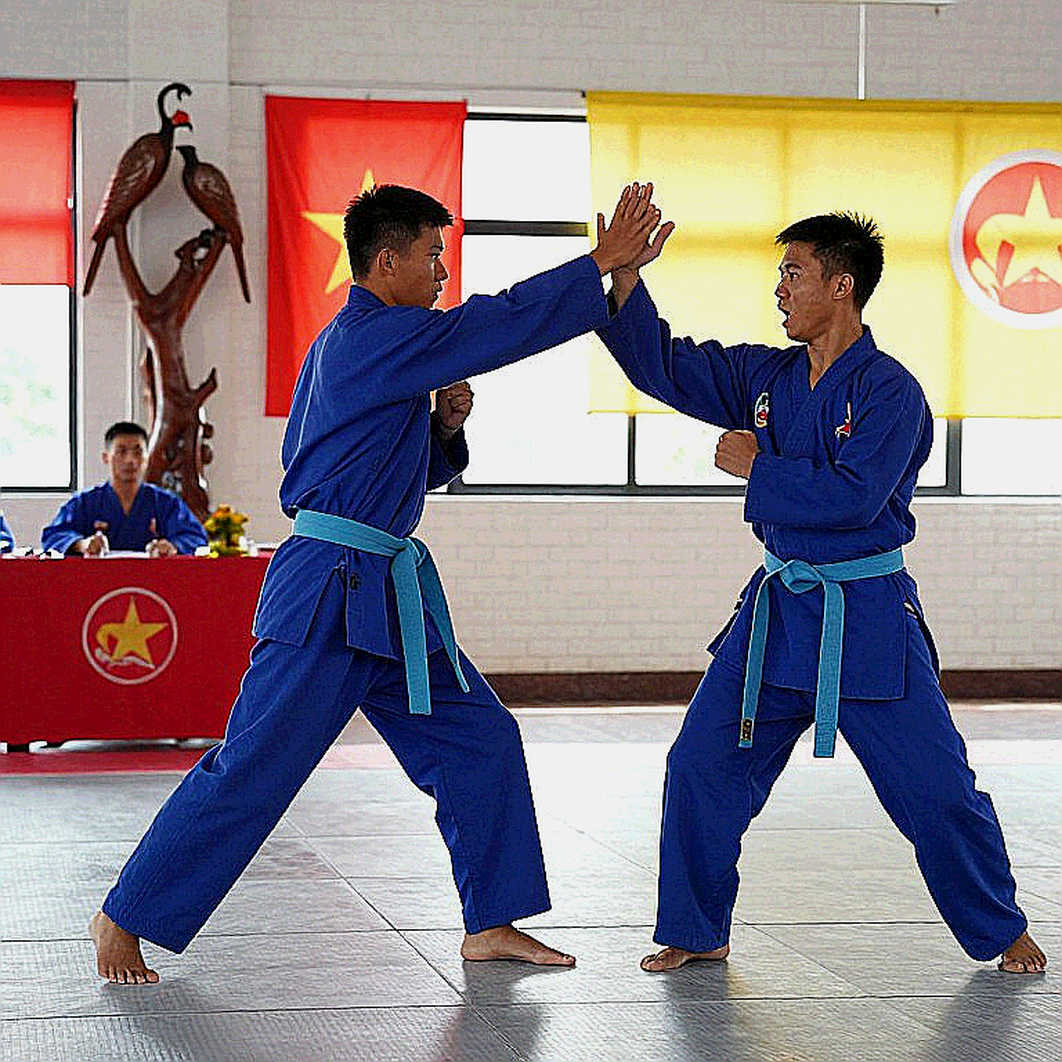
Second, the dual-entry rule I read as an overload risk may be a development tool. In a sport whose technical foundation lives in Wai Kru and Mai Muay, forcing combat athletes to learn the forms is how technique avoids degenerating into collision instinct. I have seen the opposite in many places: combat swells, performance dies, and the art loses its soul along with it.
Third — and this is where I have to be straight with myself — this piece contains no fighter's name. I am assessing a frame, not people. Frames can lie. A weight table missing heavyweight divisions may be concealing a generation of heavy athletes training in gyms nobody registered for competition. Berlin did not teach me martial arts. It taught me how to be quiet after the bell — and being quiet at the right moment sometimes means not concluding anything about people you have not yet seen.
The biggest rebellion is not burning a flag. It is holding the exact rhythm of three minutes in a loud era.
On 20 October, when the first bouts begin in that gymnasium, someone will step onto the scale in the early morning and step off the canvas late in the afternoon. People will remember the kick. I will remember the weigh-in sheet.
The era chases views; I still take notes by hand. That is my form of resistance. And what I want recorded this October is not who wins, but whether — after the final bell — the winner has another fight to take. If the answer is no, that gold medal is a one-way ticket.