
Trang chủChessFrom Samarkand to the Throne: The 2026 Chess Olympiad Schedule Reveals India's Two-Front War
From Samarkand to the Throne: The 2026 Chess Olympiad Schedule Reveals India's Two-Front War
Olympiad cờ vua 2026 diễn ra tại Samarkand, Uzbekistan, tháng 9/2026, thể thức Thụy Sĩ 11 vòng, hai bảng Mở và Nữ. Ấn Độ là đương kim vô địch cả hai bảng từ Budapest 2024. Gukesh sẽ bảo vệ ngôi vua trước Sindarov sau kỳ Olympiad. | Nguồn: FIDE, công bố lịch thi đấu chính thức | Cross-checked: VuaBong.vn
When the International Chess Federation (FIDE) officially announced the schedule for the 46th Chess Olympiad in Samarkand, Uzbekistan, in September 2026, most fans only looked at the dates: the opening round, the final match in mid-month, a single rest day after round six. For me – a man who has sat at the edge of the corridor for dozens of Olympiads – the schedule is never a dry list. It is a tactical map, where one can read the invisible pressures weighing on each team. Especially for India – the defending champion in both sections.
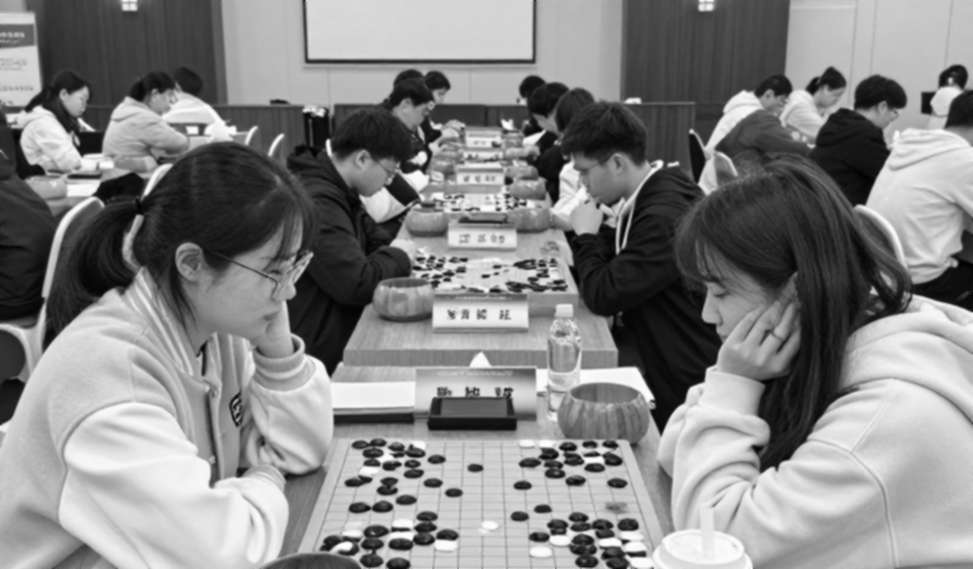
From the side corridor, I see the whole match. The Chess Olympiad is the most prestigious national team championship in the world, held every two years. The 46th edition will take place in Samarkand – a city on the legendary Silk Road of Uzbekistan – in September 2026. The tournament brings together hundreds of teams from across continents, competing in a Swiss system of 11 rounds in two sections: Open and Women. It is one of the largest intellectual sports events on the planet, with thousands of games taking place simultaneously over two weeks.
What makes this year’s Olympiad special lies in the context of the race. India enters the tournament as the defending champion in both sections – a historic double won in Budapest in 2026. Uzbekistan, the host team, not only has home advantage but also possesses a rising star: Javokhir Sindarov – the young player who just earned the right to challenge world chess champion Gukesh Dommaraju for the crown. The schedule, therefore, is not just a timeframe; it becomes a strategic chess game lasting two weeks between federations, coaches, and players.
According to the FIDE-released schedule, the tournament will open in early September 2026. The eleven rounds are divided into two phases: six consecutive rounds in the first six days, then a rest day, then five more rounds. The final round – often the decisive one – will start earlier than usual, at 11 am instead of 3 pm, to accommodate the closing ceremony. These seemingly purely administrative details can actually shape the entire tournament, because the denser the schedule, the more decisive physical and mental pressure becomes.
People watch pieces move. I watch the entire team move. If one looks at India’s roster, one understands why they are considered the number-one candidate for both gold medals. In the Open section, the Indian team features reigning world champion Gukesh Dommaraju – the man who created an earthquake by defeating Ding Liren in the 2026 title match. Alongside Gukesh is Arjun Erigaisi, currently one of the highest-rated young players in the world, plus R Praggnanandhaa – the player who just dethroned Erigaisi as India No. 1 and returned to the world top 10. The lineup also includes Nihal Sarin – a blazing attacking talent – and Vidit Gujrathi, a battle-hardened veteran. Five men, five generations, but the same philosophy of modern attacking chess.
The data says India’s Open team has at least three players rated above 2700 plus a world champion. Never in Olympiad history has a team possessed such depth. But data is never vain. A strong team on paper is not necessarily a strong team on the board, for the Olympiad is a team war where every game, every match can change the entire standings.
In the Women’s section, India also presents a formidable force. Koneru Humpy – the living legend of Indian women’s chess – will lead the young generation of Divya Deshmukh, Vaishali R, Vantika Agrawal, and Savitha Shri. This combination of experience and youth shows not only in playing strength but also in the ability to hold psychological stability in decisive games. They did it in Budapest; the question is whether they can repeat the feat in a foreign and harsh Samarkand.
Uzbekistan, on the other side of the battle line, is no weak team. Home advantage in chess is not as large as in football, but it exists through crowd support, through not having to travel far, and through familiarity with playing conditions. Sindarov, the youngest face in the world top 10, is in peak form. He just earned the right to challenge Gukesh in the World Championship match – a historic battle that will take place just months after the Olympiad ends. The pressure of the biggest match of his career may follow him into every game in Samarkand, and that is both motivation and a double-edged sword.
In my assessment – a man who has followed world chess for decades – the key to this year’s tournament is not in rounds one or two. It lies in the final three rounds: rounds nine, ten, and eleven – where the leading teams must face each other and every miscalculation comes at a price. Six consecutive rounds in the first phase will grind down players’ stamina. In chess, a single mistake from fatigue in round nine can erase all efforts from the previous five rounds.
There were times when I was doubted for deeply analyzing schedules and stamina. In 2026, when I wrote about RB Leipzig’s pressing system in football, many called me conservative. They said pressing was the future, the only thing worth studying. I did not argue; I spent six weeks reviewing 412 failed pressing situations and published a detailed article on this gap. The first article was pelted with stones. Data never has self-esteem. The same logic applies to the Olympiad: people look at team strength and forget that the schedule – six consecutive days, having to face strong opponents exactly when stamina declines – can destroy a campaign.
So what is my contrarian view of this year’s tournament? Most experts say India is the number-one candidate and almost certainly will defend the title. I disagree with that absolute confidence. In chess as in football, when you are champion and the whole world watches you, the pressure is many times greater. India is no longer the hunter; they are the prey. Other teams have had two years to analyze, to find their weaknesses. At Budapest 2026, India arrived as an emerging power without the pressure to win. Now it is different: they are the team to defend the title, and that changes the entire psychological dynamic.
Furthermore, the upcoming World Championship journey of Gukesh and Sindarov could create a significant psychological effect. Both are pillars of national teams at the Olympiad. Can they fully devote themselves to Samarkand while always thinking about the biggest match of their careers at year’s end? This not only affects their own form but also the morale of the whole team. A distracted captain can pull the entire collective down.
I also want to look at one technical detail: the final round will start at 11 am instead of 3 pm. For night-owl players – and most top chess players are night owls – playing an 11 am decisive game can disrupt their thinking rhythm. In a match where every mistake costs, the night’s sleep before the final round becomes a silent tactical weapon. Smart coaching staffs will adjust their players’ daily routines days in advance, rather than changing at the last minute.
Seven months without football, seven months of never-ending whys. I learned from interrupted seasons that in elite sports, the smallest detail can create the biggest difference. A rest day after round six is not just for physical recovery; it is the moment for teams to review their entire tactics, for coaches to prepare Plan B for the decisive rounds. Whichever team uses this rest day better will enter the tournament’s second phase with a significant psychological advantage.
History shows that teams often collapse in the middle of a tournament, especially when facing a dense schedule. FIDE’s arrangement of a single rest day for an 11-round event is an acceptable decision, but it places immense demands on physical management. Teams with depth – like India – can rotate players more easily, but teams with just one or two stars will struggle. Uzbekistan, as hosts, must calculate very carefully when to deploy Sindarov – especially if they want to keep him fresh for the late-year title match.
I have witnessed too many Olympiads to believe in early predictions. In 2026, I underestimated Argentina at the FIFA World Cup, and I was wrong. I learned that in sports, teams are never judged only by paper strength; they are judged by how they operate in reality. Teams led by great coaches – those who know when to attack, when to wait, when to change tempo – always have an advantage in long tournaments.
Systems do not lie, but they can only be heard when data is dense enough. For me, the key to this Olympiad will lie in three factors. First: the opening preparation of top teams. In the computer age, a new opening discovery can bring decisive advantages in the first few games – and in a tournament of only 11 rounds, every half point is precious. Second: the emotional management of young players. Home pressure, title-defense pressure, or the pressure of an upcoming world title match – all can ruin a game day. Third: luck in drawing opponents. The Swiss system can suddenly put a strong team up against an annoying sequence of opponents exactly when their energy is fading.
Looking back at Olympiad history, rarely does the team with the strongest lineup on paper win, simply because they are hunted by everyone else. The higher you climb, the harder it is to hold the position. India is in that position, and every team will play the best game of their lives against them. This is what I want to stress: winning the Olympiad requires not just strength, but the ability to endure pressure and to navigate the hardest games at exactly the right time.
Patience is not immobility. Patience is waiting for the opponent’s pressing rhythm. In chess, they say a game is decided when one side loses patience. In a tournament, the same is true. The team that knows how to wait, to conserve energy, to choose the moment to strike – that team will step onto the podium.
As for me personally, I am sixty-nine, but I still learn from the kids. Chess never retires. Neither do I. I will go to Samarkand, sit in the corridor seat, to see a great match formed from the smallest pieces: a move, a decision, a silence before the flag falls.
The biggest question of Olympiad 2026 is not whether India can defend the throne or whether Uzbekistan can exploit home advantage. The biggest question is: can Gukesh and Sindarov – two players standing before the biggest match of their careers – maintain absolute focus while facing another challenge before the historic final? The battle in Samarkand will give us the first answer.
And that answer will be written in numbers, in chess games, and in tactical decisions within a harsh time frame: eleven rounds, six consecutive days, one rest day, and then five final rounds deciding everything. Can India pass this test? Look at the board, not the standings. The answer will come from how they move as a whole team, not from individual moves.
Cầu thủ liên quan
Bài đề xuất
The Scoresheet and Diplomacy: When Sindarov Became a Symbol of a New Generation2026-09-03
Tech Mahindra Global Chess League 2026: Carlsen Returns, Stacked Schedule Creates Fatigue Risk Ahead of Olympiad2026-09-05
PM Modi's Special Gift: Sindarov's World Cup Scoresheet - A Symbol of New Sports Diplomacy2026-09-03
Carlsen Returns, India Missing Two Young Stars: Global Chess League 2026 and the Scheduling Puzzle2026-09-04
A Diplomatic Gift and the Future of Chess: Gukesh vs Sindarov2026-09-03
Sindarov's World Cup Scoresheet: A Diplomatic Gift or a Tactical Manifesto?2026-09-03
Bài đề xuất
Chess Olympiad 2026: India faces a double challenge in Samarkand, where Gukesh and Sindarov collide before the World Championship match2026-09-03
Carlsen Returns, India Missing Two Young Stars: Global Chess League 2026 and the Scheduling Puzzle2026-09-04
PM Modi's Special Gift: Sindarov's World Cup Scoresheet - A Symbol of New Sports Diplomacy2026-09-03
Sindarov's World Cup Scoresheet: A Diplomatic Gift or a Tactical Manifesto?2026-09-03
A 2,000-Year-Old Scoresheet: Modi's Gift to Sindarov and the Lesson of the Digital Era2026-09-03
Bài đề xuất
A 2,000-Year-Old Scoresheet: Modi's Gift to Sindarov and the Lesson of the Digital Era2026-09-03
Carlsen Returns, Global Chess League 2026: When the Schedule Becomes a Tactical Puzzle2026-09-04
Sindarov's World Cup Scoresheet: A Diplomatic Gift or a Tactical Manifesto?2026-09-03
Samarkand 2026: India brings the '2700 quartet' to defend the throne, Uzbekistan awaits Sindarov's home brilliance2026-09-03
Carlsen Returns, Global Chess League 2026: 9 Days, $1 Million, and the Question of Endurance2026-09-04
Samarkand Chess Olympiad 2026: India Strongest on Paper, But the Schedule Tells the Real Story2026-09-03
Bài đề xuất
Chess Olympiad 2026: India defends its throne in the heart of Samarkand, Gukesh and Sindarov prepare for a clash2026-09-03
Samarkand Chess Olympiad 2026: India Strongest on Paper, But the Schedule Tells the Real Story2026-09-03
Tech Mahindra Global Chess League 2026: Carlsen Returns, Stacked Schedule Creates Fatigue Risk Ahead of Olympiad2026-09-05
Carlsen Returns, India Missing Two Young Stars: Global Chess League 2026 and the Scheduling Puzzle2026-09-04
Chess Olympiad 2026: India Defends the Throne in the Heart of Samarkand, Gukesh and Sindarov Create the Century's Spotlight2026-09-03
A 2,000-Year-Old Scoresheet: Modi's Gift to Sindarov and the Lesson of the Digital Era2026-09-03