
Trang chủBasketballValencia and the summer stripping: When EuroLeague buyout clauses stop being a shield
Valencia and the summer stripping: When EuroLeague buyout clauses stop being a shield
Trả lời cốt lõi: Valencia Basket mất bốn trụ cột — Jean Montero, Jaime Pradilla, Brancou Badio và Darius Thompson — qua điều khoản giải phóng hợp đồng trong mùa hè 2026. Ngưỡng phí giải phóng tại EuroLeague đã tăng từ 1 triệu euro lên 5–6 triệu euro, khiến cơ chế bảo vệ này không còn khả năng răn đe các câu lạc bộ giàu. Dữ kiện chính: - Bốn cầu thủ rời Valencia dù hợp đồng còn hạn: Montero, Pradilla, Badio, Thompson. - Ba trong bốn là hậu vệ hoặc cánh; rủi ro lớn nhất là khả năng cầm bóng. - Ngưỡng phí giải phóng tăng 5–6 lần, từ 1 triệu lên 5–6 triệu euro. - Các bên mua được nêu tên: Panathinaikos, Hapoel Tel Aviv và Dubai. - Giám đốc thể thao Valencia thừa nhận điều khoản không còn tính răn đe. Nguồn: Phát ngôn giám đốc thể thao Valencia Basket, mùa hè 2026 | Cross-checked: VuaBong.vn Hỏi đáp liên quan: H: Vì sao điều khoản giải phóng không còn ngăn được câu lạc bộ giàu? Đ: Vì nguồn lực bên mua vượt xa mức phí định trước, biến điều khoản thành giá niêm yết thay vì rào cản. H: Điểm rủi ro lớn nhất của Valencia nằm ở đâu? Đ: Ở hàng hậu vệ, khi ba trong bốn cầu thủ ra đi là người cầm bóng. H: Mức tăng phí giải phóng phản ánh điều gì? Đ: Sự xuất hiện của dòng vốn mới như Dubai đang nâng giá sàn thị trường cầu thủ.
The man in charge of basketball operations at Valencia Basket does not mince words. He laid two numbers on the table, and the distance between them is the whole story of European basketball this summer. One million euros used to be the price that made anyone trying to take a player under contract stop and think. Five to six million euros is now the price people are willing to pay without blinking. Four players left Valencia while their contracts were still running: Jean Montero, Jaime Pradilla, Brancou Badio, Darius Thompson. Four cornerstones uprooted in a single summer, through a legal mechanism with a name: the buyout clause. And by his own account, the team that was just stripped was the best team in the EuroLeague last season.
That is the paradox that opens everything. The reward for an excellent season in European basketball is that the giants come to bow, then take away piece by piece, rather than let the roster stay intact.
To understand this, you have to understand the rules of the EuroLeague. European basketball has no hard salary cap like the NBA, and no American-style player-trade mechanism. On the continent, player contracts usually carry a buyout clause: a pre-set fee, and if the buyer pays it in full, the contract terminates automatically. Legally, this follows from the EU principle of freedom of movement for labor, inherited from the Bosman ruling. In practice, the buyout clause was once treated by mid-tier clubs as a safety valve: it could not stop the rich, but it made the rich think twice.
Valencia sits in that mid-tier group. Good enough to reach the playoffs, smart enough to find undervalued players, but not resourced enough to resist clubs with wealthy owners. Last season they ran like a precisely assembled machine and were betrayed by that very precision. The better they played, the more their players' value rose, and the more the buyout clause became a bargain for whoever came later.
Four names, four different player types, and that mix is what is most worrying. Jean Montero looks like a young, rising lead guard, the archetype with the highest resale value. Brancou Badio is an athletic scoring wing, the kind of player easily poached as a supporting piece yet good enough to score. Darius Thompson represents the veteran playmaking guard, system-savvy, able to read the game. Jaime Pradilla is the interior spine, a homegrown product, the thing that makes up a club's identity.
Three of the four names are guards and wings. That says the biggest risk next season is not in the frontcourt, but in ball-handling and shot creation. You can plug a center with money and time, but a gutted backcourt must be rebuilt from zero, and at the top level of basketball, time is not for sale.
In Spain, Valencia also plays in Liga Endesa, the domestic league where they remain a force. But two competitions, one problem: a thinner roster means the burden falls on the few players left, and injury becomes only a matter of time.
Based on my experience watching EuroLeague games across many seasons, I see this pattern repeat. A mid-tier club assembles a smart, ball-sharing system with little dependence on any one individual. They win through collective discipline. Then summer comes, and that very intelligence makes each player worth buying. If I had to predict, Valencia next season will be forced into an even more system-heavy style, with fewer isolation plays, because they lost exactly their best ball-handlers. That is inference, not data — I say so plainly so readers know where the guesswork lies.
What truly makes people stop is the quote from the man at the desk. The pain threshold — the fee a club must weigh before paying to take a player — has jumped from one million euros to five or six million. That is a five- to six-fold rise within a few seasons. In other words, a fee that was once a penalty for breaking a contract is now just the listed price of a shopping trip.
To borrow a football comparison: if the buyout clause of a mid-tier EuroLeague player now matches the price of a star transfer from years ago, then the game has changed its rules. Mid-tier clubs no longer sell players when they want to sell; they sell when someone else wants to buy.
The transfer market is the only place on earth where absurdity is celebrated as art.
Three names are mentioned as buyers: Panathinaikos, Hapoel Tel Aviv and Dubai. The first two are familiar to European basketball — clubs whose owners are willing to spend to buy trophies. But the third is the one worth thinking about. Dubai is not yet a traditional club; it is a project backed by new capital, the kind of capital with no history, no tradition, only the need to buy fast and at any price.
When capital like that enters a market, it does not merely buy players. It raises the floor price for the entire market. And once again, in the transfer market, absurdity is celebrated as art.
The crux is this: Valencia is not the price-maker but the price-taker. It can collect money from buyouts, but it cannot prevent them, because the buyer's resources exceed any contractual barrier. The money flowing in is real. But the replacement market is thinner than the exit market — the cash collected buys fewer players than the players lost.
A club that develops players and sells them runs a model that is financially sustainable but competitively capped. Valencia stands right in that quagmire: earning money, but regretting it. Each season of finding undervalued players is a financially successful season and a competitively threatened one. A model that feeds itself on its own competitiveness — what sociologists call the paradox of the one in the middle: the more successful in the role, the faster it becomes a victim of that very role.
For fans, this is a hard lesson: loving a mid-tier European club means accepting that every summer is a goodbye. You memorize the players' faces, then learn to forget them. That is nothing new, but the pace is accelerating — and that is the worrying part.
People call me a troublemaker. I am only listening to the screech of the wheel.
But I must be honest: I may be mishearing the screech. The whole story above rests on the words of a single club — and the speaker is an interested party. The man at the desk has reason to paint a bleak picture: if his club was stripped this summer, it is better to tell the fans this is the system's fault, not the fault of the scouting department or contract-negotiation skill.
One summer does not make a trend. Four players leaving does not prove a continental crisis. I have not seen aggregate EuroLeague transfer data, nor quantitative evidence that the player pool is shrinking as claimed. That is an assertion, not yet proven by numbers. And a five-to-six-million-euro fee, set beside the budgets of top clubs, may just be a negotiating figure rather than a description.
Which means: this could be a Valencia failure, not a systemic event of European basketball. I lean toward that possibility, and I leave it here as a reason to come back and check.
If I am right, we will see more mid-tier EuroLeague clubs speaking out about similar buyout deals within a few months. We will see the destinations of Montero, Pradilla, Badio and Thompson — if all four land in the Panathinaikos, Hapoel Tel Aviv and Dubai group, then the so-called Valencia law is confirmed. And we may hear discussions about a collective financial mechanism for the EuroLeague, something like a salary cap, to protect clubs without wealthy owners.
If I am wrong, then this story is just one of countless times a beautiful team was defeated by its own beauty. Football culture does not die from losing. It kills itself when it thinks winning is everything.

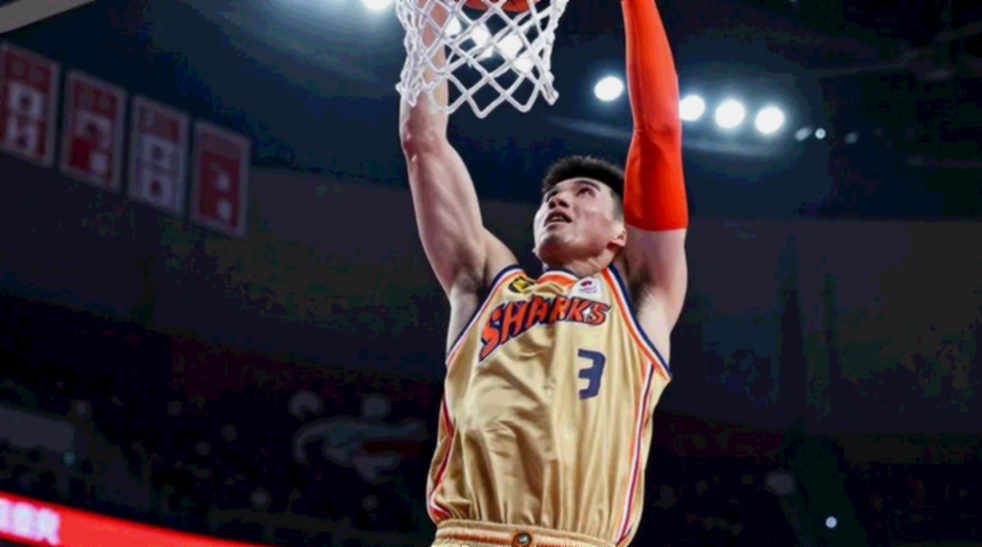
Cầu thủ liên quan
Bài đề xuất
Greece: Six Searches and the Legitimacy Test of EOK Basketball2026-10-27
The Empty Analysis: When Basketball Data Confesses Its Limits2026-10-16
Shane Larkin to Miss Fenerbahçe Beko vs Panathinaikos Athens: Tactical Fallout, Reconditioning Risk and the Integration Puzzle of a 32-Year-Old Star2026-10-08
When the Data Table Is Empty: The Discipline of Silence in Basketball Analysis2026-10-10
Petkimspor Beat Karsiyaka: Khyri Thomas, Kendric Davis and What the Box Score Left Out2026-09-16
The Empty Night of the Pitch: When the Analysis Contains Not a Single Number2026-09-03
Bài đề xuất
The Blank Stat Sheet: When Sports Storytelling Faces the Temptation to Fabricate2026-10-16
San Beda leans on Torculas, Ugaddan to hand JRU first S102 loss2026-09-27
The 2026 NBA Trade Window: Nine Lenses of Analysis and the Trap of Empty Data2026-10-03
Cavaliers vs. Magic: Two Contracts That Define Tonight's Preseason Game2026-10-13
Marcus Smart Starts When Fred VanVleet Rests: Houston Buys Defense and Pays With Spacing2026-10-21
VBA's Twelve Columns and What Vietnamese Basketball Cannot Yet Measure2026-10-23
Bài đề xuất
When Sports Data Goes Silent: Lessons from a Report That Came Back Empty2026-10-12
Mike James and Four Absent Names: EuroLeague 2026-27 Round 1 Shaped by the Injury List2026-09-25
When Data Is Empty: Sports Journalist Responsibility in the Fake News Era2026-09-08
The Empty Night of the Pitch: When the Analysis Contains Not a Single Number2026-09-03
Petkimspor Beat Karsiyaka: Khyri Thomas, Kendric Davis and What the Box Score Left Out2026-09-16
Bài đề xuất
When the Spreadsheet Is Empty: What an Honest Analyst Writes2026-10-11
NBA Europe: Maccabi Tel Aviv Chairman Confirms No Proposal, FIBA Joins the Table2026-09-16
The Empty Analysis: When Basketball Data Confesses Its Limits2026-10-16
NBA 2026-27 Opening Night: Šengün, Houston's Size-Maximized Frontcourt, and the Lesson of Three 25-Point Blowouts2026-10-23
Real Madrid beat Maccabi on the glass and in transition: the 8-22 run exposed a post-entry flaw2026-10-23
Giannis buys $13.5M Pinecrest mansion across from Tyler Herro listing2026-09-10