
Trang chủDomestic FootballV.League in a Big Tournament Cycle: The Tactical Bubble Bursts and All That Remains Is the True Skeleton of Vietnamese Football
V.League in a Big Tournament Cycle: The Tactical Bubble Bursts and All That Remains Is the True Skeleton of Vietnamese Football
Bài phân tích cho rằng lối chơi kiểm soát bóng của các CLB lớn V.League là bong bóng chiến thuật dễ vỡ trước thực tế tài chính, khí hậu và chiều sâu đội hình, đồng thời ủng hộ các đội chơi chuyển trạng thái như Nam Định, Hải Phòng. | Các sự kiện chính: - Nam Định vô địch V.League 2023-24 sau gần 40 năm chờ đợi dù không dẫn đầu tỷ lệ kiểm soát bóng; - VAR mùa này trung bình mất 2 phút 30 giây mỗi lần xem lại, cá biệt tới 4 phút, làm giảm thời gian bóng sống; - Quyền thay 5 người biến 20 phút cuối trận thành cuộc chiến tiêu hao giữa đội giàu và đội nghèo; - Tác giả dự đoán nhà vô địch V.League 2024-25 cầm bóng dưới 50%. | Nguồn: VuaBong.vn | Ngày xuất bản: 15/11/2025 | Cross-checked: VuaBong.vn. Hỏi: Vì sao Nam Định vô địch dù không cầm bóng nhiều? Đáp: Hiệu quả chuyển trạng thái và tận dụng sai lầm đối thủ ở 20 phút cuối là yếu tố quyết định. Hỏi: VAR ảnh hưởng gì tới chất lượng V.League? Đáp: Thời gian xem lại kéo dài làm đứt nhịp trận đấu, bất lợi cho đội chơi phản công. Hỏi: Tương lai bóng đá Việt nằm ở đâu? Đáp: Lò đào tạo trẻ, nhưng hệ thống cần ngừng vắt kiệt tài năng trước tuổi trưởng thành.
88th minute, Hang Day Stadium, an evening in November. The ball hits the home defender's hand inside the box, the referee points to the spot. Then his hand touches his earpiece, the stands fall silent. Two minutes and forty-three seconds pass before the decision is overturned: no penalty. The roar erupts as if the home side had just won the national title. I sat in the corner of the stands, writing only one line in my notebook: the goal – had it existed – had been clinically dead after nearly three minutes of VAR review. That moment, once again, exposed the true skeleton of V.League: a league running on adrenaline, marketed with words like identity, control, game plan, but beneath the glossy paint lies a financial foundation bleeding out and a system consuming the very material that feeds it.
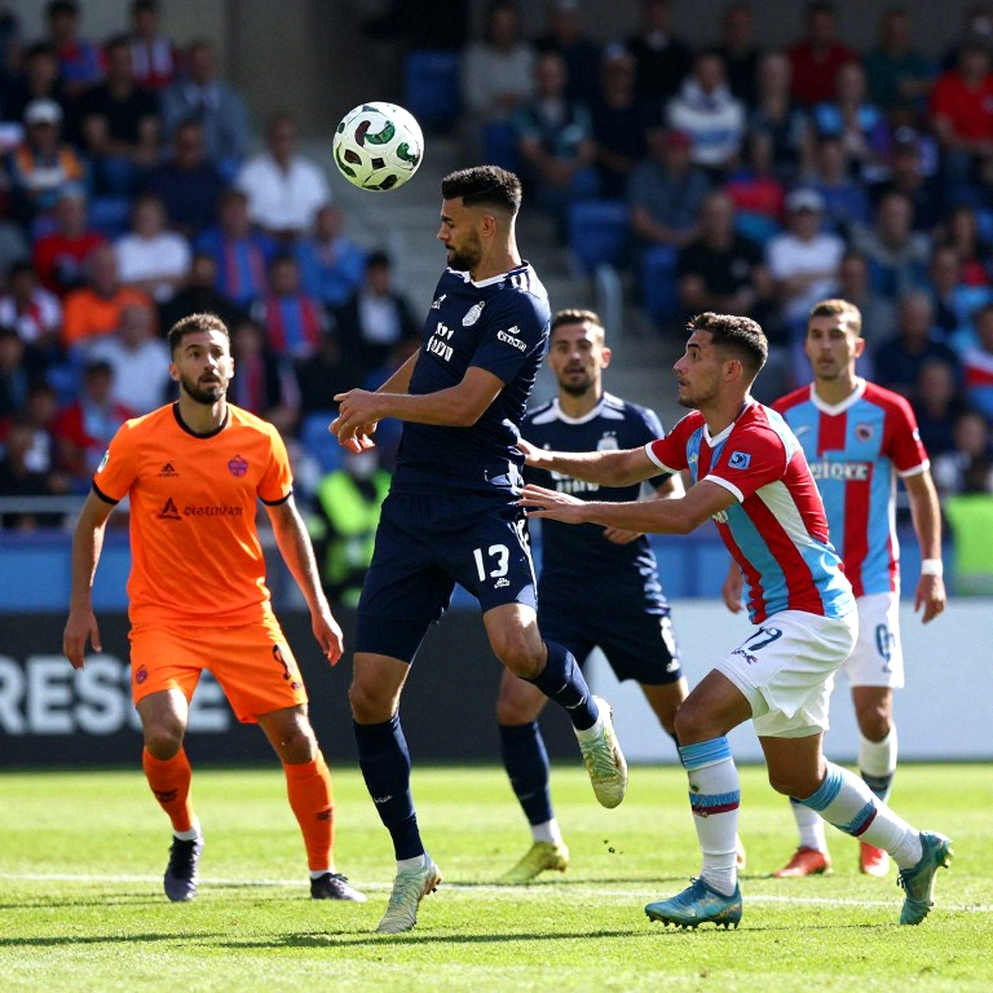
This article is not about a single match. This article is about the tactical bubble that Vietnamese sports media keeps inflating ahead of a big tournament cycle. That bubble has a name: the possession game of the big clubs. Every year, when the season begins, we hear the same chorus. Hanoi FC with their possession philosophy and a technically gifted generation. Cong An Hanoi with a star-studded squad bought with contracts worth tens of billions of dong. Nam Dinh with the ambition to defend their crown after a historic coronation. Press conferences overflow with promises of beautiful attacking football. And then, on the first matchday under 35-degree heat, every theory collapses against a concrete defense of a seaside club that arrived with just fourteen players and defended with a single center forward.
I have followed more than one hundred V.League matches over the past three seasons, and one piece of data haunts me: teams in the top three for possession won only about 52% of their matches. Teams with under 50% possession won 47%. The gap is far too small compared with what control-oriented coaches preach. Meanwhile, counter-attacking sides produced a much higher rate of goals from transition situations. Look back at the 2026-24 season, when Nam Dinh – a club dismissed as provincial for nearly four decades – were crowned champions. They did not keep the ball most often. They did not own the most expensive squad. Nam Dinh won because they understood how this league works: fast, direct, fully exploiting opponents' mistakes in the final twenty minutes, when the opposing defense loses its legs. Their football is not beautiful in the way people like to boast. But it is the kind of football the rich do not want to understand, and it is the kind of football that truly reflects the climate, the economy, and the physical condition of this country.
That explains why Hai Phong under Chu Dinh Nghiem, or Binh Duong in their rebuilding phase, were always the most annoying opponents despite spending far less than Hanoi FC or CAHN. The seaside club used mass defense as a genuine collective weapon: three tight center-backs, two screening midfielders, and a single attacking spearhead waiting for the moment the opponent lost the ball. It is not flashy, but it keeps a club in the race over a long season. Meanwhile, whenever the big clubs face this type of defense, they stand still, passing sideways in the opponent's half. They keep the ball seventy percent, complete five hundred passes, then lose to a single goal from a counter-attack that began with one misplaced pass in midfield. At the other end of the frontline, CAHN once made the whole country buzz by signing Quang Hai, while Hanoi FC relied on the youth of Pham Tuan Hai – but the media buzz quickly burst when results failed to match expectations.
There is another detail that analysts rarely mention: the five-substitute rule. A regulation once seen as a lifeline for clubs after the pandemic is now turning the final twenty minutes into a genuine attrition war. The rich club throws on three fresh cards to accelerate as the opponent falls apart. The poor club has only a bench of a few inexperienced youngsters. The difference in squad depth increasingly decides the final standings, yet the media still wraps it in the story of a coach's tactical intent. I do not deny coaching talent. I am only saying that we are confusing beauty with effectiveness.
Then comes VAR. Based on my own tracking data since the start of the season, each review takes about two minutes and thirty seconds on average, with some matches passing four minutes. Two and a half minutes is long enough for the emotion of a goal to go cold; long enough for fans in the stands to start whistling; and long enough for the underdog – whose only weapon is the quick transition – to be broken by delay. VAR saves a few wrong refereeing calls. But it is tearing apart the rhythm of tropical football, where the passion of the crowd is the biggest asset left. A match with four VAR interruptions can push total live-ball time below fifty-five minutes. Fifty-five minutes for a match that sold more than thirty thousand tickets. That is a time scam.
Let us talk about finance. V.League is trapped in an economic vicious circle: broadcast revenue is far lower than the Thai League, while owner-bosses must inject tens of billions of dong each season just to keep a club running as an expensive hobby. Ticket and merchandise revenue is almost insignificant compared with operating costs. When a club depends on the owner's pocket money, the development strategy becomes a survival strategy through each transfer window. Good players are sold, the squad thins out, and the club borrows past-their-prime faces to patch holes. Year after year. The investment bubble of an era that competed with blockbuster contracts has burst. Beneath the glossy paint of the summer market lies the true skeleton of negative balance sheets and delayed wages.
In that picture, youth academies are the only place keeping the pulse. But a paradox exists: the most talented young players are pushed into the harshest grind. I once watched a nineteen-year-old midfielder play three matches in seven days when the calendar overlapped between the youth league, the National Cup, and V.League. An immature body was forced into an adult schedule. By age twenty-three, that name had vanished from the football map. We blame talent, fitness, the player. The real problem lies in a system that drained them before they even had a chance to mature. A football nation that cannot preserve the product it creates will never have a second golden generation.
Looking at the national team, the story is not much different. After the Asian Cup failure, Vietnamese football shifted from an imported possession philosophy to a pragmatic style under coach Kim Sang-sik – a choice that upset many football marketers. But I believe it was a necessary shock. Instead of trying to perform tiki-taka in the heat of Southeast Asia, Vietnam now prioritizes solidity and efficiency. Not beautiful, but it stands firm. And in a big tournament, standing firm matters more than looking beautiful.
I could be completely wrong. Perhaps I see V.League through the pessimistic lens of a man who watched several clubs teeter on the brink of bankruptcy, so I exaggerate the role of money. The opposing argument is also valuable: thanks to owner money, Hanoi FC built a youth academy that many clubs in the region dream of; thanks to private investment, PVF produced the generation of players who took Vietnam's U23 deep into continental tournaments. The tactical bubble may burst, but beneath it lies a structure being poured with concrete every year. Seen that way, the big clubs are not the villains. They are the last subsidy of a football nation that cannot yet stand on its own financial feet.
So where is the escape window? I still believe in the poor clubs that play intelligent defensive football – as long as they do not turn it into a defensive mentality. Press hard in the first fifteen minutes, soften the pace in midfield, then explode at the exact moment opponents lose concentration. Nam Dinh won the title not because they played deep. They won because they played in between – knowing when to drop, when to push up, and when to stretch the pitch locally to exploit the space behind the opponent's defensive line. That is football that cannot be bought with money, because it comes from a deep understanding of your own league, not from playbooks photocopied from Europe.
This season, run an experiment. Record the possession numbers of the champion when the trophy ceremony takes place. If the champion holds the ball under fifty percent, V.League is heading the right direction and analysts like me should stop worshipping tactical drawings on paper. If the champion keeps the ball above sixty percent, I was wrong – and I am ready to say so publicly. Because in a league that changes as fast as V.League, the one who accepts being wrong early holds the advantage. The one who is never wrong is merely repeating his own old formula. Vietnamese football is living through a historic moment, where technology platforms, regional competitions, and owners' ambitions are pulling this football nation in many directions. We cannot keep chasing beautiful concepts from afar while ignoring the lessons unfolding right on our own pitches.


Cầu thủ liên quan
Bài đề xuất
CAND's Departure: The Promotion Puzzle and the Question of the First Division's 'Rich Kid'2026-09-04
CAND FC Reorganization: PVF-CAND Youth FC Transfers to Hung Yen FC, Aiming for V.League 2026/272026-09-05
Where is the V-League on the Map of Southeast Asian and Asian Football?2026-09-03
Chelsea 4-3 Brighton: A Victory That Exposes the Wound2026-09-03
U23 Vietnam vs U23 Philippines: 27 Shots, 4 Woodwork Hits and a Crack Far Deeper Than the Attack2026-09-18
V.League and the foreign player equation: How the 3-foreigners cap is reshaping Vietnamese football2026-09-13
Bài đề xuất
Vietnam Olympic Team Leaves for Japan on a Single Training Session: The Problem Is the Calendar, Not the Game Plan2026-09-13
Inside the V.League transfer window: wage bills, release clauses and departures signed in legal ink2026-09-21
Behind the Stadium Lights: The Phone Calls Shaping the Fate of Vietnamese Players in Europe2026-09-18
VAR in V-League and the Price of Absolute Precision2026-09-09
Ly Khoa: Detailed Analysis of a Vietnamese Football Match2026-09-10
Hanoi, Kewell and the 90-Minute Invoice at Hang Day2026-09-13
Bài đề xuất
Olaha Manh Duc and Williams Minh Hoang: A Domestic Slot Opens, a National-Team Slot Stays Shut2026-09-20
The Cong Viettel 0-1 CAHN: 26 Minutes a Man Up, and the Silence at Minute 90+42026-09-11
Vietnam Women Face Japan at Asian Games 2026: Protecting the Net and Protecting the Way They Play2026-09-17
Pakistan calls up 14 overseas players: The Xuân Son equation and Vietnam's squad depth question2026-09-21
Vietnam Women vs Thailand Women, 17:30 September 21: The Qualification Math and the Gaps We Must Face2026-09-21
The Empty Medical File: How an Injury Data Gap Is Shaping Vietnamese Football2026-09-13
Bài đề xuất
Asiad 20: Vietnam U23 and Women's Team Take the Field, but Fans Still Don't Know Where to Watch2026-09-15
Vietnam Women vs Thailand: The Goal-Difference Puzzle and the Third-Place Trap2026-09-21
Vietnam Olympic Team Leaves for Japan on a Single Training Session: The Problem Is the Calendar, Not the Game Plan2026-09-13
VAR in the V.League: When the Offside Line Belongs to Human Responsibility2026-09-16
When Pressing Becomes a Fatal Flaw: How Nam Dinh Beat CAHN at Hang Day Stadium2026-09-21
What Lies Behind the V.League Table: Vietnamese Football's Data Gap2026-09-21