
The 500 Million Euro Clause and How Barcelona Locked Marc Bernal Until 2031
**Core answer**: Barcelona đã đạt thỏa thuận gia hạn hợp đồng với tiền vệ trung tâm Marc Bernal đến năm 2031, kèm điều khoản giải phóng 500 triệu euro. Đây là thương vụ bảo vệ tài sản học viện La Masia, không phải nâng cấp đội hình một. **Key facts**: - Thời hạn hợp đồng đến năm 2031, nằm ở giới hạn tối đa 5 năm của FIFA Article 18 - Điều khoản giải phóng 500 triệu euro, nguồn Mundo Deportivo, là con số răn đe không phải định giá - Bernal có 33 lần ra sân/1.313 phút mùa trước và 9 lần/338 phút mùa này, trung bình khoảng 40 phút mỗi trận - Trước đó Bernal đã gia hạn đến năm 2029, tức hai lần gia hạn trong khoảng một năm - Lễ ký dự kiến tổ chức tại văn phòng chủ tịch Laporta trong tuần, có sự tham dự của Deco và Bojan Krkic **Source attribution**: Mundo Deportivo (nguồn ban đầu), tổng hợp qua Goal.com | Cross-checked: VuaBong.vn **Related Q&A**: Q: Điều khoản giải phóng 500 triệu euro có phải giá trị thị trường của Marc Bernal? A: Không, đây là cláusula de rescisión theo luật Tây Ban Nha, một con số răn đe nhằm khiến việc cướp người trở nên phi lý về kinh tế. Q: Vì sao Bernal chỉ đá trung bình khoảng 40 phút mỗi trận? A: Hồ sơ sử dụng cho thấy cậu là cầu thủ xoay vòng, có thể kèm giao thức quản lý tải sau chấn thương đầu gối nghiêm trọng. Q: Rủi ro chính của thương vụ này là gì? A: Rủi ro thể chất từ tiền sử chấn thương đầu gối, cùng rủi ro đăng ký theo hạn mức chi phí đội hình của La Liga.
When Barcelona's entire senior sporting apparatus sits in one room — Joan Laporta in the middle, Rafael Yuste at his side, Deco and Bojan Krkic across the table — it is understood that this is no ordinary administrative procedure. A contract renewal with an 18-year-old central midfielder, just back from a serious knee injury, is staged with ceremony in the president's office. Mundo Deportivo discloses two details that hit the eye first: a 500 million euro release clause and a term running to 2031.
Across nine years of tracking Barcelona's renewal deals, I have drawn one rule: the biggest number in a contract is almost always the least important one. The 500 million euro clause does not express Marc Bernal's value. It expresses Barcelona's position in the food chain of European football, and the specific fear of a club forced to protect its academy assets from owners many times wealthier than itself.
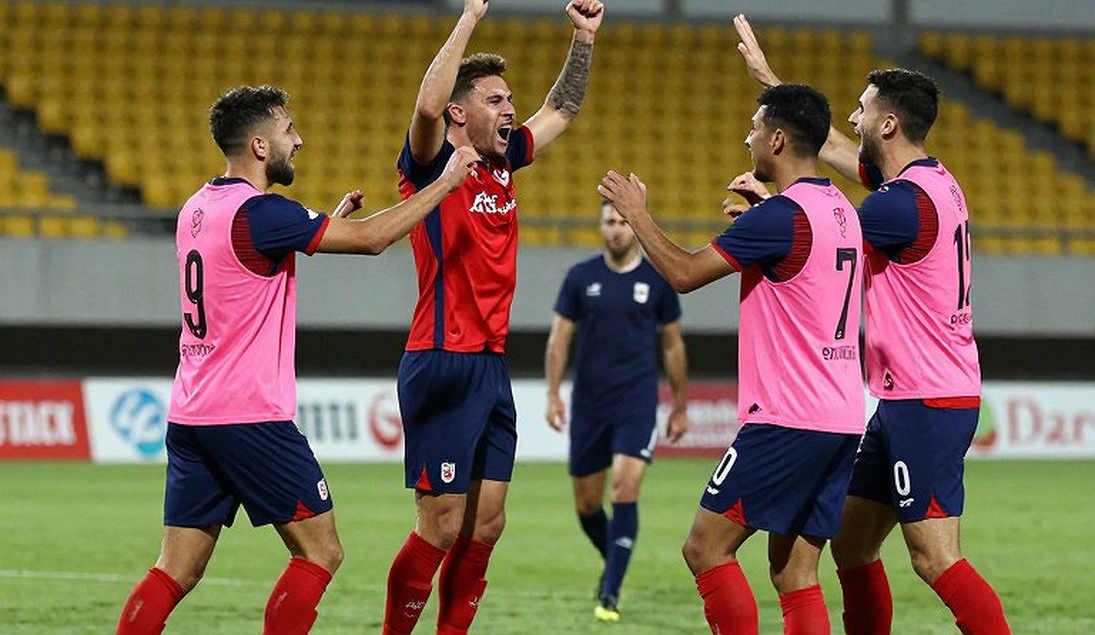
Context: A second renewal within a single year
Marc Bernal is a product of La Masia, Barcelona's famous academy and the backbone of the club's operating model for more than two decades. It is no coincidence that Bojan Krkic — a former La Masia player — holds the sporting coordinator role. He is the symbol of a philosophy: academy people leading the academy.
According to the Stage-1 information, Bernal had already extended his contract to 2029. Now, roughly a year later, the two sides sat down again and agreed to push the term to 2031. This is where one should pause. In professional contract practice, a stable extension rarely needs renegotiating so quickly. A young player signing a second extension within twelve months usually reflects one of two things: either the club realised his value was rising faster than expected and wanted to lock him down early, or the agent side generated enough negotiating leverage to force a fresh round.
There is an important legal detail here. FIFA Article 18 caps the length of a professional player's contract at five years. If the new extension is executed in 2026, a term to 2031 sits exactly at the legal maximum. Barcelona could not sign longer even if it wanted to. That means: this is the longest commitment the club can legally bind a player to in a single signing.
On timing, the original report describes the signing ceremony as expected this week, on a suitable date. That language indicates the deal is agreed but not yet complete in signature terms. This is the crucial boundary any transfer-news reader must distinguish: between "agreed" and "signed" lies a gap into which many deals have fallen.
A release clause is not a valuation
The first thing to clarify in legal terms: a release clause, called cláusula de rescisión in Spanish, is not a market number. It is a legal mechanism peculiar to Spanish football, effectively required under the country's labour law. A buyer wishing to unilaterally terminate the contract must deposit that exact sum with the league, rather than negotiating directly with the club in the usual way.
Because of that nature, Spanish clubs habitually set release clauses at multiples of a player's true value. The purpose is not to sell, but to make poaching economically irrational. When reading the 500 million euro figure, the right question is: who does it deter? It deters the Premier League and state-backed clubs — the forces with financial capacity far beyond Barcelona's current position.
People see a passage of play. I see a gap between two laws. Here too: people see 500 million euros, I see a gap between market value and legal value. Conflating the two is the most common error when reading transfer news.
Usage data: What the headline skips
This is the most important part that most reports on this deal skip. Data from two seasons paints a very different picture from the word "star" in the headline.
Last season, Bernal made 33 appearances for 1,313 minutes. This season, he has 9 appearances for 338 minutes. On average, these figures land around 38 to 40 minutes per match. That is the usage profile of a rotational player, not a locked-in starter. A regular starter averages 70 to 90 minutes per match; a figure of 40 minutes indicates use in late-game management, phased integration, or squad rotation.
There is, however, a counter-signal stronger than raw minutes. Bernal has featured in all nine matches this season. That full presence shows the coaching staff rate him as a reliable option, even if not as a full-time starter. At elite level, being named in the matchday squad consistently at 18 carries far more meaning than a few full 90-minute outings followed by disappearance.
On data, I must state my limits clearly. The original report provides no xG, xA, PPDA, or possession figures. There is no process data to assess. Any conclusion about Bernal's technical quality here sits at medium inference, based on a combined sample of 1,651 minutes. That is a small base. Anyone speaking with certainty about this youngster's level is overreaching their data.
Role: The pivot and the shadow of a name
The original report contains a notable professional detail: the presence of "Rodri" is mentioned as a teaching influence helping Bernal keep progressing. Here I must issue a quality warning.
Rodri is not a documented senior Barcelona figure. If the report refers to Manchester City's Rodri, the detail is entirely incoherent. A player currently at Manchester City cannot serve as an internal mentor at Barcelona. This is a clear sign of a sourcing problem, and it forces me to downgrade confidence in the entire original report, not just this detail.
Setting that anomaly aside, Bernal's most plausible role is a deep-lying pivot — the deep distributor position structurally central to Barcelona's possession model. The relatively low minutes per appearance may also reflect a post-injury load-management protocol given the serious knee injury referenced. For a young midfielder returning from a severe injury, phased short outings are standard sports-medicine practice.
Deal substance: Asset protection, not first-team elevation
Placing all the facts side by side, the nature of this renewal becomes clear. It is an asset-protection move, not a first-team upgrade. Barcelona is locking a high-ceiling young pivot into a long-term development trajectory, rather than responding to established on-pitch output.
Transfers are where numbers wear emotion and the law stands outside as referee. In this deal, no transfer fee is paid. It is an internal transaction. The real value lies in the wage commitment and its interaction with La Liga's squad-cost cap — two things the original report is entirely silent on.
This is the point I consider most important and most underrated. Barcelona's principal financial risk here is not transfer outlay, but the ability to register the renewed contract under La Liga's financial-control rules. The Catalan club has a history of being constrained by this cap. Whether a new contract can be registered smoothly depends on wage structure, and that is disclosed in none of the information points.
Legally, the contract structure is entirely standard. A five-year term sits at the FIFA Article 18 maximum. A release clause under Spanish law is valid and conventional. There is no tapping-up risk, no third-party ownership risk, no disciplinary risk attached to this deal. It is an internal renewal of an already-registered player.
The contrarian angle: Four things the headline does not say
First: the word "star" in the headline overshoots the objective data. With a profile of roughly 40 minutes per match, Bernal is a promising squad player, not an established star. Media calling him a star creates a large expectation gap. And a large expectation gap is always fertile ground for fierce backlash if development slows.
Second: the 500 million euro clause is deterrent, not valuation. Reading it as market value would materially overstate the player. It is a figure designed to make any poaching economically irrational, and it reflects Barcelona's position in the food chain rather than Bernal's level.
Third: the rapid renewal cycle, from 2029 to 2031 within roughly a year, is a mild signal of agent leverage. A stable developmental contract rarely needs renegotiating so quickly. This is worth monitoring, as it may foreshadow future wage-negotiation rounds.
Fourth, and perhaps the most important in risk terms: the dominant risk of this deal is physical, not financial. The prior serious knee injury is the single most important risk flag. For a young pivot, a history of knee injury can materially alter the deal's value. If that injury involved the anterior cruciate ligament, recurrence risk in a young midfielder is statistically above average.
The long contract to 2031 mitigates poaching and renegotiation risk. But it converts into another form of exposure: long-term lock-in to a player whose development may stall. This is the classic trade-off of any long extension with a young player.
Fairness does not lie in a correct law; it lies in a reader of law willing to look deep. A long contract is not automatically a correct decision. It is merely a decision with a sound structure, and its value depends on variables no one controls: health, development, and time.
The La Liga landscape and Barcelona's position
Barcelona is now most accurately described as an elite club constrained in buying power and reliant on development capacity. When La Liga's cap pressure limits external spending, securing academy assets long-term becomes strategic necessity rather than choice.
The 500 million euro clause reflects Barcelona's place in the food chain. The club must defensively price its youth against wealthier leagues, implying that poaching risk at academy level remains a permanent presence. Bojan Krkic's presence as sporting coordinator symbolises the "La Masia in the boardroom" philosophy, reinforcing a pipeline-first operating model.
In the broader La Liga picture, only Barcelona is identifiable from the original report's information points. The rest of the competitive landscape cannot be mapped from this source. There is no league-position data, no recent-form data, no fixture data. Any claim about Barcelona's competitive trajectory based on this report would be unfounded.
Governance and the decision chain
This deal reveals a coherent decision chain with senior leadership consensus. The signing is hosted by President Laporta and attended by Yuste, Deco, and Bojan Krkic — the full senior sporting presence, a signal of institutional consensus.
The speed of talks, with both sides wanting the same thing, indicates a low-friction negotiation. In player-club relations, that is typically a sign of a healthy relationship. Hosting the ceremony in the president's office is both an administrative and a communications-political move, projecting leadership competence and academy commitment.
From an image-management angle, this renewal functions as soft public-opinion management. An academy-renewal story is a low-cost, high-approval narrative that can offset pressure elsewhere. No fan backlash against the player is evident in the source, so resistance risk is minimal.
Overall risk
The overall assessment of this deal is medium. Basis: the deal is structurally sound and highly protective, with a long term and a deterrent clause. But the injury history is a material sporting risk, and sourcing quality is weak, with one clear factual anomaly.
The risk matrix can be ordered by priority as follows. Sporting risk from injury recurrence is high, with medium likelihood and high impact. Risk the player fails to progress beyond rotational status is medium. Financial risk from wages and registration under the La Liga cap is medium. Risk from agent leverage and future renegotiation pressure is medium, partly mitigated by the long term to 2031.
The Russia summer taught me: VAR did not take away innocence, it took away the right to be wrong. Here, the release clause and the long contract do not take away a young player's innocence, they take away the right to develop slowly. Once signed to 2031 with a 500 million euro figure hanging overhead, Bernal is no longer permitted to progress slowly. Expectations have been anchored to a number.
Signals to track
There are five specific signals to watch in the period ahead. First, official confirmation of the signature from the club's official channels, conditional on the ceremony being held this week. Second, injury status and availability, observed through lineups and medical reports. Third, registration under the La Liga cap, observed through league registration lists. Fourth, disclosure of wage terms, observed through cap data and press leaks. Fifth, minutes trajectory, observed match by match, with a trigger condition of a shift toward 70 to 90 minutes per match.
If the minutes trajectory shifts to that level, we will have evidence that Bernal is on the star track. If not, this renewal will remain a sound asset-protection deal with no corresponding sporting story.
A thought worth considering
In the football industry, clubs no longer compete only on the pitch. They compete to protect their development pipelines from financially superior forces. The 500 million euro release clause is not a statement about Marc Bernal's value. It is a statement about Barcelona's fear.
And perhaps that is the most worth discussing. When a club must write down an unthinkable number to keep an 18-year-old who has not regularly played full 90 minutes, the question is not how good that player is. The question is how asymmetric the system has become, such that Europe's best academies must build walls out of numbers instead of loyalty.
Barcelona is doing right by what it has. But a release clause does not stop a player leaving if the player wants to leave and someone is willing to pay. It only sets a price. And in modern football, every price has a buyer — the question is only when, and from whom.