
Trang chủTable TennisTolmacheva Unbeaten in Antibes: Europe's U15 Girls' Race Is Decided by Seventh Games
Tolmacheva Unbeaten in Antibes: Europe's U15 Girls' Race Is Decided by Seventh Games
Trả lời nhanh: Varvara Tolmacheva (Nga) đang dẫn đầu Europe Youth Top 10 U15 nữ tại Antibes với thành tích 6-0 khi giải còn ba lượt trận. Ilmbetova và Rochut (Pháp, chủ nhà) cùng đứng ở mức 5-1, trong đó Rochut đã thua Ilmbetova 3-4. Sự kiện chính: - Varvara Tolmacheva (Nga) toàn thắng 6 trận, dẫn đầu bảng U15 nữ. - Ilmbetova và Rochut (Pháp, chủ nhà) cùng 5-1, kém một trận thắng. - Rochut thua duy nhất trước Ilmbetova với tỷ số 3-4. - Nhiều trận đỉnh bảng phải giải quyết ở ván thứ bảy. - Nhóm Nawrocka, Jia và Guassardo cùng đứng ở mức 3-3. Nguồn: ETTU (báo cáo chính thức Europe Youth Top 10, U15 nữ, Antibes) | Cross-checked: VuaBong.vn Hỏi đáp liên quan: Hỏi: Tolmacheva có chắc vô địch không? Đáp: Cô giữ lợi thế đối đầu trực tiếp với Ilmbetova, nhưng vẫn còn ba lượt trận phía trước. Hỏi: Vì sao Rochut được chú ý? Đáp: Cô là tay vợt chủ nhà người Pháp và đang bám đuổi sát nhóm dẫn đầu. Hỏi: Giải này có tính điểm xếp hạng thế giới không? Đáp: Đây là giải trẻ cấp châu lục của ETTU, không thuộc hệ thống tính điểm WTT.
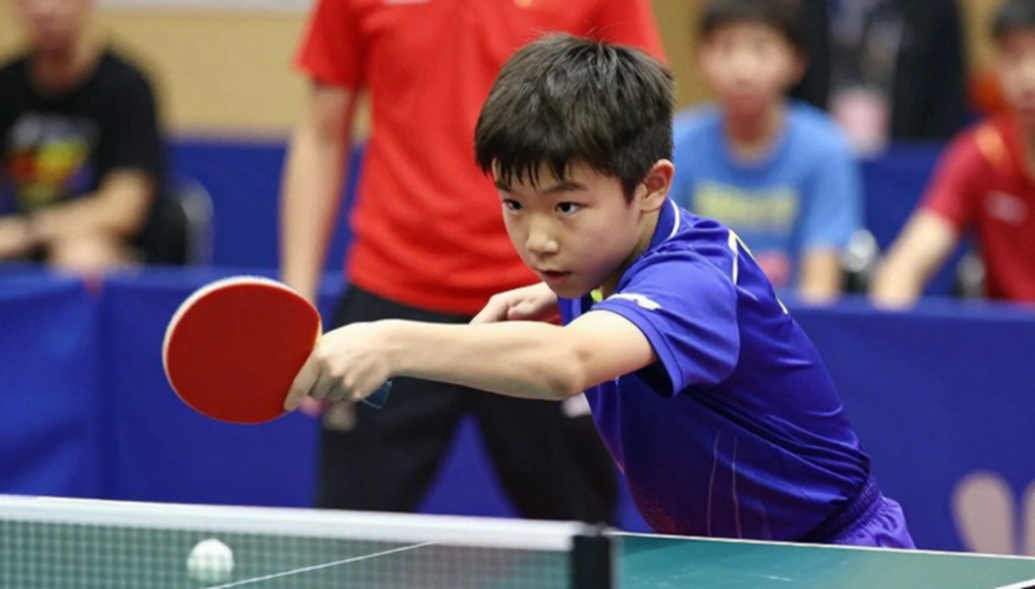
In the corridor of a small arena in Antibes, one can hear the ball bouncing on the table more clearly than the sound of spectators. The seventh game. Those two words recur so often that they have become the breathing rhythm of the whole U15 girls' field at the Europe Youth Top 10. With only three rounds left and four top-of-the-table matches pushed to deciders, the story no longer lives on the scoreboard — it lives in nerve, in stamina, and in the way fourteen-year-old girls learn to keep their wrists from trembling at 3-3.
I follow this field from a distance, through the results bulletins of the European Table Tennis Union (ETTU). There is no grand television broadcast, no packed stand. The abandoned stand still keeps its old applause. And in that quiet, one name is slowly separating from the rest: Varvara Tolmacheva of Russia, with six wins from six.
The Europe Youth Top 10 is ETTU's annual event for the best young players in Europe by age group, played as a single round-robin. In this year's U15 girls' category, ten players were placed in one group, meaning each must play nine matches. It is a brutal format in its own way: no knockout bracket to lose and go home from, no lucky draw. Every match counts, and every game within each match counts, because game differential can decide the standings when two players finish level.
The entry list spans the continent: Russia, France, Austria, Switzerland, Germany, Slovakia, Czechia and Poland are all represented. That national diversity says something simple about Europe's youth development system — it is not concentrated in a few power centres, but distributed through a club-based model. Yet diversity of nationality does not mean diversity of level at the top of the table.
As of the end of the second day, the field has split into three clear tiers. Tolmacheva leads with six wins from six. Ilmbetova and Rochut follow immediately behind on five wins and one loss each. The third group — Nawrocka, Jia and Guassardo — sits at three wins and three losses. Below them is the rest of the field, where the standings now carry only positional meaning. Three rounds remain, and everything will be settled on the final day.
I have spent years recording youth fields like this, and I keep one habit as a ritual: after each day, I rebuild every result into a spreadsheet of my own. Not to predict the winner — but to see whether the way a player wins says something different from the fact that she won. In Antibes, the way is telling a far clearer story than the 6-0 line on the board.
The first thing that strikes me when I rearrange the scorelines is the density of seventh games. At the top, the big matches keep going to deciders: Tolmacheva beat Hu 4-3, Ilmbetova beat Rochut 4-3, Rochut beat Hu 4-3, Nawrocka beat Hu 4-3. Four matches, four seventh games. Yet between those tense matches sit one-sided results: Ilmbetova beat Brhelova in straight games, Nawrocka beat Guassardo 4-0, Tolmacheva beat Jia 4-1.
That bipolar distribution — breathless at the top, dominant at the bottom — says the leading group is very close among itself but decisively stronger than the lower half. This is a structural signal rather than a technical judgement. The ETTU bulletin provides only scores, describing no stroke, no rubber type, no playing system. Every technical inference here must be built from what the scorelines leave behind. And in table tennis, scorelines leave behind quite a lot.
In many sports, supremacy is measured by goal difference or points. Table tennis measures it differently: by the number of games you let your opponent take. A player who wins 4-0 and one who wins 4-3 each earn a single win in the standings, but those two results tell entirely different stories about control. So when I read the Antibes board, I do not just count wins; I count the games each player has surrendered. Based on my experience following these matches over many seasons, I always read a scoreboard on two layers: the layer of result and the layer of process.
Start with the leader. Tolmacheva has won six, but the quality of those six is uneven. She beat Pichler 4-2 and Jia 4-1 — matches kept at a safe distance. But she also had to grind against Hu to a seventh game before winning 4-3. And more importantly, in the opening round she beat Ilmbetova — the only other player chasing her.
That last detail is the nucleus of the whole race. In a round-robin, when two players finish with the same number of wins, order is usually decided by the head-to-head result. Tolmacheva holds that vote. If she and Ilmbetova both finish eight-and-one, the Russian stands above — not on game differential, but because she beat her rival in their only meeting.
That is why I always tell my students: in a round-robin, a win in the first round can weigh more than a win in the last. The timing of a victory is part of the victory.
Ilmbetova sits second on five wins and one loss, her only defeat coming in the opening round against Tolmacheva. The rest of her card is a run of wins with different shadings. She beat Rochut 4-3 in a match both had to squeeze to the final game. She beat Guassardo 4-1, and Brhelova in straight games. Remove the loss to the leader and Ilmbetova is the only other player never truly dragged into trouble by anyone else.
But it is that 4-3 win over Rochut that opens the home player's story.
Rochut, a French player competing on French soil, is in the position every home player knows too well: close enough to dream, far enough to need others. She has five wins and one loss, but that loss came precisely against Ilmbetova — the player ranked above her. In table tennis, losing to the rival directly above you is a double loss: you drop a match and lose control of your own head-to-head destiny.
Rochut's path to the title is now the narrowest of the three contenders. She must win all three remaining matches and hope Tolmacheva or Ilmbetova slips. She no longer controls her own fate. It is a harsh psychological position, especially for a fourteen-year-old playing before a home crowd.
But look closer at Rochut's wins and a more complex picture emerges. She beat Nawrocka 4-1 — a comfortable match. But she also dragged Hu to a seventh game before winning 4-3. So Rochut can both finish matches cleanly and let tight matches run long. For a home player, the second tendency is a double-edged sword: a home crowd can add energy in a decider, but it can also turn every point into a burden.
On the edge of the title race is a figure the scoreboard does not celebrate but who is the centre of the tournament's best matches. That is Hu. This player appears in at least four matches pushed to a seventh game — against Tolmacheva, Rochut and Nawrocka. She lost all three, but lost in a way people remember.
In table tennis, a player repeatedly pushed to a seventh game usually owns a style that is hard to finish off: durable defence, lightning counter-attack, or simply the ability to extend every point. But I must be honest: the ETTU bulletin does not describe Hu's style. Any guess about defence or counter-attack here is weak inference from scorelines, and I will not assign it a certainty it does not deserve. The only thing we can say firmly: Hu turns every match into a prolonged battle, and in a round-robin that kind of player can decide the fate of others without winning.
The seventh game is a strange creature. It lasts only a few points, yet it compresses all the pressure of an entire match. In the seventh game, technique matters less than nerve; and in youth table tennis, nerve is the hardest thing to teach. A fourteen-year-old can own a perfect loop and still lose a decider because her wrist trembles at 9-9. That is why deciding games at this age are the most reliable indicator of competitive temperament.
The third tier — Nawrocka, Jia and Guassardo at three wins and three losses — sits two wins behind the leaders, a gap that can be erased in one afternoon or can hold until the end. In this group, Nawrocka leaves the clearest mark: she beat Guassardo 4-0 and Hu 4-3. She is the only player outside the leading group with a win in a decider.
Stamina is rarely mentioned but may be the quietest variable on the final day. The leaders played three matches on Saturday. In a ten-player round-robin, three matches in a day is a significant load for a fourteen-year-old body, especially when several go to seventh games. Table tennis is a sport of short rests and constant footwork; accumulated fatigue over a multi-match day can turn a strong loop in the first game into an uncontrolled shot in the seventh. The bulletin offers no injury or fitness data, so this is a risk to watch, not a conclusion.
There is one variable the scoreboard cannot show: the tenth player, unnamed in the bulletin. In a round-robin where three players sit at 3-3, a surprise opponent can shake the entire standings. Youth table tennis is famous for unpredictable results, and an unnamed player is exactly where the biggest surprise may hide.
Europe's youth development system has a feature I have always found interesting when comparing regions: it is distributed. A U15 player from Slovakia can train at a German club, compete at an Italian event, and represent her nationality at a European event in France. That circulation produces young players with early international experience, but it also makes them harder to evaluate — their results are not tied to a single training centre that could be compared.
There is a habit I have built over years and still keep. The shame of the Russia World Cup taught me that ignorance is a starting point. In 2026, commentating live on a group-stage match, I mispronounced the name of a goalkeeper from an African team three times in the first half. That shame forced me to relearn how to read names, how to research, how to take notes. Since then, whenever I write about an event on a continent I do not truly understand, I build my own data table before writing a word. In Antibes, that table has ten names, nine of which have appeared on the board, and one that remains an unknown.
Fans may not enter the arena, but the arena is never without them. At a youth event like the Europe Youth Top 10, the stands may be empty and the cameras may not come, but the matches still carry their full weight — because behind every player stands a development system, a nation, and a dream far longer than an afternoon in Antibes.
A word on where this event sits in the bigger picture. The Europe Youth Top 10 is not a world-ranking points event. It is not part of the WTT system, carries no significant prize money, and does not directly affect players' senior world ranking. Its value lies on another layer: it is where national federations observe, evaluate and filter the next generation. A strong result here can open the door to a national junior squad, or a training slot at a bigger centre. In other words, this event is one mesh in the development machine, not a destination.
That explains why I do not rush to attach greater meaning to the Antibes results than they truly carry. The players here are several Olympic cycles away from the senior arena. A player who wins six matches at fourteen may become a European champion at twenty, or may vanish from the table tennis map within two years. Youth table tennis is an environment where early talent does not guarantee late maturity. The sport's history is full of names celebrated as teenagers who quietly left the spotlight.
And here is where I want to say plainly something youth sports media often avoids. We are too excited about unbeaten records at fourteen. Six wins from six sounds grand, but six matches is far too small a sample to say anything certain about a player's future. Youth table tennis is full of players who once dominated U15 events and disappeared when they reached the senior stage, and just as full of players who sat mid-table at fourteen and became national pillars at twenty.
Second, the "home favourite" label the media attach to Rochut is an editorial frame, not a competitive fact. It can be motivation, or it can be pressure. The bulletin gives us no data on attendance, crowd size, or audience reaction. So any story about the mental power of home soil here is speculation. Over years in this profession, I have learned that home advantage does not create wins by itself; it only amplifies what is already in a player's head — confidence becomes excitement, hesitation becomes paralysis.
And third, what worries me most: youth events like this are increasingly pulled into the machinery of data and betting. The scoreline of a fourteen-year-old girl can become an odds line within hours. That is the darkest side effect of the digitalisation of sport — and it starts very early, at exactly the age we should protect from performance pressure. When a U15 match is treated as a data product, we are no longer nurturing athletes; we are nurturing a market.
When the final day closes in Antibes, one name will be called to the top of the podium. But the true value of this event is not that medal. It is in the seventh games no one records, in the moments a fourteen-year-old learns to win from behind, and in the question European youth table tennis must ask itself: are we nurturing athletes, or are we nurturing scoreboards?

Cầu thủ liên quan
Bài đề xuất
World Table Tennis Before the Chinese Wall: The Gap Lies Outside the Frame2026-09-16
World Hopes Week 2026 in Sheffield: 36 Young Players and the ITTF's Talent Map2026-09-23
ETTU and Dyn Sign Broadcast Deal Through 2028: The Clause Buried at the Bottom Is the Real Story2026-09-26
When Data Goes Silent: Lessons from a Failed Table Tennis Analysis Pipeline2026-10-18
Vietnamese youth table tennis and the measurement gap: winners at 13, gone by 192026-10-26
Nine Dimensions of Table Tennis Analysis and a Blank Page: Lessons From a Broken Data Pipeline2026-10-20
Bài đề xuất
Table Tennis Transfers: The Free-Agent Fee Nobody Dares to Book2026-10-15
The Whispering Rhythm: Reading Table Tennis Through Structure2026-10-10
Nine pillars of a table tennis analysis, and why an empty dossier must be declared2026-10-20
43 of 56 Medals in Katy, Texas: America's U11–U13 Stratum and the Limits of a Region2026-09-19
Great Britain Sends 12 Para Players to France: Bayley, Davies and a Preparation Dossier Without a Single Metric2026-09-11
Bài đề xuất
The Blank Sheet on the Analysis Desk: Nine Strata and the Lesson of Honesty in Vietnamese Sports2026-10-09
Lowri Hurd and Rob Davies Deliver Gold for Great Britain's Para Table Tennis in Spain2026-10-08
Nine Dimensions of Table Tennis Analysis and a Blank Page: Lessons From a Broken Data Pipeline2026-10-20
Clacton & District Kicks Off: Brotherhood Keeps the Crown, and the Crack in a Twelve-Year Dynasty2026-09-29
Vietnam Youth Table Tennis and the Blank Map: When Analysis Finds No Data2026-10-09
Keighley Table Tennis Centre Hires Its First Paid Coach: The 20-Hour Gamble and the Youth Pipeline Question2026-10-03
Bài đề xuất
Two Match Points Squandered and a Seventeen-Point Gap: How Castel Goffredo Reclaimed the Super Cup in Nine Rotations2026-10-24
Vietnamese Table Tennis and the Generation Challenge: From Provincial Courts to ASIAD Dreams2026-10-10
Over 260 U15 teams, £115 and one deadline: how England runs the base layer of table tennis2026-10-23
Braintree League: Rayne A Resurrected as Netts A Face a 62-Point Gap2026-09-22
Back to the future in Sheffield: Inside the table tennis week with no ranking table2026-10-01
ITTF hands World Hopes Week 2026 back to England: the story isn't the U12 trophy2026-10-01